
What Is a DSI Water Heater and How Does It Work?

Seeing that unfamiliar DSI switch or glowing red fault light on a camper wall is nothing to panic over. A DSI water heater is simply an appliance with direct spark ignition, which means an electronic spark lights the gas burner automatically. Flipping a switch from inside the living area starts the heater, so nobody has to walk outside in the wind with a long lighter to ignite a standing pilot flame.
How smoothly the system fires up depends on a few quiet basics. The heater relies on steady 12-volt camper battery power to open its internal gas valve and click the sparker. The propane line must also be fully open and cleared of trapped air pockets. Many models also include a separate electric element for campground hookups, letting the tank run on shore power alongside gas. Here is what happens behind the access door and how to reset the heater safely if it locks out.
What does DSI mean on an RV water heater?
DSI stands for Direct Spark Ignition. On an RV control panel, it indicates that your water heater uses an automatic electronic spark to light its propane burner. Instead of walking outside in the cold to light a flame with a match, you start the heater from inside your camper with a flip of a switch.
Older campers relied on a standing pilot (a small flame burning all the time). Those flames easily blow out while driving down the highway or during breezy nights at a campsite. A DSI system eliminates the continuous flame and lights the burner only when the water in the tank needs heating.
To operate, a DSI water heater relies on two power sources. It burns propane from your fuel tanks to create heat, and it uses 12V DC (standard RV battery power) to run the circuit board, open the gas valve, and spark the igniter. Because it fires on demand, it conserves propane and makes hot water effortless.
How does a DSI water heater work step by step?
Understanding how your water heater operates helps you recognize normal sounds and know what is happening behind the exterior access door.
- You flip the indoor switch: Turning on the wall switch sends 12-volt battery power from your camper to the water heater circuit board.
- The thermostat checks water temperature: A sensor pressed against the tank reads the water temperature. If the water is cold, the thermostat calls for heat and starts the lighting cycle.
- The gas valve opens and the spark fires: The circuit board opens an electronic gas valve to release propane into the burner tube. At the same second, the board sends power to the ignition electrode (a small metal rod near the burner), creating a rapid clicking spark like a gas grill igniter.
- The burner catches fire: Propane mixes with air and ignites from the spark. You will hear a soft whoosh followed by the quiet roar of a clean flame.
- The flame sensor verifies the fire: A metal probe in the flame confirms the fire is lit. This heat signal tells the circuit board that it is safe to keep the gas valve open.
- The burner shuts down when hot: Once the water reaches roughly 130 to 140 degrees Fahrenheit, the thermostat signals the board to close the gas valve, extinguishing the flame until you use hot water again.
How does DSI compare to a traditional pilot light?
A DSI water heater offers several clear advantages over older standing pilot models, along with one trade-off you need to know when camping.
The biggest difference is convenience. A manual pilot heater requires you to go outside, open the metal hatch, and hold a lighter against the burner while pressing a gas knob. With DSI, you stay inside and flip a switch from the kitchen or bed.
Fuel efficiency is another advantage. A standing pilot burns propane 24 hours a day, even when you do not need hot water. Over a week, that small flame wastes fuel. A DSI unit burns propane only while actively heating, stretching your fuel supply.
Wind resistance also favors the electronic spark design. Gusts of wind often blow out a manual pilot flame, leaving you with cold water. A DSI system will automatically attempt to relight itself if a breeze interrupts the flame.
The only trade-off is electrical power. A manual pilot heater needs zero electricity to run. A DSI heater requires 12-volt camper battery power to open the gas valve and spark the electrode. If your camper battery is completely dead, the heater cannot light. For travelers building out mobile living rigs, managing battery draw and fuel is essential, just like planning the best heater for van life setups.
Why is the DSI fault light on?
Next to your DSI switch, you will see a small warning light labeled "DSI FLT" or "Fault." When you flip the switch on, this light glows for a few seconds during ignition. Once the flame sensor verifies a steady fire, the light turns off.
If the light stays on, your heater has entered an ignition lockout (a safety mode that shuts down the heater to prevent unburned gas from building up). The circuit board tries to light the burner three times. If it cannot detect a flame after three attempts, it closes the gas valve and triggers the fault light.
Common causes of an ignition lockout include:
- Air in the propane line: If the camper sat in storage or you swapped tanks, air fills the line. Propane must reach the burner before it can light.
- Empty fuel cylinder: Your propane tank may be empty, or the tank valve might be closed.
- Low camper battery voltage: If your battery drops below roughly 10.5 volts, it cannot open the gas valve or generate a crisp spark.
- Insect webs in the burner tube: Spiders often build webs inside the burner tube, blocking the flow of gas and air.
- Dirty electrode: Soot or corrosion on the metal probe can keep the spark from jumping or block the flame signal.
To safely reset the heater, follow these steps:
- Turn the switch OFF. Wait five minutes for any lingering propane to clear.
- Purge air from the line. Light a burner on your RV stove and let it burn for 30 seconds to pull fresh propane through.
- Inspect the burner tube. Open the outside heater door and check the tube for spider webs. Clean them out gently with a small brush or compressed air.
- Confirm your battery shows at least 12 volts on your camper monitor.
- Turn the interior DSI switch back ON and listen for the spark and flame ignition.
If the fault light stays on, leave the switch off. Do not keep cycling the switch repeatedly. If you smell gas, shut the main tank valve immediately and call a certified RV technician.
Can you run DSI gas and electric heat together?
Many RVs feature combination water heaters with two wall switches: one for DSI gas and one for electric heat. Running both switches at the same time is completely safe and supported by manufacturers.
The main reason to run both together is fast recovery time. Camper tanks are compact, holding only 6 to 10 gallons. A single shower drains the hot water quickly. On propane or electric alone, reheating takes 30 to 45 minutes. When you turn on both switches, you combine the heat output of the gas flame and the electric element. This cuts recovery time to roughly 15 to 20 minutes, letting family members shower back-to-back.
When you do not need fast recovery, choose the fuel that fits your camping setup:
- Use electric mode when hooked up to campground shore power. This saves your onboard propane for cooking and furnace heat.
- Use DSI gas mode when dry camping or boondocking without hookups. The gas burner heats quickly while drawing minimal battery power.
One vital safety warning applies to the electric switch: never turn on the electric heating element when the water tank is empty. An electric element sits directly inside the tank. If powered dry, it will burn out and melt within seconds. Always run water through a hot faucet until air bubbles stop before flipping the electric switch. For park models or seasonal trailers, similar precautions apply to heating setups, like those discussed for the best heater for mobile home systems.
What should you look for in a replacement heater?
If your existing water heater has a damaged tank or you want to upgrade from an old manual pilot model, choosing a direct spark ignition replacement restores easy hot water to your camper.
First, check the tank capacity and cutout dimensions. RV water heaters typically come in 6-gallon, 10-gallon, or 12-gallon sizes. A larger tank gives you longer showers, but it requires a larger wall opening and adds weight to your camper. Measure your cabinet height, width, and depth before selecting a replacement.
Second, consider tank construction and corrosion protection. Steel tanks with a porcelain lining mimic residential water heaters and provide dependable strength. These tanks use a sacrificial anode rod (a replaceable metal rod that collects rust and corrosive minerals). In these models, the anode rod also serves as the drain plug, requiring periodic inspection. Aluminum tanks resist corrosion naturally and do not use an anode rod, though they require different maintenance.
Finally, decide if you want a gas-only DSI heater or a dual-fuel model with an electric element. Dual-fuel models cost slightly more and require 120-volt wiring, but using campground electricity saves propane over time.
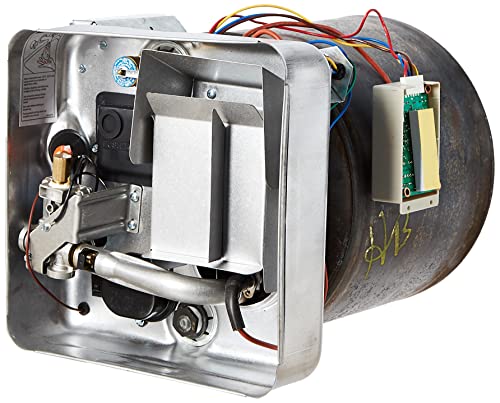
- BWP Score9.0
BWP Score is a ranking system developed by Bestwinterproducts.com. BWP score has no relationship or impact from any manufacturers or sales agent websites. Learn more
- BrandSuburban

- BWP Score8.6
BWP Score is a ranking system developed by Bestwinterproducts.com. BWP score has no relationship or impact from any manufacturers or sales agent websites. Learn more
- BrandSuburban

- BWP Score7.8
BWP Score is a ranking system developed by Bestwinterproducts.com. BWP score has no relationship or impact from any manufacturers or sales agent websites. Learn more
- BrandSuburban
Last update on 2026-10-08 / Affiliate links / Images, Product Titles, and Product Highlights from Amazon Product Advertising API
FAQs
Does a DSI water heater drain the RV battery?
A DSI water heater draws very little battery power. It uses 12-volt electricity for just a few seconds to spark the burner and draws a tiny fraction of an amp to hold the gas valve open while heating. Once the water is hot, power draw drops to zero, allowing you to camp off-grid for days without draining your house battery.
Can spider webs stop a DSI heater from igniting?
Yes, spider webs are a leading cause of ignition failure in RV water heaters. Spiders are attracted to the chemical scent added to propane and spin dense webs inside the burner tube. This blocks the air-fuel mixture, causing the spark to click without lighting and triggering an ignition lockout.
How long does an RV water heater take to warm up?
On propane DSI heat alone, a cold 6-gallon tank takes about 25 to 35 minutes to reach full temperature, while a 10-gallon tank takes 40 to 50 minutes. If your heater has a dual-fuel option and you run both propane and electric heat together, warm-up time drops to about 15 to 20 minutes.
What should you do if you smell gas near the heater?
If you smell raw propane near your water heater, act immediately. Do not flip switches, light matches, or attempt to reset the heater. Turn the heater switch off, go outside to close the main valve on your propane tanks, open your camper doors to ventilate the space, and contact a qualified technician to inspect the system.


Best Warm Winter Scarves 2026 For Cozy Comfort

Best Green Ski Goggles 2026 For Clear Vision On Slopes

12 Best Corner Electric Fireplace 2026: My Ultimate Guide To Pick One

Best Battery Powered Snow Blower 2026 For Effortless Snow Clearing

Best Ski Goggles Under 30 Inches For Crisp Vision And Comfort

Best Cooling Scarf 2026 For Instant Relief And Comfort

Fake Snow for Grass: Create a Realistic Winter Lawn Display

Dimplex Prism Wall Mount Fireplace: Sleek Heat With Modern Flame Style





