What Is a Ventless Gas Fireplace and Is It Safe?

A homeowner stands in a chilly living room, staring at a blank wall and wondering how real flames could burn there without a chimney. A ventless gas fireplace is an indoor heater that burns fuel cleanly enough to operate without an exhaust flue or vent pipe. Because no warmth escapes through the roof, all the generated heat stays directly inside the room.
Whether one works in a specific house depends on three main factors. Local building codes come first, as some municipalities restrict unvented gas appliances. Room size is equally important, because an oversized burner can introduce unwanted moisture or overheat an enclosed area. Available fuel also plays a role, whether piped natural gas or liquid propane. Here is how these heaters run cleanly, how built-in sensors protect indoor air, and how to confirm if your room qualifies.
Learn how a ventless burner operates without an exhaust pipe
A ventless gas fireplace is a standalone heater, insert, or log set that burns fuel cleanly enough to operate without an exhaust duct. Unlike a traditional hearth that vents smoke and gases through a chimney or metal flue (a pipe or chimney that sends exhaust outside), a ventless unit draws room air directly into its burner, ignites the gas, and pushes the heated air right back into your living space. Because there is no chimney to draw warm air out of the building, almost all the energy produced by the flame stays inside your home.
The core technology behind this process is clean, precision combustion. In a standard wood fire or an open gas log set, combustion is incomplete. That incomplete burn produces visible smoke, soot particles, and high levels of carbon monoxide. Ventless fireplaces use precision-engineered burners designed to mix gas and room oxygen at an exact ratio. This high-efficiency burn produces a sharp, hot flame that converts almost all the fuel into heat, carbon dioxide, and water vapor, leaving only microscopic traces of combustion byproducts.
To picture how this works, think of the gas range on your kitchen stove. When you turn on a cooktop burner to boil water, it burns natural gas or propane right in the open kitchen without an exhaust hood pulling every bit of air outdoors. A ventless fireplace operates on a similar chemical principle, but it is built to run at higher temperatures for longer periods. The burner ports are drilled with high precision to keep the flame steady and prevent fuel from escaping unburned.
Because there is no vent pipe carrying warm air to the roof, where the exhaust goes is the most common worry for homeowners. The combustion products simply blend into the general air volume of your home. As long as the unit burns at peak efficiency and the room has enough fresh airflow, those emissions remain well below established residential safety limits. But because those byproducts enter the room directly, these units require strict operating conditions, proper room sizing, and built-in mechanical safeguards to keep your indoor air fresh and safe.
Compare ventless and vented models before you choose a setup
Deciding between a ventless gas unit and a traditional vented fireplace comes down to balancing raw heating power against flame appearance and installation flexibility. Both systems burn gas, but they behave very differently once you turn the burner on. Knowing these differences helps you avoid installing a heater that either overheats your room or sends all its warmth up the chimney.
Vented fireplaces connect to a vertical chimney or vent horizontally through an exterior wall with a direct-vent pipe system. These units pull outdoor air in for combustion and push all exhaust fumes outdoors. Because fumes leave the house, vented fireplaces can produce taller, lazy, yellow flames that roll over ceramic logs just like a real campfire. The trade-off is efficiency. A vented fireplace can lose 30 to 50 percent of its heat directly through the exhaust pipe. They work well for visual charm, but they cost more to run if you need serious room warmth.
Ventless fireplaces flip that balance entirely. Because they do not vent outdoors, they deliver nearly 100 percent of their heat into your room. Every BTU (a measurement of heat output) created by the burner stays inside the living area. This makes ventless units exceptional supplemental heaters for cold basements, open-concept living rooms, and drafty family spaces. If you are converting an existing masonry hearth to gas and want to stop room drafts, you might also consider how to close a fireplace damper tightly so warm room air does not escape past your new burner.
The compromise with a ventless unit comes in the flame presentation and run time. To maintain clean combustion and prevent carbon soot from forming, the flames cannot lick directly against ceramic logs or decorative elements. The logs must sit in fixed positions specified by the manufacturer, and the flames tend to be smaller, more stable, and bluer at the base. You also cannot run a ventless fireplace continuously all day long. Most makers advise running them for no more than four continuous hours to keep humidity and carbon dioxide levels in check.
- Heat delivery: Ventless units direct nearly all generated heat into the room, while vented units send a large portion out through the chimney pipe.
- Installation requirements: Vented systems require cutting through an exterior wall or running a pipe through the roof. Ventless systems only require a dedicated gas line and code-compliant room clearances.
- Visual flame style: Vented models feature tall, roaring yellow flames. Ventless models use shorter, highly controlled flames that avoid contacting the log surfaces.
- Impact on indoor air: Vented units isolate the firebox from room air, while ventless models release water vapor and combustion gases into the living area.
Rely on built-in sensors and shut-offs to guard your indoor air
The thought of burning gas without a chimney can feel alarming. To address that concern, manufacturers equip every certified ventless gas fireplace with a mechanical safety system known as an ODS (a safety sensor that shuts gas off if room oxygen drops). This device is not an optional accessory; it is a permanent, factory-calibrated assembly that monitors the room air continuously while the fire burns.
The ODS combines an oxygen-sensing pilot light, a precision burner nozzle, and a thermocouple (a small sensor that generates an electrical signal when heated). Normal room air contains about 20.9 percent oxygen. The pilot flame is engineered to remain stable and touch the thermocouple only when oxygen stays at a safe level. If the oxygen concentration in the room drops toward 18 percent, the pilot flame naturally destabilizes and lifts away from the thermocouple. Within fractions of a second, the cooled sensor cuts the electrical current to the main gas valve, shutting off the fuel supply completely before hazardous conditions develop.
Beyond the oxygen sensor, ventless fireplaces include thermal limit switches and automatic gas shut-off valves. If the internal firebox becomes too hot or if the pilot light blows out, the gas valve closes instantly to prevent unburned fuel from leaking into your home. These parts are completely mechanical and do not rely on household electricity, meaning your safety shut-offs remain fully active even during a winter power outage.
You can maintain these safety systems by following a few clear habits:
- Leave the ceramic logs in their factory slots: Never rearrange, stack, or push logs directly into the flame path. Disrupting the flame causes incomplete combustion, which produces black soot and carbon monoxide.
- Keep burner ports free of household dust: Vacuum around the pilot assembly and burner tray before every heating season. Dust, pet hair, and lint can clog air intake holes and disrupt the clean burn.
- Never clean parts with household chemicals: Solvents or aerosol sprays near the pilot sensor can coat the burner orifices and alter how the flame behaves.
- Install a plug-in carbon monoxide alarm: Place a digital carbon monoxide detector on the wall in the same room as the fireplace and outside sleeping areas. Check the alarm monthly to ensure total peace of mind.
Calculate room volume and check local codes to prevent moisture and fumes
Before bringing a ventless fireplace into your home, you must confirm that your room is large enough to handle the burner and that your local town rules permit vent-free gas appliances. Because a ventless fire puts moisture and combustion air directly into your space, an oversized burner in a tight room causes stuffy air, lingering smells, and window condensation.
When gas burns, hydrogen molecules in the fuel combine with oxygen to create water vapor. A typical ventless fireplace burning on high can release a pint or more of water vapor into the air every hour. In an older, drafty house, that extra humidity might feel comfortable during dry winter months. But in a modern, tightly sealed home with tight window seals and dense insulation, trapped moisture can condense on cold window glass, settle in exterior corners, and create conditions that encourage mold growth. If you notice damp walls or fogged windows, crack an interior door or run the fireplace on a lower setting.
To prevent air quality problems, standard fuel gas codes require calculating room volume before sizing a heater. The standard formula requires at least 50 cubic feet of room volume for every 1,000 BTUs of heater output. To find your room volume, multiply the room length by the width, then multiply that result by your ceiling height. For example, a living room that is 20 feet long and 15 feet wide with an 8-foot ceiling provides 2,400 cubic feet of space (20 x 15 x 8 = 2,400). Dividing 2,400 by 50 gives you 48, meaning that room can safely support up to a 48,000 BTU ventless appliance.
Room type also determines what you can install. National safety codes strictly limit ventless gas appliances in smaller enclosed areas. Most areas restrict bedroom installations to a maximum of 10,000 BTUs, while bathrooms are limited to 6,000 BTUs. Many jurisdictions ban them from bedrooms and bathrooms altogether because you cannot monitor air quality while sleeping. If local rules ban unvented gas appliances in your area, or if your room volume is too small for a gas line, an electric fireplace insert for large room heating offers powerful supplemental warmth without any combustion risks or chimney requirements.
Always check with your city or county building department before ordering equipment. While national building codes provide general standards, individual states and municipalities have the final say. For instance, California prohibits ventless gas fireplaces in all homes, and cities like New York restrict them under local fire safety codes. Confirming your local guidelines first saves you from spending money on a system a plumber cannot legally connect.
Select the right ventless style and fuel connection for your living space
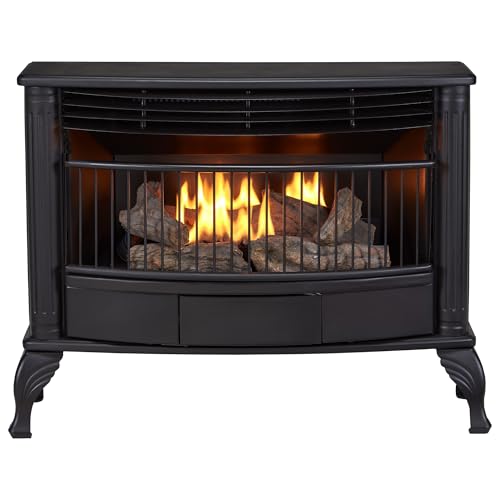
Finding the right ventless fireplace starts with deciding how the unit will fit into your room architecture and choosing the fuel source that works best for your home. These heaters come in three primary styles: freestanding stoves, recessed firebox inserts, and drop-in log sets designed for existing masonry hearths. Each style serves a specific room layout, so look closely at your floor space and wall construction before buying.
A freestanding stove sits directly on the floor or a hearth pad, making it an excellent choice for corners or open family rooms that lack an existing chimney structure. Recessed fireplace inserts slide into a framed wall opening or fit inside a factory-built wooden cabinet with an integrated mantel. These give the appearance of a permanent, built-in hearth without the heavy masonry work. If you already have an open brick fireplace with a working flue, a drop-in ventless log set sits on an iron grate inside your existing firebox, allowing you to close your chimney damper completely to stop cold winter drafts.
Pay close attention to your fuel supply during your search. Natural gas is supplied through utility pipes under your street, while liquid propane is stored in an exterior tank on your property. Ventless heaters are built with burner orifices tailored to the exact pressure of one fuel type. If you have natural gas today but might move to a rural home later, look for a dual fuel system (a burner system that works with either natural gas or propane). Dual-fuel appliances include an internal selector valve that lets you switch between fuel supplies without replacing the entire burner assembly.
Look for convenience and control features that make daily operation simple. Models with built-in thermostat controls automatically cycle the burner on and off to maintain your target room temperature instead of blasting constant heat. Remote controls allow you to adjust flame height, turn the pilot on, and monitor settings from your sofa. Finally, plan to hire a licensed gas fitter or professional plumber for the final hookup. A certified technician will verify gas line pressure, confirm that pipe joints are leak-free, and ensure your new heater meets every local safety clearance.

- BWP Score9.0
BWP Score is a ranking system developed by Bestwinterproducts.com. BWP score has no relationship or impact from any manufacturers or sales agent websites. Learn more
- BrandDuluth Forge
- BWP Score8.8
BWP Score is a ranking system developed by Bestwinterproducts.com. BWP score has no relationship or impact from any manufacturers or sales agent websites. Learn more
- BrandDuluth Forge
- BWP Score8.8
BWP Score is a ranking system developed by Bestwinterproducts.com. BWP score has no relationship or impact from any manufacturers or sales agent websites. Learn more
- BrandDuluth Forge

- BWP Score8.2
BWP Score is a ranking system developed by Bestwinterproducts.com. BWP score has no relationship or impact from any manufacturers or sales agent websites. Learn more
- BrandDuluth Forge

- BWP Score8.2
BWP Score is a ranking system developed by Bestwinterproducts.com. BWP score has no relationship or impact from any manufacturers or sales agent websites. Learn more
- BrandDuluth Forge

- BWP Score8.0
BWP Score is a ranking system developed by Bestwinterproducts.com. BWP score has no relationship or impact from any manufacturers or sales agent websites. Learn more
- BrandDuluth Forge

- BWP Score7.8
BWP Score is a ranking system developed by Bestwinterproducts.com. BWP score has no relationship or impact from any manufacturers or sales agent websites. Learn more
- BrandDuluth Forge

- BWP Score7.8
BWP Score is a ranking system developed by Bestwinterproducts.com. BWP score has no relationship or impact from any manufacturers or sales agent websites. Learn more
- BrandDuluth Forge

- BWP Score7.6
BWP Score is a ranking system developed by Bestwinterproducts.com. BWP score has no relationship or impact from any manufacturers or sales agent websites. Learn more
- BrandDuluth Forge

- BWP Score6.8
BWP Score is a ranking system developed by Bestwinterproducts.com. BWP score has no relationship or impact from any manufacturers or sales agent websites. Learn more
- BrandAmericangaslogs
Last update on 2026-10-02 / Affiliate links / Images, Product Titles, and Product Highlights from Amazon Product Advertising API
FAQs
Where does the exhaust go in a ventless gas fireplace?
The exhaust does not leave through a pipe or chimney. Instead, the clean combustion byproducts, which consist almost entirely of harmless carbon dioxide and water vapor, flow directly into the room air. As long as your room meets the required cubic footage for the heater's heat rating, these trace emissions stay well within safe household levels.
Can I leave a ventless gas fireplace running overnight while I sleep?
No, you should never leave a ventless gas fireplace running unattended or while you sleep. These units are built strictly for supplemental zone heating and should be turned off when you leave the room or go to bed. Running the burner for long, unattended periods can deplete room oxygen and allow moisture to build up on your walls and windows.
Why does my ventless gas fireplace produce an unusual smell when it burns?
A slight odor is normal during the first several hours of use as factory oils and protective paints cure under the heat. In everyday operation, dust, pet dander, or aerosol sprays drawn into the air intake can also singe as they pass through the burner. If you smell raw gas, which resembles rotten eggs, shut the gas valve off immediately and call your gas utility from outside your home.
Will a ventless gas fireplace keep working during an electrical power outage?
Yes, most ventless gas fireplaces operate completely independently of your home's electrical grid. The safety sensors and pilot lights rely on internal mechanical components and thermocouples that generate their own tiny electrical currents from the pilot flame. If your unit includes a remote control or electronic spark starter, those parts typically run on standard household batteries.


12 Best Corner Electric Fireplace 2026: My Ultimate Guide To Pick One

Dimplex Prism Wall Mount Fireplace: Sleek Heat With Modern Flame Style
Best Electric Fireplace Insert for Large Room Heating and Style

Best 40 Inch Electric Fireplace Insert 2026 - Cozy Ambiance with Modern Power
Top 12 Best Quality Electric Fireplace 2026 - Buying Guides

Best Wall Mount Electric Fireplace 2026 for Ultimate Comfort and Style

How to Start Monessen Fireplace: A Step-by-Step Guide

How to Whitewash Rock Fireplace: Simple Steps to Refresh Your Space