
What Is the Right Temperature for an Electric Water Heater?

Aim for 120 degrees Fahrenheit. It is the best baseline temperature for almost every electric tank. At 120 degrees, the water stays hot enough for steamy showers and clean dishes without scalding sensitive skin at the tap. Keeping the tank there also curbs your electric bill, because the heating rods do not waste power constantly maintaining scorching heat.
A few situations can shift that target. Homes with someone who has a weakened immune system may need the tank set higher, at 140 degrees, to stop harmful bacteria from growing. Raising the heat also helps if a small tank runs out of hot water during busy mornings, as long as the plumbing includes a mixing valve (a safety valve that blends cold water into the hot line) to prevent accidental burns. Here is how to balance safety, power costs, and hot water supply to choose the right setting for your home.
The Short Version
- The ideal standard: Setting your electric water heater to 120 degrees Fahrenheit gives most homes plenty of hot water while preventing accidental burns and lowering electric bills.
- When to go higher: Bumping the setting up to 140 degrees makes sense if someone in your home has a compromised immune system, but you should install a mixing valve (a safety device that blends cold water into hot lines) to avoid scald injuries at the tap.
- Safety first: Always turn off the breaker (an electrical power switch in your main fuse box) before unscrewing the access panels, because live 240-volt wiring sits right next to the adjustment dials.
- Set both dials evenly: Most electric tanks use two separate heating rods inside the tank, each with its own dial, and setting them to the same temperature ensures balanced heating and prolongs the life of the parts.
Why 120 Degrees Works Best for Most Homes
For the vast majority of households, setting your electric water heater to 120 degrees Fahrenheit strikes the right balance between comfort, safety, and energy savings. At this temperature, water is hot enough for comfortable morning showers, effective dishwashing, and clean laundry, yet it remains below the threshold where hot water instantly damages human skin.
Electric water heaters consume a substantial portion of a home's monthly utility budget. Water heaters constantly lose heat through the steel walls of the tank, a process known as standby heat loss. When you keep a 50-gallon tank resting at an unnecessarily high heat, the heating rods must switch on frequently throughout the day and night just to maintain that elevated temperature. Dropping the dial from a higher setting down to 120 degrees slows down standby heat loss and reduces the daily workload on your electrical system.
Many electric water heaters leave the factory preset at 140 degrees. Manufacturers often pick this higher number to guarantee that smaller tanks can meet heavy morning demands, or to prevent moisture-loving germs from growing during storage and shipping. For an everyday household, however, 140 degrees is usually hotter than necessary. If your tank sits in a cold utility room or a drafty garage, ambient air constantly pulls heat away from the outer shell. Installing supplemental space heating or choosing the best electric heater for garage with thermostat can stabilize the surrounding room temperature, reducing the strain on your water heater during freezing winter months.
Running your tank at 120 degrees also slows down the accumulation of mineral scale. Hard water contains dissolved calcium and magnesium. When water is heated past 130 degrees, these minerals quickly bake onto the heating rods and settle at the bottom of the tank as a gritty sludge. This mineral layer acts like an insulating blanket over the lower heating rod, forcing it to run longer to heat the water and eventually causing the part to burn out prematurely.
Scalding Risks Versus Bacteria Growth: Choosing Between 120 and 140 Degrees
Deciding on the right temperature often comes down to weighing two distinct risks: the danger of hot water burns versus the danger of bacterial growth. Understanding how water temperature affects both issues will help you select the safest setting for your specific living situation.
Scalding happens much faster than most people realize, especially for young children and older adults whose skin is thinner and more delicate. Water heated to 140 degrees can cause a severe, third-degree burn in less than five seconds of direct contact. A curious toddler turning on the hot water tap or an older adult with slower reflexes can suffer a serious injury before they have time to pull away. At 120 degrees, it takes several minutes of continuous exposure to cause the same level of burn, giving family members plenty of time to step back or adjust the faucet.
On the other hand, setting a water heater too low introduces biological risks. Legionella (harmful water bacteria that causes lung illness) thrives in warm, stagnant freshwater between 68 and 122 degrees. The bacteria multiplies easily in this range, but it ceases multiplying around 122 degrees and dies quickly when water temperatures reach 131 to 140 degrees. People breathe in this bacteria through fine mist or vapor created during showers, which can lead to a severe respiratory condition known as Legionnaires' disease.
Here is how to choose the right setting based on who lives in your home:
- Healthy households with children or seniors: Stick with 120 degrees. The immediate danger of scalding in homes with toddlers or elderly relatives generally outweighs the risk of bacterial growth, provided water is used regularly and does not sit stagnant for weeks.
- Homes with immunocompromised residents: Keep the tank set to 140 degrees. People with weakened immune systems, chronic lung disease, or organ transplants face much higher risks from waterborne pathogens.
- Small tanks that run out of water quickly: Raising the temperature to 130 or 140 degrees effectively expands your hot water capacity. Because the water in the tank is hotter, you mix in more cold water at the shower valve, making a 40-gallon tank feel like a 50-gallon tank.
If you need to keep your tank at 140 degrees for health reasons or capacity needs, the safest solution is to install a mixing valve (a safety device that blends cold water into hot lines). A mixing valve attaches directly to the hot water pipe exiting your heater. It keeps the water inside the tank at a germ-killing 140 degrees, but automatically blends a stream of cold water into the pipe before the water travels to your sinks and showers. This ensures the water coming out of your faucets never exceeds a safe 120 degrees.
How to Safely Adjust the Temperature on an Electric Water Heater
Unlike gas water heaters, which have an external dial on the outside of the tank, electric water heaters have their controls hidden behind protective metal access plates. Because these controls sit right next to high-voltage electrical terminals, you must follow strict safety procedures before attempting any adjustment.
- Shut off the electrical power: Go to your home's main circuit breaker panel. Locate the breaker (an electrical power switch in your main fuse box) labeled for the water heater. Switch it firmly to the Off position. Electric water heaters run on 240 volts, which can cause fatal shocks. Never skip this step, and never attempt to adjust the temperature while the circuit breaker is on.
- Confirm the power is off: Return to the water heater. If you have a non-contact voltage detector, place it near the access cover or the power conduit entering the top of the tank to confirm that no electrical current is present.
- Remove the access covers: Most electric tanks have two rectangular metal panels on the side, held in place by one or two screws each. Use a standard screwdriver to remove the screws and set the metal plates aside.
- Move the insulation aside: Behind each metal cover, you will find a layer of fiberglass or foam insulation and a plastic safety shield. Gently fold the insulation outward and lift the plastic guard. Do not pull hard or tear the insulation away from the tank.
- Locate the control dial: Behind the plastic guard sits the thermostat (a temperature control dial behind the panel). It looks like a small plastic dial with numbers, arrows, or small hash marks. You will see words like "Hot", "Warm", or numbers ranging from 90 to 150 degrees.
- Turn the dial: Use a flat-head screwdriver to turn the dial pointer. Align the pointer with the 120-degree mark. If your dial uses words instead of numbers, "Warm" typically corresponds to approximately 120 degrees, while "Hot" indicates 140 degrees. If the dial only has tick marks, check the label on the inner panel or your owner's manual to verify what each line represents.
- Adjust both dials identically: If your tank has both an upper and a lower panel, repeat the exact same adjustment on the bottom control dial. Both dials should point to the identical temperature setting.
- Reinstall the covers securely: Fold the insulation back neatly over the controls, put the plastic safety shield back in place, and screw the outer metal panels tightly onto the tank. The protective covers shield your family and pets from electrical connections and keep drafts away from the sensors.
- Restore power and verify: Switch the circuit breaker back to the On position. Wait at least two to three hours for the tank water to adjust to the new setting. Turn on a hot water tap at your kitchen sink, let it run for two minutes, and hold an ordinary cooking thermometer under the stream to check the actual temperature.
Understanding Dual Thermostats and Heating Rods
Most standard electric water heaters are dual element models, meaning they feature two separate heating rods inside the tank. One rod sits near the top third of the tank, and the second rod sits near the bottom. Each rod connects to its own independent thermostat (a temperature control dial behind the panel).
These two heating rods do not operate at the same time. Electric water heaters use a sequential heating system designed to deliver hot water quickly without overloading your home electrical panel. When cold water enters the tank through the dip tube, it settles at the bottom. However, if the entire tank is cold, the upper control dial takes priority. The upper heating rod turns on first, heating the top layer of water so you have usable hot water for a shower as quickly as possible.
Once the upper portion reaches your set temperature, the upper control switches power down to the lower heating rod. The lower rod then heats the remaining cold water in the bottom of the tank. During normal daily use, cold water entering the bottom activates the lower control dial, which handles roughly 80 percent of the routine heating demand. The upper rod only fires up when a large amount of hot water has been drained and the top of the tank cools down.
Because these two controls work in a coordinated sequence, you should always set both dials to the exact same temperature. Setting the upper dial significantly higher than the lower dial disrupts this balance. The upper rod may run constantly while the lower rod barely activates, resulting in slower recovery times, erratic water temperatures at the faucet, and premature component failure. If your home has unique plumbing constraints, such as those found when selecting the best heater for mobile home utility closets where tank sizes are restricted, keeping both dials matched is essential for getting every drop of available capacity from the unit.
Warning Signs That Your Water Heater Dial Is Set Wrong
If you have never checked your water heater settings, the tank may be operating at an incorrect temperature. Watch for these everyday signs that your dials need attention:
- Sputtering faucets or visible steam: If you turn on a hot water tap and steam billows into the room, or if the water hisses and sputters aggressively out of the aerator, the tank is running dangerously hot. This indicates the dials are set well above safe limits or the internal controls are stuck in the on position.
- Showers turn cold after five minutes: Running out of hot water unexpectedly during a single shower usually points to a dial that is set too low, or a failed lower heating element that is forcing the upper element to do all the work alone.
- A sudden spike in your monthly power bill: If your electricity costs jump during a month when heating habits have not changed, check your water heater. A dial bumped to a high setting keeps the heavy-draw heating rods firing continuously to fight standby heat loss.
- Unpleasant water odors: A persistent rotten egg or stagnant smell coming exclusively from your hot water faucets can indicate that the water temperature is too low. Temperatures below 120 degrees allow naturally occurring bacteria to react with the tank's sacrificial anode rod, producing foul-smelling gases.
What to Look for in Replacement Parts When Dials or Elements Fail
When adjusting the temperature dial does not change how hot your water gets, or if the water stays completely cold even with the breaker turned on, the internal control parts or heating rods may be worn out. In many cases, you do not need to replace the entire water heater tank. Swapping out the internal electrical controls can restore normal heating and precise temperature management.
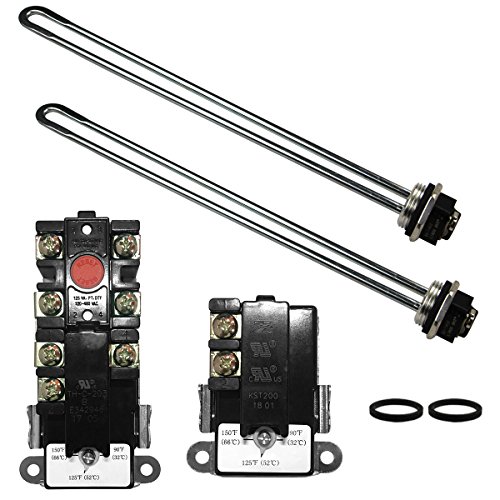
When selecting replacement parts for an electric water heater, verify the electrical ratings of your existing equipment. Most residential tanks operate on standard 240-volt circuits, though smaller point-of-use units may use 120 volts. Look for replacement kits that include both the upper and lower control dials along with new heating elements. Replacing all of these components at the same time prevents old, worn parts from straining your new controls.
Pay close attention to the physical mounting style and element construction. Quality replacement heating rods are typically crafted from dense copper or specialized alloy sheathing that resists scale buildup and dry firing. Check the wattage rating on your tank's manufacturer label, commonly 3,500 to 4,500 watts, and ensure the replacement components match those specifications. Always verify that the replacement control dials include an integrated high-limit safety reset button, which automatically shuts down power if internal water temperatures ever reach dangerous levels.

- BWP Score9.0
BWP Score is a ranking system developed by Bestwinterproducts.com. BWP score has no relationship or impact from any manufacturers or sales agent websites. Learn more
- BrandDROMIX
- BWP Score9.0
BWP Score is a ranking system developed by Bestwinterproducts.com. BWP score has no relationship or impact from any manufacturers or sales agent websites. Learn more
- BrandDROMIX

- BWP Score8.8
BWP Score is a ranking system developed by Bestwinterproducts.com. BWP score has no relationship or impact from any manufacturers or sales agent websites. Learn more
- BrandHUVOPUMO

- BWP Score8.6
BWP Score is a ranking system developed by Bestwinterproducts.com. BWP score has no relationship or impact from any manufacturers or sales agent websites. Learn more
- BrandTouwenzd

- BWP Score8.2
BWP Score is a ranking system developed by Bestwinterproducts.com. BWP score has no relationship or impact from any manufacturers or sales agent websites. Learn more
- BrandOstutry

- BWP Score8.2
BWP Score is a ranking system developed by Bestwinterproducts.com. BWP score has no relationship or impact from any manufacturers or sales agent websites. Learn more
- BrandLakkzoom

- BWP Score8.2
BWP Score is a ranking system developed by Bestwinterproducts.com. BWP score has no relationship or impact from any manufacturers or sales agent websites. Learn more
- BrandOrnalry

- BWP Score8.0
BWP Score is a ranking system developed by Bestwinterproducts.com. BWP score has no relationship or impact from any manufacturers or sales agent websites. Learn more
- BrandECOTINYMACH

- BWP Score7.6
BWP Score is a ranking system developed by Bestwinterproducts.com. BWP score has no relationship or impact from any manufacturers or sales agent websites. Learn more
- BrandHNCSYCY

- BWP Score7.2
BWP Score is a ranking system developed by Bestwinterproducts.com. BWP score has no relationship or impact from any manufacturers or sales agent websites. Learn more
- Brandxwdzswgs
Last update on 2026-09-30 / Affiliate links / Images, Product Titles, and Product Highlights from Amazon Product Advertising API
FAQs
What is the factory default temperature on most electric water heaters?
Most manufacturers ship electric water heaters preset to 140 degrees Fahrenheit. They use this higher default setting to reduce the risk of bacterial growth during shipping and storage and to maximize hot water delivery from smaller tanks. Most residential safety guidelines recommend turning this setting down to 120 degrees after installation to prevent scalding and save energy.
Will lowering my water heater temperature really lower my electric bill?
Lowering the temperature from 140 degrees to 120 degrees noticeably trims your monthly electricity usage. Standby heat loss slows down because there is less of a temperature difference between the water inside the tank and the room air outside. Heating rods also do not need to stay energized as long to heat incoming cold water up to the lower target.
How do I know the exact temperature if the dial has no numbers?
Many electric water heater dials only feature words like "Warm" and "Hot", or simple pointer lines without numerical degrees. As a general rule, the lowest marked setting is usually around 110 degrees, "Warm" is approximately 120 degrees, and "Hot" sits near 140 degrees. You can find the exact output by running a hot water faucet for two minutes and measuring the stream with an accurate digital cooking thermometer.
When should I stop and call a professional plumber or electrician?
You should stop and call a licensed professional if you see signs of scorched wiring, melted plastic, or rust and water leaking around the access panels. Also call an expert if the reset button trips repeatedly after being pressed, or if adjusting the dials does not change your water temperature at all. Working inside an electrical appliance carries real shock and fire risks if internal components are damaged.


Best Warm Winter Scarves 2026 For Cozy Comfort

Best Green Ski Goggles 2026 For Clear Vision On Slopes

12 Best Corner Electric Fireplace 2026: My Ultimate Guide To Pick One

Best Battery Powered Snow Blower 2026 For Effortless Snow Clearing

Best Ski Goggles Under 30 Inches For Crisp Vision And Comfort

Best Cooling Scarf 2026 For Instant Relief And Comfort

Fake Snow for Grass: Create a Realistic Winter Lawn Display

Dimplex Prism Wall Mount Fireplace: Sleek Heat With Modern Flame Style





