
Which Electric Heater Type Really Warms a Cold Garage?

Heating a freezing workspace is nothing to stress over once the power needs are clear. For warming the entire space, a 240-volt fan-forced ceiling heater is the best option because it pushes steady hot air across large, open floors. Anyone who only wants quick warmth right at a workbench will do much better with a radiant quartz heater plugged into a standard wall outlet.
The right choice comes down to garage wiring, wall insulation, and how the space gets used. Standard household outlets cannot provide enough power for a whole cold building, so heating every corner requires a dedicated heavy-duty line. Uninsulated walls and leaky garage doors also dump hot air outside, which makes direct radiant heat that shines straight onto people far more practical. Looking at these factors makes it easy to pick a setup that actually keeps the chill away.
Comparing the Three Main Garage Heater Types
Stepping into a freezing garage in winter makes quick weekend chores miserable. Cold tools numb your hands, motor oil thickens, and glues refuse to cure. Many homeowners try bringing a small portable heater from the house, only to realize it barely warms a few inches in front of its grille. Heating a garage is completely different from warming an insulated bedroom, and choosing the right unit starts with how different electric heaters produce warmth.
Fan-forced electric heaters use metal heating coils paired with a fan that pushes warm air across the room. As cool air enters the back, it passes over the heated coils and circulates into the garage. This continuous cycle creates steady convection heat. A fan-forced unit is the best choice if you want to bring the entire room up to a comfortable working temperature. But warming that much cold air demands substantial power, which is why whole-garage models almost always require a dedicated heavy-duty power line.
Radiant quartz heaters work differently by emitting gentle heat that warms people and furniture directly like sunlight. They feature dual quartz tubes behind a protective metal grille. When you stand in front of one, you feel soothing warmth on your skin immediately, even if the surrounding air stays chilly. Radiant quartz heaters are the smartest choice for drafty or uninsulated shops where you stay in one spot, such as a workbench. Because they do not heat the air itself, opening the garage door will not blow your warmth away.
Portable ceramic space heaters use a ceramic heating element that warms up in seconds, paired with a small blower fan. They plug into standard wall outlets and are easy to move around. While great for warming your boots under a desk, they cannot warm a full garage. They lack the airflow and heat output needed to overcome freezing concrete floors and cold masonry walls.
Power Limits and Insulation: Why Standard Outlets Struggle
Plugging a standard space heater into a wall outlet and expecting it to warm a two-car garage is a recipe for frustration. Most wall outlets in an American garage run on a standard 120-volt household circuit with a 15-amp breaker. Under continuous heating loads, safety rules restrict power draw to 80 percent of capacity. This caps standard heaters at 1,500 watts, pulling about 12.5 amps and generating roughly 5,100 British Thermal Units (BTUs) of heat per hour.
In a bedroom, 5,100 BTUs keeps you cozy. In a garage, that heat vanishes. The concrete floor acts as a massive thermal sponge, continuously pulling heat down into the cold ground. At the same time, thin metal doors and drafty seals dump freezing air into the space. Warming an uninsulated garage presents the same challenge as heating a breezy porch, which you can see in our guide on the best heater for enclosed porch spaces.
A 1,500-watt heater running in these conditions cannot keep up. It runs constantly, raises your electric bill, and might only raise room temperature by a couple of degrees. If you switch on a table saw or shop vacuum on the same circuit, the breaker trips instantly.
This is why whole-garage heating relies on a 240-volt power supply. A 240-volt line is a heavy-duty power line like an electric dryer outlet. By doubling the voltage, it safely powers 5,000-watt, 7,500-watt, or 10,000-watt heaters. A 5,000-watt model delivers about 17,060 BTUs per hour, more than triple a portable plug-in heater. That output quickly cuts through concrete chill and warms the entire garage. These units are hardwired (connected straight into household wiring without a plug) to dedicated 30-amp to 50-amp breakers.
Sizing Your Garage Heater: Wattage Checklist by Space and Ceiling Height
Sizing your heater requires balancing floor space, ceiling height, and insulation. Indoor rooms typically need about 10 watts of heating power per square foot. Garages need more because cold concrete and thin overhead doors shed heat quickly.
If your garage has finished, insulated walls and an insulated door, calculate 10 to 12 watts per square foot. If you have exposed wall studs, uninsulated sheet-metal doors, or drafty eaves, plan for 12 to 15 watts per square foot. High ceilings also matter. Because warm air rises, a 10-foot or 12-foot ceiling creates an overhead pocket of warmth that stays above your head unless pushed down.
Use this sizing checklist to match your workspace to the right heating output:
- Workbench spot warmth (any garage size): A 1,500-watt radiant quartz heater mounted overhead. It runs on a standard 120-volt outlet and warms your body directly.
- One-car garage (200 to 250 square feet): A 2,500-watt to 3,000-watt fan-forced unit on an insulated space, or 4,000 watts if uninsulated. Requires a 240-volt circuit.
- Two-car garage (400 to 500 square feet): A 5,000-watt hardwired fan-forced heater. This is the most common size, delivering roughly 17,000 BTUs to warm the entire space.
- Three-car garage or workshop (600 to 900 square feet): A 7,500-watt to 10,000-watt unit wired to a dedicated 40-amp or 50-amp 240-volt breaker.
- Ceilings over 10 feet: Add 15 to 20 percent more wattage and choose louvers that tilt downward to direct heat to the floor.
To avoid wasting electricity, select a heater with a digital temperature dial that clicks on and off to hold your set warmth. Learn how these controls operate in our guide to the best electric heater for garage with thermostat options.
Safe Placement and Mounting: Setting Up for Maximum Warmth
Garages hold tools, vehicles, sawdust, and flammable chemicals, making safe placement essential. A poorly placed heater can ignite fumes or leave your work area freezing. Follow these four installation steps for safe, balanced warmth.
- Mount the unit overhead on ceiling joists: Secure the bracket to solid framing with heavy lag bolts. Overhead mounting keeps floor space clear, protects cords from foot traffic, and keeps heating elements far away from gasoline fumes that settle near the floor.
- Direct airflow diagonally across the room: Aim the louvers toward the coldest wall or overhead vehicle door, tilted down at roughly a 45-degree angle. This pushes hot air to floor level so it circulates across your workspace before rising.
- Maintain a 3-foot safety buffer: Keep all items at least 3 feet (36 inches) away from the heater grille. Never store boxes, lumber, rags, or spray cans within this buffer, and verify that raised car hoods or garage doors do not swing into it.
- Wire directly into dedicated circuits without extension cords: Never power a garage heater through extension cords or power strips, which can overheat and spark fires. Plug 120-volt units directly into dedicated wall outlets, and hardwire 240-volt units into proper metal conduit.
What to Check Before Choosing Your Garage Heater
Before buying an electric garage heater, inspect your electrical panel and garage setup. Open your breaker box to confirm you have space for a double-pole breaker. A 240-volt heater needs two empty slots and sufficient panel capacity. If your panel is full or located far away, running new wiring may be costly. In that case, an overhead 120-volt radiant quartz heater focused directly on your workbench is a practical alternative.
Next, inspect the mounting brackets and directional louvers. Look for sturdy steel brackets that offer both horizontal swivel and vertical tilt so you can steer warmth where you stand without moving the unit.
Built-in safety controls are critical. Ensure the heater features an automatic overheat sensor that shuts the unit off if internal parts get dangerously hot from dust or restricted airflow. If you use a portable floor model, verify it has a tip-over safety switch that cuts power instantly if the unit is knocked over or tilted. Always confirm the product label displays a recognized North American mark like UL or ETL.
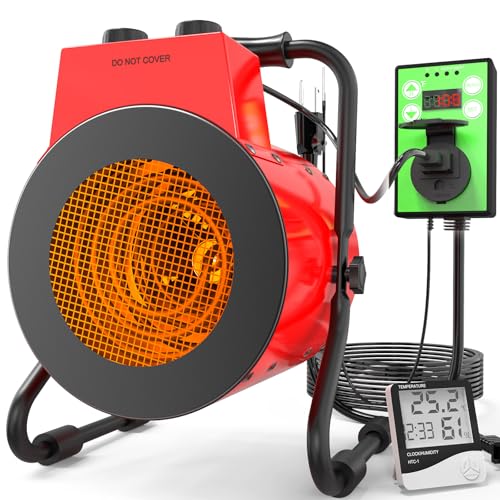
- BWP Score10.0
BWP Score is a ranking system developed by Bestwinterproducts.com. BWP score has no relationship or impact from any manufacturers or sales agent websites. Learn more
- BrandBuyplus

- BWP Score8.8
BWP Score is a ranking system developed by Bestwinterproducts.com. BWP score has no relationship or impact from any manufacturers or sales agent websites. Learn more
- BrandGiveBest

- BWP Score8.8
BWP Score is a ranking system developed by Bestwinterproducts.com. BWP score has no relationship or impact from any manufacturers or sales agent websites. Learn more
- BrandVEVOR

- BWP Score8.8
BWP Score is a ranking system developed by Bestwinterproducts.com. BWP score has no relationship or impact from any manufacturers or sales agent websites. Learn more
- BrandTEMPWARE

- BWP Score8.6
BWP Score is a ranking system developed by Bestwinterproducts.com. BWP score has no relationship or impact from any manufacturers or sales agent websites. Learn more
- BrandCOMFORT ZONE

- BWP Score8.4
BWP Score is a ranking system developed by Bestwinterproducts.com. BWP score has no relationship or impact from any manufacturers or sales agent websites. Learn more
- BrandTEMPWARE
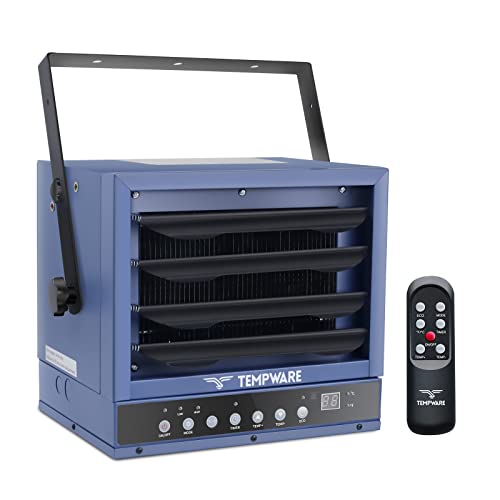
- BWP Score8.4
BWP Score is a ranking system developed by Bestwinterproducts.com. BWP score has no relationship or impact from any manufacturers or sales agent websites. Learn more
- BrandTEMPWARE

- BWP Score8.2
BWP Score is a ranking system developed by Bestwinterproducts.com. BWP score has no relationship or impact from any manufacturers or sales agent websites. Learn more
- BrandBEYOND HEAT

- BWP Score8.2
BWP Score is a ranking system developed by Bestwinterproducts.com. BWP score has no relationship or impact from any manufacturers or sales agent websites. Learn more
- Brandshinic

- BWP Score8.2
BWP Score is a ranking system developed by Bestwinterproducts.com. BWP score has no relationship or impact from any manufacturers or sales agent websites. Learn more
- BrandNewAir
Last update on 2026-09-29 / Affiliate links / Images, Product Titles, and Product Highlights from Amazon Product Advertising API
FAQs
Can a standard 120-volt plug-in heater warm a two-car garage?
A standard 120-volt heater cannot heat an entire two-car garage. These units max out at 1,500 watts, producing about 5,100 BTUs of heat, which is quickly lost through cold concrete floors and drafty doors. A 120-volt model works well only for spot warmth pointed directly at your workbench. Heating the full room requires a 240-volt unit rated at 5,000 watts or higher.
Do I need an electrician to install a 240-volt garage heater?
You should hire a licensed electrician unless your garage already has a dedicated 240-volt outlet matching your heater. Installing a 240-volt line requires adding a double-pole breaker to your main panel, pulling heavy-gauge wire, and securing safe connections. High-voltage wiring carries serious fire and shock hazards if done improperly. A professional ensures the installation meets local electrical codes.
Is it safe to leave an electric garage heater running unattended?
Hardwired ceiling heaters with built-in thermostats and overheat shutoffs can safely run unattended to keep tools from rusting or pipes from freezing. You must maintain at least 3 feet of clear space around the unit, away from flammable chemicals, sawdust, and storage boxes. Never leave portable floor heaters running unattended or overnight. Check that nearby smoke alarms are operational and functioning properly.


Best Warm Winter Scarves 2026 For Cozy Comfort

Best Green Ski Goggles 2026 For Clear Vision On Slopes

12 Best Corner Electric Fireplace 2026: My Ultimate Guide To Pick One

Best Battery Powered Snow Blower 2026 For Effortless Snow Clearing

Best Ski Goggles Under 30 Inches For Crisp Vision And Comfort

Best Cooling Scarf 2026 For Instant Relief And Comfort

Fake Snow for Grass: Create a Realistic Winter Lawn Display

Dimplex Prism Wall Mount Fireplace: Sleek Heat With Modern Flame Style





