
Which Electric Heater Type Warms a Large Room?

Check the ceiling height and drafts in the space before picking any unit. That room layout dictates how heat travels, making a convection panel heater the best choice for steady, silent whole-room warmth. Unlike small blowers that only warm what sits directly in front of them, convection models let rising warm air circulate naturally to fill an open living area or chilly basement evenly over several hours.
A few room quirks can shift that choice. Vaulted ceilings allow warm air to float uselessly out of reach, which makes a directional infrared heater a much smarter option for warming people directly. Oscillating ceramic fan towers work best for quick, short bursts of heat when coming in from the cold, though their blowers add steady background hum. Matching the heater style to the room layout keeps everyone comfortable without driving up the electric bill.
The 1,500-Watt Ceiling and Managing Heating Costs in Large Spaces
Every standard plug-in electric space heater sold for residential use in the United States shares the exact same power ceiling. Under standard electrical codes, a portable heater running on a typical 120-volt household circuit draws a maximum of 1,500 watts of electrical power draw. That 1,500-watt cap produces roughly 5,120 British Thermal Units (BTUs) of heat per hour. Whether a heater costs thirty dollars or three hundred dollars, it cannot legally or physically generate more raw heat from a standard wall outlet. Understanding this limit prevents unrealistic expectations when trying to warm a large living room, finished basement, or open-concept floor plan.
Heating contractors rely on a standard sizing rule of thumb: you need roughly 10 watts of heating power for every square foot of living space with standard eight-foot ceilings. That means a 1,500-watt heater can fully heat a closed 150-square-foot room from a chilly temperature up to a cozy warmth. In a room that measures 300, 400, or 500 square feet, a single plug-in heater cannot act as a complete central heating replacement. Instead, it serves as supplemental zone heating. It creates a comfortable pocket of warmth right where you sit, work, or sleep, allowing you to keep your main home thermostat lower without freezing in your favorite chair.
Operating a heater on its high setting draws 1.5 kilowatt-hours of electricity for every hour it runs. Depending on your local utility rates, running a heater continuously all day and night can cause electric bills to climb quickly. To manage power consumption without sacrificing comfort, look for heaters equipped with a digital temperature dial that clicks on and off to hold your set warmth. When you set a specific target, like 68°F or 70°F, the unit runs on high to reach that level and then shuts off or scales down its power draw automatically.
Using built-in timers and eco modes also prevents unnecessary energy waste. Setting a sleep timer ensures the unit turns off after you fall asleep under blankets, while lower power levels (such as a 750-watt low setting) maintain steady background comfort once the initial chill leaves the room. For spaces that shed warmth rapidly through uninsulated walls or large window banks, pairing an accurate internal sensor with targeted placement helps stabilize the room. You can see similar temperature control principles applied in electric heaters with thermostats, where steady cycling prevents cold concrete and drafts from draining excess power.
Convection, Ceramic, and Infrared: How Heat Moves Across Open Rooms
Because all plug-in heaters share the same 1,500-watt power ceiling, the primary difference between models comes down to how they deliver that heat into the room. Selecting the wrong heater style for your specific room layout leads to wasted electricity, uneven temperatures, and chilly seating areas. The three primary heating methods used in residential heaters are natural convection, fan-assisted ceramic, and direct infrared radiant heat.
Convection panel heaters and silent oil-filled radiators operate on rising warm air circulation. Cold air sits near the floor, enters through vents at the base of the heater, passes over heated internal aluminum fins or oil channels, and naturally rises into the room as it warms. This natural air movement creates a gentle, continuous cycle that gradually warms the entire air volume of an enclosed space. Convection heaters produce zero motor hum and do not stir up household dust or dry out indoor air. The trade-off is speed: natural convection takes twenty to forty minutes to noticeably warm a cold room. They work best in closed living rooms, dens, or bedrooms where you want steady, silent, lasting comfort over several hours.
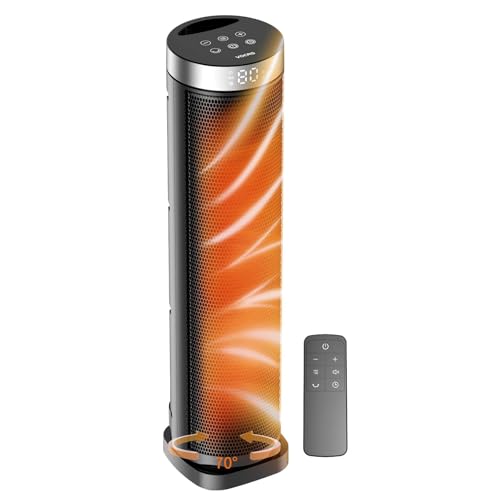
Ceramic heaters use a ceramic heating element that warms up in seconds, paired with an internal fan that pushes warm air across the room. These heaters are often shaped as tall, upright towers with wide oscillating grilles. As electric current passes through the ceramic plates, the material heats up almost instantly, and the motor pushes that warmth deep into the room. This makes ceramic fan heaters ideal for quick relief when you first walk into a cold room. The fan actively mixes the air, helping overcome temperature stratification where hot air floats to the ceiling while your feet stay freezing. But ceramic units do produce a steady background fan hum and can blow airborne dust, which may bother light sleepers.
Infrared heaters work completely differently by producing gentle heat that warms people and furniture directly like sunlight. Instead of trying to heat thousands of cubic feet of cold air, infrared waves travel straight through the room in a direct beam until they strike an object, wall, or person. The surfaces absorb the heat and re-radiate it into the immediate area. This direct delivery makes infrared the superior choice for high-ceiling rooms where convection heat simply drifts twelve feet overhead and gets wasted. Infrared is also the best choice for drafty spaces, uninsulated basements, and open rooms with open doorways, similar to how homeowners select heaters designed to warm drafty spaces where constant airflow would blow away warm air currents.
Use this quick room-matching checklist to identify which style fits your specific space:
- High, vaulted, or cathedral ceilings: Choose an infrared heater so warmth focuses directly on your body and seating area rather than floating up to the rafters.
- Drafty open layouts or unfinished basements: Choose an infrared heater or an oscillating ceramic fan tower that actively pushes heat into your immediate living zone before drafts carry it away.
- Enclosed family rooms or bedrooms: Choose a convection panel heater for silent, draft-free warmth that maintains an even temperature throughout the night without fan noise.
- Intermittent daytime use (like a home office): Choose a fast-acting ceramic tower with wide oscillation to heat your personal space in seconds without waiting for the whole room to warm up.
Safe Electrical Habits and Avoiding Tripped Breakers
A standard 1,500-watt space heater pulls approximately 12.5 amps of electricity during normal operation on a standard 120-volt circuit. In modern homes, living room and bedroom circuits are typically wired to 15-amp or 20-amp circuit breakers. Electrical safety standards require that continuous electrical loads not exceed 80 percent of a circuit's maximum capacity. On a standard 15-amp breaker, that safe continuous threshold sits at 12 amps (1,440 watts). Running a 1,500-watt heater on high pushes that breaker right to its limit. If you run a television, desktop computer, gaming system, floor lamp, or vacuum cleaner on that same circuit while the heater is running, the breaker will trip almost immediately.
Never plug a space heater into an extension cord, power strip, surge protector, or multi-outlet tap. Standard household extension cords and multi-plug strips contain thinner gauge internal wiring that cannot handle a continuous 12.5-amp current over several hours. The resistance inside an undersized cord builds up high heat, which can melt the plastic insulation, damage your wall receptacle, and create an immediate electrical fire hazard. Always plug your space heater directly into a dedicated wall outlet, and make sure the plug fits tightly into the receptacle without wobbling or slipping out.
Space heaters also require built-in safety features to protect your household from accidental fires. Look for a tip-over safety switch that cuts power instantly if the unit is knocked over or tilted by a child or pet. In addition, an automatic overheat sensor that shuts the unit off if internal parts get dangerously hot protects against internal component failures or blocked air intakes. Always maintain a strict 3-foot safety buffer: keep all curtains, upholstered furniture, bedding, blankets, area rugs, and loose paperwork at least 36 inches away from the heater on all sides.
Follow these numbered steps to set up and check your heater safely:
- Locate a dedicated wall outlet: Choose a wall receptacle on a circuit that does not share power with other high-draw appliances like microwaves, refrigerators, or hair dryers.
- Clear the 3-foot safety buffer: Measure at least three feet of open floor space around the front, sides, and rear of the heater, ensuring no drapes or furniture sit within range.
- Plug directly into the wall: Insert the plug straight into the wall socket until the prongs are fully seated, ensuring the power cord lies flat and uncovered along the floor.
- Check the plug temperature after twenty minutes: Place your hand on the plastic plug head and the wall outlet faceplate. If the outlet or cord feels hot to the touch, or if you smell hot plastic, switch the heater off, unplug it immediately, and call a licensed electrician to inspect the receptacle.
What to Look for in a Large Room Electric Heater
When selecting an electric heater to supplement the warmth in a large room, focus on functional designs that match your layout and daily routine. Start by looking for clear proof of safety. The heater packaging and product label should display recognized safety certification marks, such as UL, ETL, or CSA. These marks confirm that the heater has been independently evaluated to meet strict North American electrical and fire safety standards.
Thermostat precision makes a massive difference in everyday comfort. Heaters with digital temperature settings let you select an exact degree target, which allows the internal sensor to cycle the heating elements smoothly. Avoid basic heaters that only offer an uncalibrated minimum-to-maximum dial, as they force you to constantly adjust the knob to keep from getting too hot or too cold. For fan-driven ceramic towers, look for models with wide horizontal oscillation (70 degrees or wider) or vertical louver controls so warm air sweeps across the entire seating area rather than blowing directly at one spot.
Physical placement also dictates your choice. If floor space is tight or you want to keep the appliance completely out of reach of pets and crawling toddlers, consider a wall-mounted panel design. Wall-mounted units save floor area, eliminate tripping hazards from loose floor cords, and cannot be accidentally tipped over. For portable floor models, look for sturdy bases, cool-touch exterior housings, and built-in carry handles so you can reposition the heater safely once it cools down. Finally, consider convenient controls like remote controls or programmable timers, which let you adjust the temperature from across a large living room without getting up from your chair.

- BWP Score9.6
BWP Score is a ranking system developed by Bestwinterproducts.com. BWP score has no relationship or impact from any manufacturers or sales agent websites. Learn more
- BrandDREO
- BWP Score9.6
BWP Score is a ranking system developed by Bestwinterproducts.com. BWP score has no relationship or impact from any manufacturers or sales agent websites. Learn more
- BrandVOCRS

- BWP Score8.8
BWP Score is a ranking system developed by Bestwinterproducts.com. BWP score has no relationship or impact from any manufacturers or sales agent websites. Learn more
- BrandEdenPURE

- BWP Score8.8
BWP Score is a ranking system developed by Bestwinterproducts.com. BWP score has no relationship or impact from any manufacturers or sales agent websites. Learn more
- BrandAKIRES

- BWP Score8.8
BWP Score is a ranking system developed by Bestwinterproducts.com. BWP score has no relationship or impact from any manufacturers or sales agent websites. Learn more
- BrandDREO

- BWP Score8.8
BWP Score is a ranking system developed by Bestwinterproducts.com. BWP score has no relationship or impact from any manufacturers or sales agent websites. Learn more
- BrandDREO

- BWP Score8.8
BWP Score is a ranking system developed by Bestwinterproducts.com. BWP score has no relationship or impact from any manufacturers or sales agent websites. Learn more
- BrandGiveBest

- BWP Score8.6
BWP Score is a ranking system developed by Bestwinterproducts.com. BWP score has no relationship or impact from any manufacturers or sales agent websites. Learn more
- BrandAirNmore

- BWP Score8.0
BWP Score is a ranking system developed by Bestwinterproducts.com. BWP score has no relationship or impact from any manufacturers or sales agent websites. Learn more
- BrandBallu
Last update on 2026-09-30 / Affiliate links / Images, Product Titles, and Product Highlights from Amazon Product Advertising API
FAQs
Can a portable electric heater actually warm a 400-square-foot living room?
A standard 1,500-watt electric heater cannot raise the temperature of an entire 400-square-foot room from freezing to warm on its own. Because residential wall outlets limit portable heaters to 1,500 watts, one unit provides supplemental zone heat for roughly 150 square feet of primary comfort. In a large open room, an oscillating ceramic tower or a direct infrared heater works best to keep your specific seating area cozy while your central heating system maintains baseline house temperatures.
Which electric heater style is safest for homes with children and pets?
Wall-mounted convection panels and cool-touch ceramic tower heaters provide the highest safety in homes with active children and pets. Wall heaters mount safely out of reach, preventing curious hands or running animals from bumping into hot surfaces or knocking the unit down. For portable floor heaters, choose models built with cool-touch plastic exteriors, child-lock settings, an automatic overheat sensor that shuts the unit off if internal parts get dangerously hot, and a tip-over safety switch that cuts power instantly if the unit is knocked over or tilted.
Why does my space heater keep shutting off after running for thirty minutes?
Unexpected shutoffs almost always happen when the heater's automatic overheat safety switch detects that internal components have exceeded safe operating temperatures. This problem typically occurs when dust clogs the rear intake grille, when thick carpet blocks airflow underneath the unit, or when the heater sits too close to furniture or curtains. Turn the heater off, unplug it from the wall, allow it to cool down completely, and clear away any dust or nearby obstructions before plugging it back in.


Best Warm Winter Scarves 2026 For Cozy Comfort

Best Green Ski Goggles 2026 For Clear Vision On Slopes

12 Best Corner Electric Fireplace 2026: My Ultimate Guide To Pick One

Best Battery Powered Snow Blower 2026 For Effortless Snow Clearing

Best Ski Goggles Under 30 Inches For Crisp Vision And Comfort

Best Cooling Scarf 2026 For Instant Relief And Comfort

Fake Snow for Grass: Create a Realistic Winter Lawn Display

Dimplex Prism Wall Mount Fireplace: Sleek Heat With Modern Flame Style





