
Which Type of Heater Fits Your Living Room Layout?

Take a quick look at the doorways and ceiling height before choosing any plug-in unit. That room shape dictates how heat moves through the space. For a standard closed room with normal ceilings, an oscillating ceramic tower works best to spread warm air evenly around the seating area. Large, open floor plans with high ceilings need an infrared heater instead, which warms people and furniture directly rather than struggling to fill a massive volume of air.
Daily routines also change what fits best. Quick warmth for evening movie nights calls for a fast fan, while all-day lounging benefits from the steady, silent heat of an oil-filled radiator. Furniture clearance matters too, because every unit requires three feet of open floor away from sofa cushions, drapes, and wandering pets. The breakdown below explains how each option handles different room shapes, power limits, and electric bills.
Match your heater style to how you use your living room
Living rooms serve many purposes throughout the day. You might sit on the sofa for an hour to watch the evening news, or your whole family might spend an entire Saturday afternoon spread out across the rug. Because the space is used in different ways, picking the right heating method depends entirely on how fast you need heat and how long you plan to stay in the room.
The three most common heater styles for living areas are ceramic fan towers, infrared cabinets, and oil-filled radiators. Each one creates and shares warmth in a completely different way:
- Ceramic tower heaters: These units use a fast-heating ceramic block that warms up in seconds, paired with an internal fan that pushes warm air across the room. Because they stand tall and usually oscillate from side to side, they blow warm air right at couch height. They raise the air temperature in a standard room faster than any other portable option. The fan makes a gentle white-noise hum, similar to a desk fan on low speed, which works well if you want fast warmth for movie night.
- Infrared heaters: Instead of heating the air, an infrared unit creates gentle heat that warms people and furniture directly like sunlight. It shoots invisible light rays across the room that soak straight into your clothes, your sofa fabric, and your skin. The air itself stays relatively cool at first, but you feel warm the moment you sit in front of it. These heaters are nearly silent because they do not rely on heavy fan blowers, making them ideal if you hate background fan noise while watching television.
- Oil-filled radiator heaters: These look like classic old-fashioned home radiators on small caster wheels. Inside, electrical elements warm sealed diathermic oil that flows through steel fins. They take twenty to thirty minutes to get hot, so they will not help if you want instant relief after coming in from the cold. But once the fluid is hot, they provide a silent radiator heater that circulates steady, lasting warmth across the entire room. They produce zero fan noise and keep radiating heat for a long time even after the unit clicks off.
If you only spend an hour or two in your living room before bed, a ceramic tower gives you the fastest comfort without wasting energy. If you spend all day working or relaxing in the same room, an oil-filled radiator provides the most consistent, whisper-quiet baseline heat. If your living room is drafty or wide open, infrared beam heat keeps you comfortable without trying to warm hundreds of cubic feet of empty air.
Look at your ceiling height and open walls before deciding
Your living room floor plan determines whether heated air stays where you can feel it or escapes before it does any good. Air naturally separates by temperature: cold, dense air sits near your baseboards, while warm, light air floats toward the ceiling. In a small, closed living room with standard eight-foot ceilings and closed doors, a fan-forced ceramic heater easily pressurizes and mixes the air, raising the temperature from floor to ceiling in under twenty minutes.
The challenge comes with modern open-concept floor plans, cathedral ceilings, or living rooms that open directly into stairwells and kitchens. In a room with twelve-foot or vaulted ceilings, a standard fan heater pushes warm air straight up over your head. You can run a ceramic heater on high for three hours, yet your feet and knees will stay chilled on the sofa while thousands of BTUs gather uselessly near the ceiling fan. If you live in a home with open archways or uninsulated extensions, learning how to warm drafty spaces will help you spot where your precious warm air slips away.
In open spaces, the standard rule of thumb is roughly 10 watts of electric power per square foot of living space. A standard portable electric heater tops out at 1500 watts, which means it can serve as the primary heat source for a closed room measuring about 150 square feet. If your living room measures 300 or 400 square feet, no single plug-in electric space heater can heat the entire volume of air on its own.
For these large or tall spaces, change your goal from whole-room heating to personal zone heating. Place an infrared heater six to eight feet away from your main seating area, pointed directly at the couch. Because infrared waves travel straight through the air without rising, they heat your body and your furniture directly, completely bypassing tall ceilings and open hallways.
Protect your circuit breaker from heavy electrical loads
Living rooms are filled with electronics: flat-screen televisions, streaming devices, soundbars, gaming consoles, floor lamps, and phone chargers. Plugging a high-powered electric heater into this shared living space is the most common reason household circuit breakers trip in the winter.
Almost every full-sized portable electric heater draws 1500 watts on its high heat setting. In a standard 120-volt American home electrical system, 1500 watts equals about 12.5 amps of continuous electrical current. Standard household circuits in living rooms are wired for 15 amps total, managed by a single breaker switch inside your main electrical panel. Electrical safety standards require that a continuous load should never exceed 80 percent of a circuit's total capacity, which equals 12 amps on a 15-amp breaker.
This means a 1500-watt space heater running on high claims the entire safe capacity of that circuit all by itself. If your living room television pulls 150 watts, your soundbar pulls 50 watts, and two lamps pull another 60 watts from outlets tied to that same breaker, turning your heater to maximum will push the total draw over 15 amps. Within a few minutes, the breaker clicks off, plunging the living room into darkness.
To keep your power on and your home safe, follow these electrical rules:
- Plug directly into the wall receptacle: Never plug an electric space heater into an extension cord, power strip, surge protector, or multi-outlet tap. These accessory cords are rarely rated for continuous 12.5-amp loads. They can overheat internally, melt their plastic casings, and spark fires behind your entertainment center or sofa.
- Map your living room outlets: Plug a small table lamp into different wall outlets around the room, then switch off the living room breaker in your electrical box. Note which outlets lose power. If one wall outlet belongs to a separate circuit from the television wall, plug your heater there.
- Run on the lower power level: Most space heaters offer a Low setting (usually 750 watts or 1000 watts) alongside High (1500 watts). Running on Low drops the electric draw down to about 6 to 8 amps. This gives your television and lights plenty of breathing room on the circuit while still supplying continuous, gentle heat.
- Feel the wall plug after thirty minutes: When you first set up the heater, run it for half an hour, then switch it off and carefully touch the molded plastic plug where it enters the wall. A slight warmth is normal. If the plug or the plastic wall plate feels hot to the touch, unplug it immediately. That heat indicates a loose wire or worn brass contacts inside the wall box, and you should call a licensed electrician to inspect the receptacle before using it again.
Clear a three-foot safety buffer around all living room furniture
Living rooms contain more soft, flammable items than almost any other part of the home. Upholstered couches, foam cushions, synthetic throw blankets, area rugs, and hanging curtains can catch fire if exposed to constant, concentrated heat. Creating a secure buffer zone keeps your home safe and ensures the heater can draw in fresh air properly.
Walk through this safety checklist whenever you place or move a heater in your living room:
- Measure a three-foot clearance in every direction: Maintain at least 36 inches of empty floor space around the front, sides, and back of the heater. Keep it three feet away from sofas, coffee tables, armchairs, pet beds, and holiday trees. Never park a heater directly beneath hanging window drapes, because a sudden draft from an open window can blow fabric against the hot front grille.
- Set the unit on a hard, flat floor: Place your heater on hardwood, tile, laminate, or tight low-pile carpet. Never set a heater on thick shag rugs, fluffy floor mats, or soft furniture. High-pile carpet fibers can block the bottom air intake vents, causing the internal elements to overheat. Thick carpet can also prevent the tip-over safety switch from engaging if the unit wobbles.
- Keep electrical cords uncovered on the floor: Lay the power cord flat along the baseboard where people will not walk on it. Never run a heater cord underneath an area rug, couch cushions, or carpet runners. Foot traffic walking over a hidden cord can fray the internal copper wires, and the rug traps heat rising from the cord, creating a hidden fire danger.
- Pick cool-touch cabinets around active households: If you have toddlers, dogs, or cats running through the room, pick a tower or infrared cabinet with a cool-touch plastic exterior. Infrared cabinets and enclosed ceramic towers keep the glowing elements behind protective grilles, preventing accidental burns if a child brushes past during play.
- Verify the safety shutoff sensor: Look for a heater with an automatic tip-over safety switch that cuts power instantly if the unit is knocked over or tilted. Before settling in, place the heater on the floor, turn it on, and gently tip it forward a couple of inches. The heating element and fan should shut off immediately. If it keeps running while tilted, unplug it and do not use it.
Set your thermostat and ECO settings to avoid high power bills
Using a space heater to cut heating costs only works if you practice true zone heating. If you leave your central furnace running at 72 degrees and run a 1500-watt space heater at the same time, your winter electric bill will climb sharply. Space heaters save money only when they allow you to lower the temperature across the rest of the house.
Follow these practical steps to stay warm while keeping your power meter from spinning out of control:
- Dial down your whole-house central thermostat: Before sitting down for an evening in the living room, lower your central home thermostat by 3 to 5 degrees Fahrenheit (for example, dropping it from 70°F down to 66°F). This prevents your large central furnace from firing up to heat empty bedrooms, bathrooms, and hallways.
- Start on high, then throttle back: Turn the living room heater to its high 1500-watt setting for the first fifteen to twenty minutes to take the bite out of the room air. Once your seating zone feels comfortable, drop the power level down to Low or Medium. Running on a lower wattage maintains the warmth using roughly half the electricity.
- Engage the digital temperature dial: Avoid setting the heater to run continuously on maximum. Instead, set the digital thermostat to your preferred temperature, such as 68°F or 70°F. The unit will monitor room air, automatically cutting the heating element off when the target is reached and turning back on only when the room cools. Setting up steady warmth with an adjustable thermostat works on this exact cycling principle, saving kilowatt-hours throughout the day.
- Use the ECO mode for automated efficiency: Most modern digital space heaters feature an ECO setting. In this mode, a built-in precision sensor measures the ambient air temperature. If the room is far below your set target, it uses full 1500-watt power. As the room approaches your desired temperature, it automatically steps down to lower heat levels before cycling off, eliminating wide temperature swings and saving energy.
- Close off unused living room openings: Keep warmth concentrated where you are sitting. Close doors leading to hallways, laundry rooms, or formal dining spaces that nobody is using. If you have an open archway, hanging a heavy decorative curtain helps trap warm air inside the living room zone.
- Set the automatic shutoff timer before bed: It is easy to doze off during a late movie. Use the heater's built-in countdown timer, setting it for two or three hours. The unit will switch itself off automatically, ensuring you never pay to heat an empty living room all night long while everyone is asleep in bed.
Look for certified safety shutoffs and wide oscillation before you choose
When selecting a supplemental heater for a living room, look for units carrying verified safety certification marks like UL, ETL, or CSA on the manufacturer label. These marks verify that the electrical wiring, internal switches, and housing materials meet standard American fire safety guidelines. Avoid unbranded budget heaters that lack these basic certification stamps.
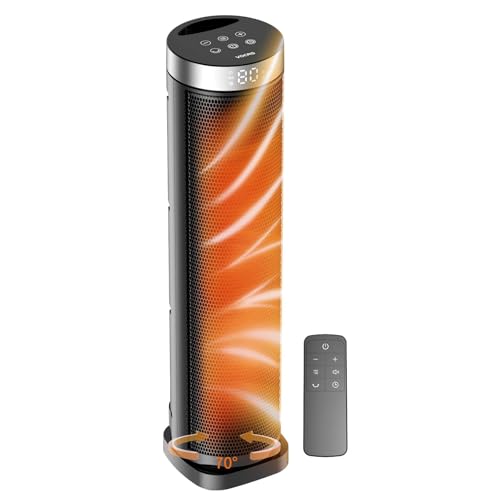
For closed living rooms, look for a ceramic tower heater featuring wide oscillation, ideally between 70 and 120 degrees. Wide oscillation sweeps warm air smoothly across multiple seating spots rather than blasting one person on the couch with uncomfortable dry heat. A model with top-mounted digital controls or an included remote control allows you to adjust temperature settings, timers, and oscillation angles from across the room without leaving your chair.
For open-concept layouts with tall ceilings, look for an infrared cabinet heater built with internal copper or quartz heating elements. These provide solid, reliable spot heating that will not get lost in your ceiling rafters. Whichever style fits your floor plan best, confirm that the model includes both an automatic overheat sensor and an internal tip-over switch, giving your household reliable comfort and complete peace of mind all winter long.

- BWP Score10.0
BWP Score is a ranking system developed by Bestwinterproducts.com. BWP score has no relationship or impact from any manufacturers or sales agent websites. Learn more
- BrandComDomus

- BWP Score10.0
BWP Score is a ranking system developed by Bestwinterproducts.com. BWP score has no relationship or impact from any manufacturers or sales agent websites. Learn more
- BrandFLOWBREEZE

- BWP Score9.8
BWP Score is a ranking system developed by Bestwinterproducts.com. BWP score has no relationship or impact from any manufacturers or sales agent websites. Learn more
- BrandDUOMIY

- BWP Score9.6
BWP Score is a ranking system developed by Bestwinterproducts.com. BWP score has no relationship or impact from any manufacturers or sales agent websites. Learn more
- BrandComDomus
- BWP Score9.6
BWP Score is a ranking system developed by Bestwinterproducts.com. BWP score has no relationship or impact from any manufacturers or sales agent websites. Learn more
- BrandVOCRS

- BWP Score9.6
BWP Score is a ranking system developed by Bestwinterproducts.com. BWP score has no relationship or impact from any manufacturers or sales agent websites. Learn more
- BrandComDomus

- BWP Score8.8
BWP Score is a ranking system developed by Bestwinterproducts.com. BWP score has no relationship or impact from any manufacturers or sales agent websites. Learn more
- BrandEdenPURE

- BWP Score8.8
BWP Score is a ranking system developed by Bestwinterproducts.com. BWP score has no relationship or impact from any manufacturers or sales agent websites. Learn more
- BrandDREO

- BWP Score8.8
BWP Score is a ranking system developed by Bestwinterproducts.com. BWP score has no relationship or impact from any manufacturers or sales agent websites. Learn more
- BrandDREO
Last update on 2026-09-29 / Affiliate links / Images, Product Titles, and Product Highlights from Amazon Product Advertising API
FAQs
Can a 1500-watt space heater warm an entire open-concept living room?
No, a single 1500-watt electric space heater cannot warm a large open-concept living room on its own. Standard electric heaters provide about 5,100 BTUs of heat, which is only enough to heat roughly 150 square feet of closed living space under standard conditions. In large open floor plans, use the heater for personal zone heating by aiming an infrared unit directly at your seating area to stay warm without trying to heat the entire room.
Which living room heater is safest around active kids and pets?
An infrared cabinet heater or an oscillating ceramic tower with cool-touch exterior housing is the safest choice for busy living rooms. These models enclose their red-hot heating elements behind protective grilles and flame-retardant outer plastics that stay safe to brush against. Always make sure any heater you choose has a sensitive tip-over safety switch that cuts electrical power instantly if a running pet or playing child knocks the unit over.
Can I plug my living room space heater into a heavy-duty surge protector?
No, you should never plug an electric space heater into a surge protector, power strip, or extension cord. Space heaters pull up to 12.5 amps of continuous current, which creates sustained electrical resistance that can easily overheat the internal contacts and light-gauge wiring inside power strips. Always plug the heater power cord straight into a permanent wall outlet that is in good physical condition.
Why does my living room cool down so quickly after turning off a ceramic heater?
Ceramic heaters warm up the air inside a room, but they do not heat up the solid objects very deeply. Because warm air is light and thin, it quickly slips through window drafts, cold exterior walls, and ceiling seams the moment the fan stops running. If you want heat that lingers in the room longer after the power clicks off, an oil-filled radiator heater warms up solid steel fins that slowly release heat into the room for up to an hour after shutting down.


Best Warm Winter Scarves 2026 For Cozy Comfort

Best Green Ski Goggles 2026 For Clear Vision On Slopes

12 Best Corner Electric Fireplace 2026: My Ultimate Guide To Pick One

Best Battery Powered Snow Blower 2026 For Effortless Snow Clearing

Best Ski Goggles Under 30 Inches For Crisp Vision And Comfort

Best Cooling Scarf 2026 For Instant Relief And Comfort

Fake Snow for Grass: Create a Realistic Winter Lawn Display

Dimplex Prism Wall Mount Fireplace: Sleek Heat With Modern Flame Style





