
Which Type of Water Heater Is Right for Your Home?

There is no single best hot water heater, but the right type is the one that matches your home's existing fuel lines and daily routine. What changes that answer immediately is whether your utility closet already runs on natural gas or an electric circuit. Standard storage tanks keep upfront replacement costs low, compact tankless units deliver endless hot water, and hybrid heat pumps slash monthly power bills.
Household size and daily habits shift the decision just as quickly. A busy home running two morning showers and a washing machine at once needs a heater that keeps up without sudden bursts of cold water. Available space and your breaker panel capacity also play a huge role, especially if switching to a new style requires extra venting or an electrical upgrade. Walking through how each design operates will help you pick the best fit without any costly installation surprises.
Comparing the Four Main Water Heater Types
Water heaters fall into four distinct categories, each designed around different household layouts, fuel hookups, and daily routines. Understanding how each system heats and stores water helps narrow down what works best for your home before you make a replacement purchase.
- Standard storage tank water heaters: These familiar units keep a reservoir of 30 to 80 gallons of water heated around the clock using either a natural gas burner at the base or electric elements inside the tank. They cost the least to purchase and swap out when plumbing connections already match, but they suffer from standby loss, which is heat escaping from a resting storage tank into the surrounding air when no taps are running.
- Tankless (on-demand) water heaters: Instead of holding standing water, a tankless unit fires up high-output heating elements or gas burners the moment you turn on a hot faucet. Cold water circulates through a compact heat exchanger, warming instantly before traveling to your shower or sink. They hang flat against an interior or exterior wall, saving valuable floor room while providing continuous hot water as long as your demand stays within the unit's capacity.
- Heat pump (hybrid) water heaters: A hybrid unit uses electricity to pull existing heat out of the surrounding air and transfer it directly into an insulated water storage tank, operating like a household refrigerator running in reverse. When hot water demand peaks, electric resistance elements kick in as a backup. They cut electric utility costs substantially compared to standard electric tanks, but they need a large, unconfined space like an open basement or garage to draw in enough ambient room warmth.
- Point-of-use water heaters: A point-of-use heater is a small unit installed directly under a single sink or inside an outbuilding. Available as miniature 2.5-gallon to 3.0-gallon storage tanks or tiny wall-hung boxes, these units plug into standard household wall outlets to heat water right at the fixture, eliminating long waits for water to travel from a central basement heater.
Storage Tank versus Tankless Systems
The choice between a traditional storage tank and a modern tankless model represents the most common decision homeowners face. While tankless units sound ideal because they never run out of warm water during back-to-back showers, the practical trade-offs come down to installation complexity, initial plumbing changes, and physical room.
A standard tank remains the easiest option if you want a fast, direct replacement. If your old tank fails on a weekend, a plumber can usually disconnect the cold water inlet, hot water outlet, and existing fuel line, then slide a new cylinder into the exact same footprint within a few hours. The trade-off is finite volume. If three family members shower in a row while the dishwasher runs, a 40-gallon or 50-gallon tank empties completely, forcing you to wait 30 to 45 minutes for the water to reheat.
Tankless heaters eliminate that waiting period by heating water continuously as it flows. You can run two showers and a washing machine simultaneously without running cold, provided your heater delivers enough GPM, which means gallons per minute (how fast hot water flows to your taps). Tankless units also free up 10 to 15 square feet of floor space because they mount directly to wall studs. But switching from a tank to a tankless system often requires significant venting and utility upgrades that raise initial installation expenses.
Maintenance needs also differ. Storage tanks require periodic flushing to clear loose sediment from the bottom. Tankless units have narrow copper or stainless steel water passages that require annual descaling with a vinegar solution, particularly if your home has hard water containing calcium and magnesium minerals.
Five Essential Checks to Make Before Selecting a New Water Heater
Before buying a new unit, walk through these practical steps to confirm that your home can support the heating method, power supply, and physical placement you want.
- Confirm your existing fuel supply and line sizing. Check whether your current utility hookup is natural gas, liquid propane, or electricity, and measure the pipe diameter at the heater. Natural gas tankless units require high gas volume, often needing a 3/4-inch gas line rather than the standard 1/2-inch line common on older storage tanks. Reason: Installing a unit that demands more fuel than your supply pipes can deliver causes burner errors and lukewarm water.
- Check your home breaker panel for spare capacity. Open your electrical service panel and check the main breaker rating, which shows total amperage, meaning electrical panel capacity to handle heavy power draw. Whole-home electric tankless units require massive electrical loads, frequently demanding two, three, or four dedicated 240-volt double-pole breakers. Reason: If your home has a 100-amp or 150-amp main electrical service, adding a whole-house electric tankless heater will overload the panel unless you pay for an expensive electrical panel upgrade.
- Inspect your existing exhaust venting setup. Look at the metal or plastic exhaust pipe leaving the top of your current fuel-burning heater. Standard atmospheric gas tanks vent naturally through metal chimneys up through the roof, whereas modern tankless and high-efficiency systems require sealed plastic pipe venting, meaning exhaust pipes carrying combustion fumes outside safely through a side wall. Reason: Connecting a modern high-efficiency gas heater to an old metal chimney can allow acidic moisture to rot the flue and leak dangerous carbon monoxide gas into your living space.
- Measure your floor area, ceiling height, and doorway clearances. Pull a tape measure across the installation room, noting the width of nearby doorways, stairs, and ceiling joists. Hybrid heat pump water heaters are often several inches wider and taller than old electric tanks because of the compressor unit mounted on top, and they require roughly 700 to 1,000 cubic feet of surrounding air space to function efficiently. Reason: Buying an oversized tank can leave you with a unit that cannot fit through the basement door or that starves for air inside a tiny utility closet.
- Identify your winter groundwater temperature. Run your cold water tap for two minutes in mid-winter and check the water temperature with a basic thermometer. Groundwater in northern states often enters homes at 40 degrees Fahrenheit, while southern ground water might stay at 65 degrees Fahrenheit. Reason: Tankless heaters are limited by how many degrees they can heat incoming water in real time, so colder incoming water significantly reduces the actual gallons per minute the heater can deliver to your showers.
Household Sizing and Daily Water Demand
Choosing the correct capacity ensures your showers stay warm without paying for unnecessary energy to heat water you never use. Sizing rules depend on whether you pick a storage tank or an on-demand unit.
For storage tanks, look at the yellow EnergyGuide label for the First Hour Rating. This figure measures how many gallons of hot water the unit can supply in one busy hour starting with a fully heated tank. General household sizing guidelines include:
- 1 to 2 people: A 30-gallon to 40-gallon electric tank or a 30-gallon gas tank provides plenty of water for morning showers and daily dishes.
- 3 to 4 people: A 40-gallon to 50-gallon tank handles overlapping routines, like running a shower while the kitchen sink is active.
- 5 or more people: A 55-gallon to 80-gallon tank, or a commercial-grade hybrid heat pump unit, prevents cold water disputes during busy evening hours.
For tankless water heaters, sizing is calculated entirely in gallons per minute (GPM). Add together the flow rates of all fixtures your family might run at the exact same moment. A standard low-flow showerhead draws roughly 1.5 to 2.0 GPM, a kitchen faucet draws about 1.0 to 1.5 GPM, and a clothes washer uses around 2.0 GPM. If your family frequently runs two showers and a washing machine at the same time, you need a unit rated for at least 5.0 to 6.0 GPM based on your local groundwater temperature.
Natural gas tankless units deliver the highest output for busy households. A high-capacity gas unit boasting 190,000 BTU and up to 8.5 GPM can support four to six taps simultaneously across showers, kitchen sinks, and laundry. Moderate gas units with an 80,000 BTU rating provide up to 3.6 GPM, which easily covers a single bathroom home or cabin without any waiting periods. If you manage a small living space or manufactured layout, check the specific venting clearances required for a heater for a mobile home to ensure proper combustion airflow.
Electric tankless models suit smaller demands or specific zones. A 14kW electric unit running on a 240-volt circuit supplies up to 3.38 GPM for two to three simultaneous fixtures, requiring a 60-amp double-pole breaker and 6 AWG wiring. Smaller 11kW electric units deliver up to 2.6 GPM for one or two points of use, running on a 50-amp breaker with 8 AWG wiring. For isolated sinks in an outbuilding or detached garage, you might pair small point-of-use heating with an electric heater for a garage with a thermostat to keep pipes warm and water flowing comfortably through freezing winter stretches.
Safe Installation, Venting Lines, and When to Call a Plumber
Water heaters combine high water pressure with extreme heat, high-voltage electricity, or combustible gas. Keeping your system safe requires proper safety parts, correct venting, and knowing when to hire a licensed professional.
Every pressurized water heater must have an operational temperature and pressure relief valve (T&P valve). This spring-loaded brass valve mounts directly on the top or upper side of the tank. If the water temperature exceeds 210 degrees Fahrenheit or the internal pressure climbs past 150 pounds per square inch, the valve lifts automatically to discharge scalding water through an attached drain pipe. Without a working T&P valve, an overheating tank can build pressure like a boiler and rupture violently. Never plug or cap a leaking relief valve.
Closed plumbing systems, where the city water meter has a one-way check valve or pressure-reducing valve, also require an expansion tank. As cold water heats up inside your water heater, it expands in volume. An expansion tank contains a flexible rubber bladder with pressurized air that absorbs this extra water volume, protecting your plumbing joints, faucet cartridges, and water heater lining from high pressure spikes.
Over time, mineral sediment settles at the base of tanks and inside heating coils. This layer acts as an insulating blanket, trapping heat at the bottom of the tank, causing popping sounds and lowering efficiency. Homeowners can use a dedicated flush tool verified for heat and pressure (such as tools with a UL verification mark) connected to an air source to clear loose clogs from drain valves. However, when flushing does not resolve rattling noises or heating loss, internal components may be coated in heavy limescale.
Always shut off the fuel valve or flip the electrical circuit breaker before inspecting or servicing any water heater. Call a licensed plumber or electrician immediately if you encounter any of these warning signs:
- A persistent rotten egg smell near a gas heater, indicating a dangerous natural gas or propane leak.
- Water leaking directly from the steel tank body or seams, which signals internal corrosion that cannot be patched.
- Electrical circuit breakers that trip immediately whenever the water heater elements engage.
- Soot marks, scorching, or melted plastic around the draft hood or electrical junction box.
- Planning a system conversion that involves cutting into main gas lines, resizing vent flues through the roof, or pulling building permits required by your local municipality.
What to Look for in Modern Water Heating Equipment
When you are ready to choose replacement water heating equipment, focus on features that simplify daily use, match your physical layout, and protect your home electrical system. Look for compact wall-mounted profiles if you need to reclaim basement or closet storage, and check that the unit includes clear digital controls for setting exact temperatures. A steady digital display allows you to limit outlet temperatures to 120 degrees Fahrenheit, preventing accidental scalding while keeping water comfortable for handwashing and showers.
Always confirm that any electrical unit carries recognized national safety marks, such as ETL or UL listings, on its data plate. Check the exact electrical connection specifications before purchasing. Compact electric units designed for single sinks run on 110-volt or 120-volt circuits, while larger whole-home electric models demand dedicated 240-volt double-pole breakers with heavy-gauge copper wiring. Taking time to verify these physical and electrical requirements upfront ensures your new water heater operates reliably for years to come.

- BWP Score9.2
BWP Score is a ranking system developed by Bestwinterproducts.com. BWP score has no relationship or impact from any manufacturers or sales agent websites. Learn more
- BrandRanein

- BWP Score9.2
BWP Score is a ranking system developed by Bestwinterproducts.com. BWP score has no relationship or impact from any manufacturers or sales agent websites. Learn more
- BrandSediment Buster

- BWP Score9.2
BWP Score is a ranking system developed by Bestwinterproducts.com. BWP score has no relationship or impact from any manufacturers or sales agent websites. Learn more
- BrandOrbek

- BWP Score8.6
BWP Score is a ranking system developed by Bestwinterproducts.com. BWP score has no relationship or impact from any manufacturers or sales agent websites. Learn more
- BrandRanein
- BWP Score8.2
BWP Score is a ranking system developed by Bestwinterproducts.com. BWP score has no relationship or impact from any manufacturers or sales agent websites. Learn more
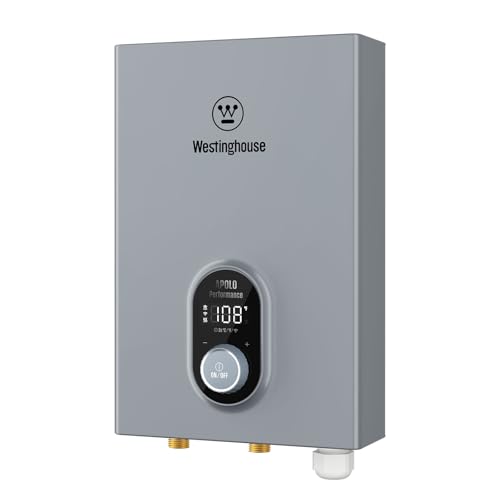
- BrandWestinghouse

- BWP Score8.2
BWP Score is a ranking system developed by Bestwinterproducts.com. BWP score has no relationship or impact from any manufacturers or sales agent websites. Learn more
- Brandxwdzswgs

- BWP Score8.0
BWP Score is a ranking system developed by Bestwinterproducts.com. BWP score has no relationship or impact from any manufacturers or sales agent websites. Learn more
- BrandAgust

- BWP Score8.0
BWP Score is a ranking system developed by Bestwinterproducts.com. BWP score has no relationship or impact from any manufacturers or sales agent websites. Learn more
- BrandECOTINYMACH
Last update on 2026-09-30 / Affiliate links / Images, Product Titles, and Product Highlights from Amazon Product Advertising API
FAQs
Will my existing electrical panel support an electric tankless water heater?
Most whole-home electric tankless units draw between 80 and 150 amps of electrical current, requiring two to four dedicated 240-volt circuit breakers. If your home has a standard 100-amp or 150-amp electrical service panel, your system will not support a whole-house tankless unit without an expensive panel upgrade. However, smaller single-fixture or point-of-use units drawing 30 to 60 amps can often fit into an existing panel that has available breaker slots.
Are heat pump hybrid water heaters worth the higher initial price tag?
Heat pump water heaters use up to 70 percent less electricity than standard electric storage tanks because they move heat rather than creating it with electric resistance coils. While the equipment costs more up front, the substantial drop in monthly electric bills often offsets the difference in equipment price over several years of use. They work best when installed in spaces with at least 700 cubic feet of air space and ambient temperatures that stay between 40 and 90 degrees Fahrenheit year-round.
Does a tankless water heater provide hot water instantly at the faucet?
A tankless water heater begins heating water on demand without delay, but it does not make hot water appear instantly at your faucet. The warm water still must travel from the heater through your household pipes to the fixture, pushing out the room-temperature water sitting in the lines first. If you want true instant hot water at a distant bathroom or kitchen sink, installing a small point-of-use heater directly under the cabinet eliminates that waiting time.
How can you tell when a water heater is about to fail completely?
Common warning signs of an aging water heater include rusty or discolored hot water, rumbling and popping sounds caused by trapped steam under heavy mineral sediment, and moisture pooling around the base of the tank. If water is dripping from the steel tank seams or fittings rather than a removable valve, the internal glass lining has cracked and corroded through. When a storage tank begins leaking from its shell, it cannot be repaired and requires immediate replacement before it bursts.


Best Warm Winter Scarves 2026 For Cozy Comfort

Best Green Ski Goggles 2026 For Clear Vision On Slopes

12 Best Corner Electric Fireplace 2026: My Ultimate Guide To Pick One

Best Battery Powered Snow Blower 2026 For Effortless Snow Clearing

Best Ski Goggles Under 30 Inches For Crisp Vision And Comfort

Best Cooling Scarf 2026 For Instant Relief And Comfort

Fake Snow for Grass: Create a Realistic Winter Lawn Display

Dimplex Prism Wall Mount Fireplace: Sleek Heat With Modern Flame Style





