
Which Type of Outdoor Patio Heater Fits Your Space?

Finding the right outdoor heater is far simpler than it seems, because your patio setup makes most of the choice for you. In wide-open backyards, tall propane umbrella heaters provide the strongest, widest circle of warmth. For covered porches, low awnings, or smaller balconies, electric infrared heaters are the safest and most dependable option.
A few practical details decide which path makes sense for your space. Overhead clearance is the biggest factor, as tall gas units demand plenty of open air above the reflector to stay safe. Wind speed also plays a huge role, because moving air blows gas heat away, while infrared warmth travels straight to your skin like natural sunlight. Fuel convenience matters too, from swapping twenty-pound propane tanks to simply flipping a wall switch. Here is how each heater style works so you can match the right warmth to your outdoor routine.
How do different outdoor heaters create warmth?
Outdoor heaters face a tough challenge because open air does not trap warmth. When a heater warms the surrounding air, that hot air rises and drifts away on the first light breeze. This process is known as convective heating. While warming the air works well in a sealed room, it fails on an open patio where heat quickly escapes into the sky.
Outdoor heating relies instead on radiant warmth, often called infrared heat. Radiant heat does not warm the air directly. Instead, it travels silently through space like sunshine, warming your clothes, skin, and patio chairs. Because these heat rays do not warm the air, they keep you cozy even when a gentle autumn breeze blows across your yard.
Heaters deliver this warmth through gas or electricity. Gas models burn fuel to heat a metal mesh or glass tube, broadcasting heat outward across your seating zone. Electric models use heating elements to project instant radiant warmth with a switch. Deciding between gas power and electric convenience depends on your patio layout and overhead cover.
Why choose a tall propane umbrella heater?
Tall propane umbrella heaters are the classic freestanding towers seen on restaurant patios. Standing seven to eight feet tall, they feature a wide metal reflector disc at the top resembling an umbrella. The base cabinet holds a standard twenty-pound propane cylinder, keeping the fuel concealed and weighting the unit near the ground.
These heaters are the most powerful choice for open backyards and unroofed stone terraces. They produce heat rated in BTU, which is a standard gas heat strength rating. A full-size umbrella heater pushes out between 40,000 and 50,000 BTU, spreading warmth across a circle up to twenty feet wide. The broad top reflector prevents heat from escaping straight up, bouncing radiant warmth down over your patio chairs.
Umbrella heaters need lots of open space. Because the burner head operates at high temperatures and vents hot exhaust, you must provide ample clearance, which is the mandatory empty safe space around the heater. They cannot be used under low wooden pergolas, fabric awnings, or covered porch ceilings where heat buildup creates fire risks.
They also require manual fuel management. A twenty-pound propane tank provides roughly eight to ten hours of warmth on high. When the cylinder runs empty, you must disconnect the fitting, lift the heavy tank, and swap it at a local store. For open decks without ceiling restrictions, a tall umbrella heater provides outstanding warmth.
Are pyramid flame heaters warmer than umbrella heaters?
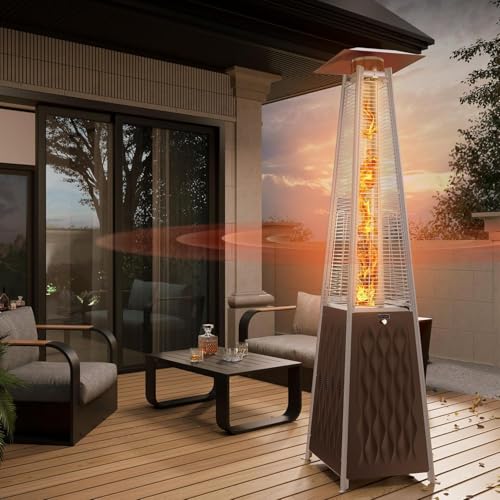
Pyramid patio heaters feature a four-sided metal frame with a tall quartz glass tube running up the center. When you light the burner, a column of live flame dances inside the clear tube, rising several feet into the air. They provide an eye-catching focal point, casting a warm golden glow across your patio furniture and evening guests.
While pyramid heaters look striking, they produce less downward warmth than standard umbrella towers. An umbrella heater directs almost all of its heat downward using its wide aluminum dome. A pyramid heater radiates gentle warmth outward along its vertical glass column, but a significant portion of that heat vents directly out the top chimney into the open air.
Many pyramid models carry high ratings near 48,000 BTU, yet you must sit closer to the glass column to feel the full effect. Their effective heating circle is smaller and more localized.
Choose a pyramid heater if your main priority is visual ambiance, evening light, and moderate warmth for relaxed conversations around a pool or garden lounge. If your patio faces cold winds and your goal is staying warm during late-autumn dinners, an umbrella reflector heater provides far more practical warmth.
When are electric infrared heaters your best option?
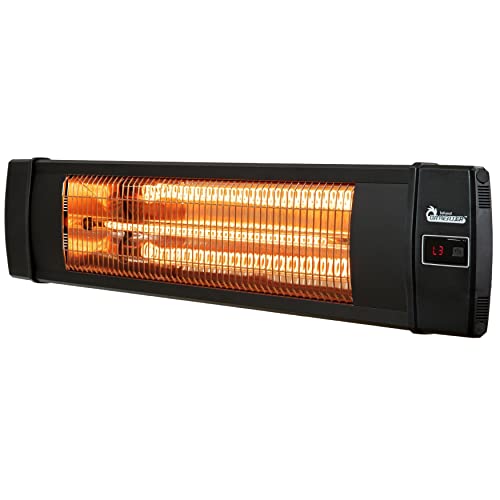
Electric infrared heaters are the best and safest choice for covered porches, screened gazebos, balconies, and under-awning dining areas. Gas heaters burn fuel, consume fresh oxygen, and produce toxic carbon monoxide fumes, making them unsafe in enclosed spaces. Electric heaters produce zero exhaust and zero open flames, allowing you to mount them safely beneath solid ceilings.
If you want to heat an enclosed outdoor area, reading about the best heater for enclosed porch spaces will show you why flame-free warmth is essential for semi-indoor living zones. Electric infrared heaters warm you directly like sunshine, so passing drafts do not steal your comfort. You can mount them permanently to ceiling beams or exterior walls, keeping your deck floor clear of bulky equipment.
Wall-mounted electric units also stay out of reach of running children and pets. They turn on instantly with a switch or remote control, sparing you from hauling heavy gas tanks.
The main limitation of electric patio heaters is household electrical capacity. Standard plug-in models draw 1,500 watts, pulling roughly 12.5 amps on a normal 120-volt household circuit. If your exterior outlet shares a breaker with other appliances, running your heater on high can trip the breaker. Much like setting up the best electric heater for garage with thermostat units, using a dedicated outdoor circuit ensures steady power on chilly nights.
When does a tabletop or compact heater work?
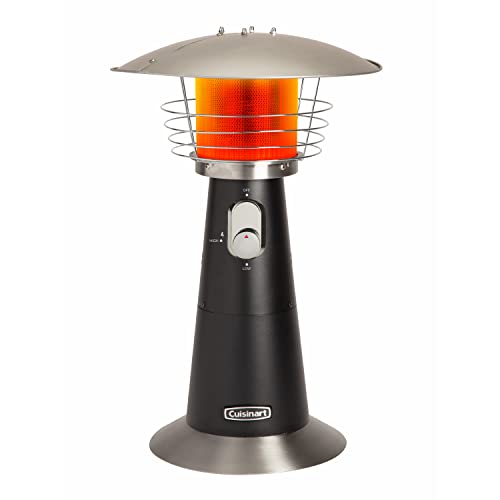
Tabletop heaters and small portable units solve the problem of heating tight outdoor dining areas where a tall tower cannot fit. Standing roughly two feet high, a tabletop gas heater sits directly on a patio table, providing around 10,000 to 11,000 BTU of targeted warmth.
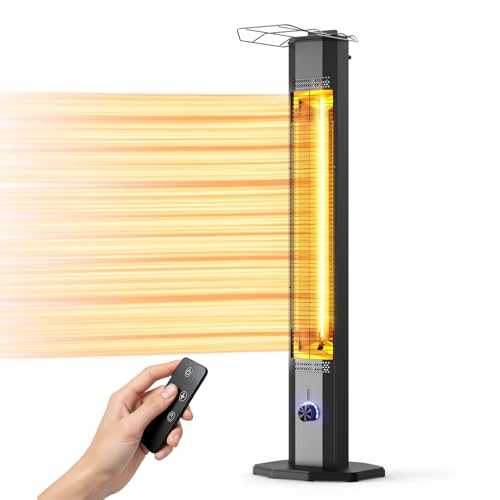
These compact gas heaters run on small one-pound propane canisters inside the base, or connect to a standard tank using an adapter hose. They warm a localized circle of roughly thirty square feet, which is just enough to take the chill off four people seated closely together for a meal. Compact electric tower heaters work similarly, offering spot heating for small balconies or reading nooks.
Portable units are easy to store in a shed or deck box when summer arrives, protecting them from rain and rust. Because they are lightweight, you can move them easily between your dining table and a seating bench.
The drawback of a tabletop unit is lost table space and reduced warmth. Placing a heater between plates leaves less room for food, and guests must avoid touching the hot protective wire guard. A tabletop unit warms your hands and chest, but it leaves your legs and feet cold in crisp weather.
What safety clearances and features do you need?
Outdoor patio heaters produce intense heat, making safe positioning and equipment checks critical. Ignoring clearances can scorch awnings, melt vinyl siding, or create fire hazards.
Follow this safety checklist whenever setting up and operating an outdoor heater:
- Verify overhead and side clearances: Clearance is the mandatory empty safe space around the heater where no combustible materials may sit. Tall propane umbrella models require at least three feet of open air above the reflector dome and two to three feet around the sides. Keep heaters away from dry branches, canvas canopies, vinyl siding, and railings.
- Check for an anti-tilt safety switch: An anti-tilt switch is an internal safety valve that turns off the gas or power if tipped past a safe angle. This safety device prevents accidental fires if wind or a pet knocks the heater over.
- Weight the base against strong winds: Tall umbrella heaters have wide top domes that catch wind like sails. Choose models with hollow base compartments that you can fill with sand or water, adding thirty to forty pounds of stabilizing ballast.
- Inspect gas fittings for leaks: Mix equal parts liquid dish soap and water in a spray bottle. Spray the solution onto the hose connections and cylinder valve before lighting. If soap bubbles expand, gas is escaping; shut the valve immediately and tighten the fittings before lighting.
- Use dedicated exterior electrical outlets: Always plug electric patio heaters into a weather-protected outdoor outlet with ground-fault protection. Never use lightweight household extension cords, which can overheat and melt under continuous 1,500-watt loads.
What should you check before buying a patio heater?
Selecting the right outdoor heater comes down to your overhead cover, your floor space, and how often you plan to use it. If you have an open patio under the clear sky, a tall propane umbrella heater gives you the highest raw heat output and complete freedom to position your warmth anywhere on the deck. Look for durable stainless steel or powder-coated finishes that resist moisture, along with sturdy wheels for easy repositioning.
If your patio has a permanent roof, an awning, or screened walls, choose an electric infrared heater designed for wall or ceiling mounting. Confirm that the electric model carries an outdoor water-resistance rating so it can safely handle windblown rain and damp evening air.
Finally, check the safety certifications printed on the product rating label before buying. Look for marks from recognized certification agencies like UL, ETL, or CSA to ensure the heater features reliable tip-over shutoffs and overheat protection. Measuring your ceiling clearances and confirming your electrical outlet capacity guarantees you choose a heater that keeps your patio warm and safe.

- BWP Score-
BWP Score is a ranking system developed by Bestwinterproducts.com. BWP score has no relationship or impact from any manufacturers or sales agent websites. Learn more
- BrandEAST OAK
- BWP Score-
BWP Score is a ranking system developed by Bestwinterproducts.com. BWP score has no relationship or impact from any manufacturers or sales agent websites. Learn more
- BrandCuisinart
- BWP Score-
BWP Score is a ranking system developed by Bestwinterproducts.com. BWP score has no relationship or impact from any manufacturers or sales agent websites. Learn more
- BrandDR. INFRARED HEATER
- BWP Score-
BWP Score is a ranking system developed by Bestwinterproducts.com. BWP score has no relationship or impact from any manufacturers or sales agent websites. Learn more
- BrandEAST OAK
- BWP Score-
BWP Score is a ranking system developed by Bestwinterproducts.com. BWP score has no relationship or impact from any manufacturers or sales agent websites. Learn more
- BrandNfccra

- BWP Score-
BWP Score is a ranking system developed by Bestwinterproducts.com. BWP score has no relationship or impact from any manufacturers or sales agent websites. Learn more
- BrandEAST OAK
- BWP Score-
BWP Score is a ranking system developed by Bestwinterproducts.com. BWP score has no relationship or impact from any manufacturers or sales agent websites. Learn more
- BrandJoanolga

- BWP Score-
BWP Score is a ranking system developed by Bestwinterproducts.com. BWP score has no relationship or impact from any manufacturers or sales agent websites. Learn more
- BrandAmazon Basics
Last update on 2026-09-29 / Affiliate links / Images, Product Titles, and Product Highlights from Amazon Product Advertising API
FAQs
Can you use a propane heater under a covered patio?
You should never use a standard tall propane patio heater under a covered patio, wooden awning, or low porch roof. Propane heaters vent hot exhaust gases straight upward and need several feet of empty overhead clearance to prevent ceiling fires. For covered or screened spaces, an electric infrared heater mounted to a wall or ceiling beam is the safest choice.
Does outdoor wind blow away patio heater warmth?
Wind quickly blows away warmth from heaters that heat the surrounding air. In contrast, electric infrared heaters emit radiant waves that travel straight through breezy air to warm your body directly. While tall propane heaters also generate radiant heat, strong gusts can cool the metal burner head and shrink your warm zone.
Can you plug an outdoor heater into an extension cord?
Avoid plugging a 1,500-watt electric patio heater into a standard household extension cord. Thin cords cannot handle high continuous current, which causes them to overheat, melt, or start a fire. If your outlet is too far, have an electrician install a dedicated outdoor outlet, or use a heavy-duty, outdoor-rated 12-gauge cord kept as short as possible.
How long does a twenty-pound propane tank last outside?
A standard twenty-pound propane tank powers a full-size patio heater for eight to ten hours of continuous use on high. Turning the control valve down to medium or low can extend runtime to twelve or fifteen hours. Keeping a second full tank stored in an outdoor shed ensures you never run out of fuel during an evening gathering.


Best Warm Winter Scarves 2026 For Cozy Comfort

Best Green Ski Goggles 2026 For Clear Vision On Slopes

12 Best Corner Electric Fireplace 2026: My Ultimate Guide To Pick One

Best Battery Powered Snow Blower 2026 For Effortless Snow Clearing

Best Ski Goggles Under 30 Inches For Crisp Vision And Comfort

Best Cooling Scarf 2026 For Instant Relief And Comfort

Fake Snow for Grass: Create a Realistic Winter Lawn Display

Dimplex Prism Wall Mount Fireplace: Sleek Heat With Modern Flame Style





