
Which Portable Electric Heater Type Fits Your Room?

Most people assume any small space heater will easily warm up a cold room, but different designs handle heat in completely different ways. For quick personal comfort at a desk or in a small sitting area, a ceramic fan heater is the best all-around choice because it blows soothing heat within seconds. However, if the goal is gentle, all-night warmth without any annoying fan buzz, an oil-filled radiator works much better by heating the surrounding air steadily and silently.
The right choice comes down to heating speed, noise tolerance, and the room itself. A whirring fan heater can disrupt light sleepers, while an oil radiator takes twenty minutes to get going. Damp spots like bathrooms also bring electrical risks that standard living room heaters cannot safely handle. Here is how the main heater types compare so you can match the right design to your space.
How Ceramic, Oil-Filled, and Radiant Heaters Compare
Every portable electric space heater sold for standard household use in the United States shares one fundamental limitation. When plugged into a standard 120-volt wall outlet on its highest setting, any electric heater draws a maximum of 1,500 watts of power. That comes out to roughly 12.5 amps on a standard 15-amp household circuit breaker. Because all electric resistance heaters convert electricity directly into heat with near total efficiency, a 1,500-watt ceramic fan heater, a 1,500-watt oil-filled radiator, and a 1,500-watt radiant heater all produce the exact same amount of raw heat energy, which is roughly 5,120 BTUs per hour.
The real difference is how that heat gets delivered into your space. One heater design warms your skin in seconds, another slowly blankets an entire bedroom in silent warmth, and a third cuts straight through cold drafts to warm you directly without bothering to heat the air in between. Choosing the wrong type means you either end up shivering while waiting for a cold room to heat up, lying awake listening to an annoying fan rattle, or watching your electric bill jump without feeling comfortable.
As a general sizing rule in American homes, portable space heaters provide about 10 watts of heating power for every square foot of living space. That means a standard 1,500-watt portable heater is built to handle a closed 150-square-foot room with standard eight-foot ceilings. In larger rooms, like an open living room or a kitchen, that same heater serves as supplemental zone warmth, designed to keep the immediate seating area comfortable so you do not have to turn up your central home thermostat for the whole house.
Ceramic Fan Heaters for Fast, Focused Warmth
Ceramic heaters are the most popular portable heaters on the market for good reason: they get hot almost immediately. Inside the housing sits a ceramic heating block (a self-regulating heating block made of ceramic stones that warms up in seconds when electric current flows through it). An electric fan sits directly behind this ceramic element, pushing room air across the hot ceramic fins and throwing a steady stream of heated air straight out into the room.
This design is ideal when you need instant, targeted relief from the cold. If you work from home and your basement desk feels like an icebox, a compact ceramic heater sitting near your feet will warm you up in less than five seconds. Many modern desktop ceramic units run at lower power settings, such as 500 watts or 750 watts, which keeps your personal work zone toasty without threatening to trip the 15-amp circuit breaker you share with your computer, monitor, and desk lamps. If you live off-grid or travel in a camper, choosing a low-draw heater for van life prevents sudden battery drain and breaker trips.
The primary advantage of ceramic heaters is speed and portability. Most weigh between two and four pounds, making them easy to carry from your home office during the day to your living room couch in the evening. Many models also include an oscillation feature that sweeps the airflow back and forth across a 70-degree arc, spreading warmth across a small seating area instead of baking your ankles in one spot.
The trade-off comes down to noise and air feel. Ceramic heaters rely on an internal fan spinning at high speeds, which produces a constant whirring sound. While some people enjoy that steady white noise, it can disturb light sleepers. The moving fan also tends to dry out the air in small spaces and can stir up household dust and pet dander. Once you switch a ceramic heater off, the heat vanishes almost instantly because the lightweight ceramic element holds very little residual warmth.
Oil-Filled Radiators for Quiet Bedroom Comfort
Oil-filled radiators take the opposite approach to heating. These units look like miniature versions of old-fashioned cast-iron radiators, featuring a series of hollow metal fins. Inside these fins is a permanently sealed reservoir of specialized diathermic oil. You never burn this oil, you never consume it, and you never have to refill or service it. When you turn the heater on, an internal electric element warms the oil, which circulates through the metal fins and heats the outer casing.
The hot fins warm the surrounding air through natural convection (warm air circulating naturally upward toward the ceiling while pulling cooler air off the floor). Because there is no internal fan pushing the air, oil-filled radiators run in absolute, total silence. You will hear an occasional gentle click as the built-in thermostat cycles on and off, but there is zero motor hum, zero vibrating plastic, and zero blowing air. This makes oil-filled radiators the undisputed champion for bedrooms, home nurseries, and quiet study areas.
The biggest benefit of an oil-filled radiator is its thermal momentum. Because the dense oil and heavy steel fins absorb and retain heat, it takes about 15 to 25 minutes for the heater to reach full temperature. But once it gets hot, it holds that heat for a very long time. When the thermostat detects that your bedroom has reached your target temperature and shuts the power off, the radiator continues releasing gentle, steady warmth into the room for another twenty to thirty minutes. This creates an even, consistent room temperature without the hot-and-cold spikes common with fan-driven heaters.
The downsides are weight and bulk. Oil-filled radiators are heavy, often weighing 15 to 20 pounds, though most come on caster wheels so you can roll them across hard floors. The metal exterior fins can also become quite hot to the touch, so you must keep curious toddlers and pets away from the unit. If you need a freezing bedroom warm in two minutes flat, an oil-filled radiator is not the right tool. But if you want to sleep soundly through an eight-hour winter night in cozy, uninterrupted silence, it is the best option available.
Radiant Heaters for Drafty Spots and Open Spaces
Radiant heaters, including quartz and infrared models, work on an entirely different physical principle than convection heaters. Instead of spending energy trying to warm the ambient air in a room, radiant heaters emit invisible infrared beams of thermal radiation. Think of stepping out from the cold shade into direct sunlight on an autumn afternoon: the outdoor air temperature has not changed, but your face and jacket instantly feel warm. Radiant heaters do the exact same thing indoors.
Inside a radiant heater, electricity flows through quartz tubes, carbon fiber filaments, or ribbon elements, causing them to glow orange and cast direct heat forward. That heat travels straight through the air in an unobstructed line until it hits a solid object: your legs, your armchair, your sweater, or your floorboards. Those solid surfaces absorb the thermal energy and warm up directly, which in turn slowly radiates warmth back into your immediate surroundings.
This direct heating method makes radiant models uniquely suited for drafty, uninsulated, or high-ceiling spaces where fan heaters fail completely. In rooms with drafty window frames, open stairwells, or uninsulated sunrooms, blowing hot air is frustrating because that air immediately rises to the ceiling or gets pulled out through drafty gaps. If you need to keep a cool three-season room comfortable, finding the right heater for an enclosed porch that relies on radiant warmth ensures you stay comfortable even when the air around you is cool and moving.
The limitation of radiant heating is line-of-sight coverage. If you are sitting directly in front of the heater, you feel wonderfully warm. But if you stand up and step two feet outside the heater beam, you are instantly back in the cold. Radiant heaters do not warm an entire room evenly, and because the heating elements glow brightly, they are usually too bright for comfortable bedroom sleeping.
Steps to Pick and Safely Place Your Portable Heater
- Measure your room square footage to match wattage capacity. Multiply the room length by width to find your square footage, then multiply that number by 10 to determine the minimum watts needed. A standard 1500-watt heater covers an enclosed 150-square-foot room; choosing an undersized heater causes it to run continuously on high, which wastes power and strains your electrical circuits.
- Select the heating mechanism that fits your daily routine. Pick a ceramic fan model if you need instant warmth for short periods at a desk or couch, an oil-filled radiator if you need quiet, steady heat for hours while sleeping, or a radiant heater if you sit in an open or drafty area. Matching the mechanism to your habits prevents frustrating temperature swings and annoying fan noise.
- Verify recognized safety marks on the electrical rating label. Check the label on the bottom or back of the heater for a recognized certification mark, such as UL (Underwriters Laboratories), ETL (Intertek), or CSA (Canadian Standards Association). These independent marks confirm that the heater internal wiring, tip-over switches, and fire-resistant plastics meet strict national safety standards.
- Plug the heater directly into a dedicated wall outlet. Always plug your heater straight into a wall receptacle rather than using an extension cord, power strip, or multi-outlet surge protector. Portable heaters pull 12.5 amps continuously, which easily overloads light-duty extension cords and power strips, melting the plastic housing and sparking electrical fires.
- Establish a strict three-foot safety buffer around the entire unit. Keep all bedding, curtains, upholstered furniture, rugs, throw pillows, and clothing at least 36 inches away from the front, sides, and rear of the heater. Maintaining clear space keeps nearby items from catching fire and ensures the heater air intake stays completely unobstructed so internal parts do not overheat.
- Confirm splash protection and an ALCI plug before using near moisture. If you intend to use a heater in a bathroom or laundry area, make sure the manufacturer explicitly rates the unit for damp spaces and equips it with an ALCI plug (a shock-protection plug built for wet areas that cuts electrical power in a fraction of a second if a short circuit occurs). Standard floor heaters placed near sinks or bathtubs create a deadly risk of electrocution.
What to Look for Before Choosing Your Portable Heater
When selecting a portable electric heater, focus on the specific safety controls and convenience features that make everyday use simple and worry-free. Start by confirming that any unit you consider includes a mechanical tip-over safety switch that cuts power instantly if a pet, child, or vacuum cleaner knocks the heater off balance. An internal overheat protection sensor is equally vital: this sensor constantly monitors internal temperatures and automatically shuts the unit down if an accidental blockage, like a dropped blanket or heavy dust buildup, traps heat inside.
Look for intuitive temperature controls rather than basic on-off switches. An adjustable digital thermostat allows you to set a precise target temperature in degrees Fahrenheit, prompting the heater to cycle off once the room is warm and saving noticeable money on your monthly electric bill. Multiple heat settings, such as a 750-watt low mode and a 1,500-watt high mode, give you the flexibility to maintain gentle warmth without continuously drawing maximum power from your electrical panel. If you plan to move the heater between rooms, check that the unit features a cool-touch exterior housing, an integrated carry handle, and a sturdy, non-wobbly base.
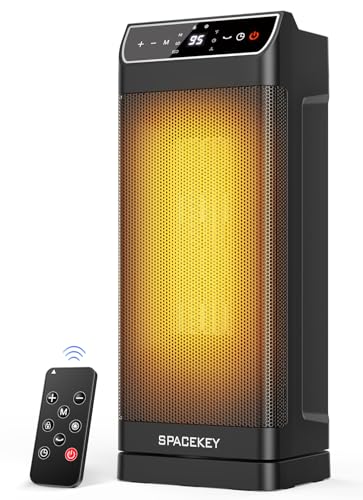
- BWP Score9.6
BWP Score is a ranking system developed by Bestwinterproducts.com. BWP score has no relationship or impact from any manufacturers or sales agent websites. Learn more
- BrandSpacekey

- BWP Score9.2
BWP Score is a ranking system developed by Bestwinterproducts.com. BWP score has no relationship or impact from any manufacturers or sales agent websites. Learn more
- BrandDREO

- BWP Score9.2
BWP Score is a ranking system developed by Bestwinterproducts.com. BWP score has no relationship or impact from any manufacturers or sales agent websites. Learn more
- BrandDREO

- BWP Score9.2
BWP Score is a ranking system developed by Bestwinterproducts.com. BWP score has no relationship or impact from any manufacturers or sales agent websites. Learn more
- BrandTUNISE

- BWP Score9.0
BWP Score is a ranking system developed by Bestwinterproducts.com. BWP score has no relationship or impact from any manufacturers or sales agent websites. Learn more
- BrandLasko

- BWP Score9.0
BWP Score is a ranking system developed by Bestwinterproducts.com. BWP score has no relationship or impact from any manufacturers or sales agent websites. Learn more
- BrandWINHL

- BWP Score8.8
BWP Score is a ranking system developed by Bestwinterproducts.com. BWP score has no relationship or impact from any manufacturers or sales agent websites. Learn more
- BrandBLACK+DECKER

- BWP Score8.8
BWP Score is a ranking system developed by Bestwinterproducts.com. BWP score has no relationship or impact from any manufacturers or sales agent websites. Learn more
- BrandAmazon Basics

- BWP Score8.6
BWP Score is a ranking system developed by Bestwinterproducts.com. BWP score has no relationship or impact from any manufacturers or sales agent websites. Learn more
- BrandLerat

- BWP Score8.6
BWP Score is a ranking system developed by Bestwinterproducts.com. BWP score has no relationship or impact from any manufacturers or sales agent websites. Learn more
- BrandASNUG
Last update on 2026-09-30 / Affiliate links / Images, Product Titles, and Product Highlights from Amazon Product Advertising API
FAQs
Which heater warms you up the fastest?
Ceramic fan heaters warm you up the fastest. Their internal ceramic elements reach full operating temperature within two to three seconds, and the motorized fan blows that hot air directly across your body immediately. Radiant heaters also provide instant surface warmth on your skin the moment the element begins to glow.
What is the safest heater type to run overnight in a bedroom?
Oil-filled radiators are the safest and most reliable option for overnight bedroom heating. They have no exposed glowing elements, operate completely silently without a spinning fan, and their sealed metal fins run at lower surface temperatures than bare electric wire coils. Always maintain a three-foot clearance from blankets and make sure the unit has automatic overheat and tip-over shutoff sensors.
Which electric heater uses the least power?
All electric space heaters use the same amount of electricity when running on their high 1,500-watt setting. To minimize power use, choose a heater that offers a true low-wattage setting (such as 500 or 750 watts) and a sensitive thermostat that shuts the element off when the room reaches your desired temperature. Radiant heaters also use less power in drafty rooms because they heat your body directly instead of wasting energy heating circulating air.
Can I use a regular portable heater in a bathroom?
No, you should never place a standard floor space heater in a bathroom. Bathrooms contain high levels of moisture, humidity, and standing water that can easily penetrate non-sealed heater grilles and create severe electrocution hazards. You must only use heaters specifically certified for bathroom use that include an integrated ALCI safety shutoff plug, and you must always keep the unit placed far away from bathtubs and sinks.


Best Warm Winter Scarves 2026 For Cozy Comfort

Best Green Ski Goggles 2026 For Clear Vision On Slopes

12 Best Corner Electric Fireplace 2026: My Ultimate Guide To Pick One

Best Battery Powered Snow Blower 2026 For Effortless Snow Clearing

Best Ski Goggles Under 30 Inches For Crisp Vision And Comfort

Best Cooling Scarf 2026 For Instant Relief And Comfort

Fake Snow for Grass: Create a Realistic Winter Lawn Display

Dimplex Prism Wall Mount Fireplace: Sleek Heat With Modern Flame Style





