
Which Type of Portable Heater Warms a Large Room?

Most people assume a bigger portable heater will blast enough heat to replace a central furnace in a chilly open room. That rarely works because standard household wall outlets cap every portable heater at the exact same electric power. For steady, lingering warmth that circulates across the whole area, an oil-filled radiator is the most dependable choice. To get quick personal comfort right where you sit, an oscillating ceramic tower works best by blowing heat straight toward you.
The right match depends on ceiling height and how you spend time in the space. Lofty ceilings trap rising heat near the roof, so a unit with an internal fan delivers warmth where you sit much better than a passive radiator. Available wall circuits also matter, as running heavy heaters alongside other appliances can trip a breaker. A closer look at how these heaters move air will help you find the right balance for your home.
Comparing the Two Top Contenders: Oil Radiators and Ceramic Towers
When you want to take the chill out of a spacious family room or open-concept living area, two styles of portable heaters work best: oil-filled radiators and oscillating ceramic towers. Both draw the standard maximum of 1,500 watts from your wall outlet, but they release that heat into your living area in completely different ways. Your choice depends on how you plan to use the space.
An oil-filled radiator acts like a silent radiator heater that circulates steady, lasting warmth. Inside its sealed metal fins is diathermic oil that never needs refilling or maintenance. An electric heating element warms this oil, which transfers heat to the fins and gradually warms the room. This process relies on natural convection, where warm air rises and cool air drops, setting up a steady circulation loop. It takes twenty to thirty minutes for an oil radiator to get hot. Once it warms up, the dense fins radiate heat for hours, holding a stable room temperature with zero fan noise and zero blowing air.
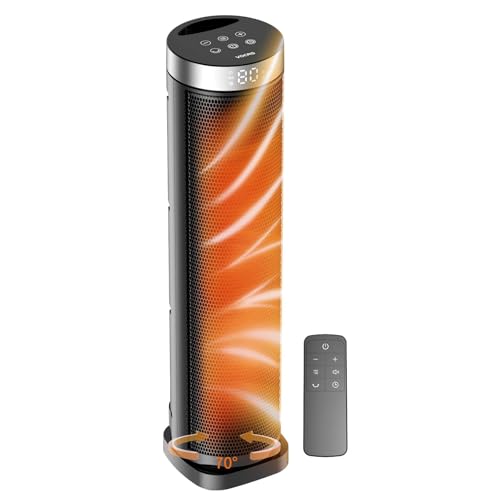
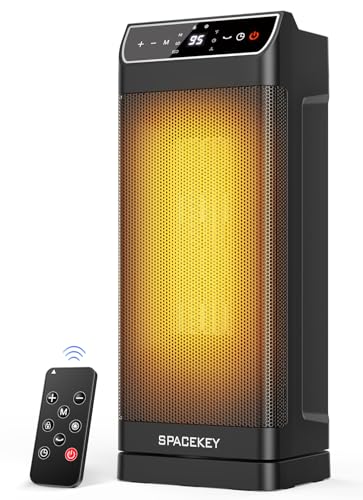
An oscillating ceramic tower heater takes the opposite approach. It relies on a ceramic heating element that warms up in seconds, combined with an internal fan that pushes warm air across the room. As the tower swings from side to side, it spreads warm air across your living space. You feel warm almost immediately after turning it on. If you come home cold and want fast comfort on the couch, a ceramic tower is the right pick. If you want steady background warmth throughout the evening without motor hum or dry breezes, an oil radiator is ideal.
The 1,500-Watt Wall Outlet Limit and Room Sizing
Before buying any heater, you should understand a fundamental rule of household electricity in the United States. Nearly every portable electric space heater sold for indoor use draws a maximum of 1,500 watts on its highest setting. Wattage is simply the electric power drawn from the wall outlet. In a standard home, regular outlets run on 120-volt lines connected to a 15-amp circuit breaker. A heater running on high draws about 12.5 amps. Safety standards limit continuous electrical loads to eighty percent of a circuit's total capacity, which caps standard household plug-in heaters at 1,500 watts.
Because of this power cap, every 1,500-watt heater produces roughly the same amount of raw thermal energy, about 5,120 BTUs. A small desktop heater, a tall tower, and an oil radiator all generate the same total heat on their highest setting. The difference is how they spread that heat into your space.
A helpful rule of thumb for heating living spaces with standard eight-foot ceilings is roughly 10 watts of power per square foot. That means a 1,500-watt heater can warm a closed 150-square-foot bedroom on its own. When you move that heater into a 300 to 500 square foot living room, it cannot replace your central heating furnace. Instead, it serves as a supplemental zone heater. It can lift the room temperature by several degrees or warm your immediate seating area, allowing you to turn down your central thermostat and save energy on your main heating bill.
How the Three Main Heater Types Perform in Open Spaces
Understanding how different heating elements interact with room air helps you choose the right model for your specific floor plan.
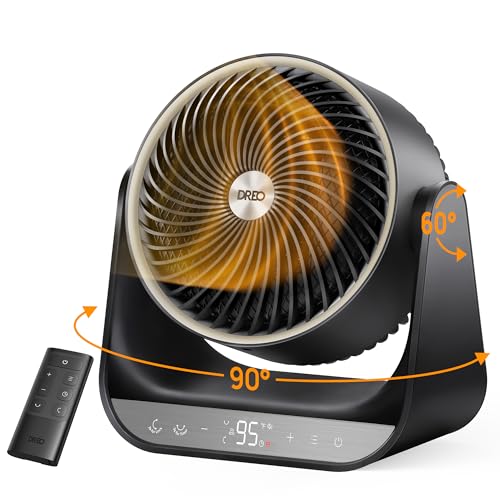
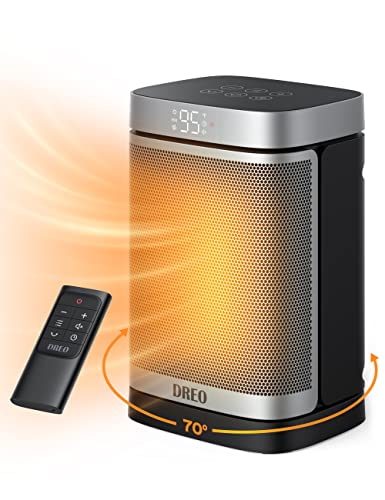
Ceramic fan-forced heaters use a blower fan to push air over heated ceramic stones. This fan throws warm air several feet into the room, making it easy to direct warmth toward a couch or work area. While these units warm you quickly, the fan does make a light hum. In very large rooms, fan-forced heat can feel uneven, leaving the area directly in front of the heater warm while corners remain chilly.
Oil-filled radiant heaters produce gentle, steady convection heat without a fan. Air warms as it touches the hot metal fins, rises to the ceiling, and pulls cool air up from the floor. This natural cycle spreads warmth evenly throughout the entire room over time. Because they have no fan motor, they are completely silent and do not stir up household dust. They work best in closed living rooms and bedrooms where you want quiet, continuous background heat.
Infrared heaters work by casting gentle heat that warms people and furniture directly like sunlight, rather than heating the air itself. When infrared waves hit your skin, clothes, or furniture, those surfaces absorb the warmth. If you have an open floor plan with drafty corners, high ceilings, or poor insulation, infrared heat is effective because the warmth does not blow away or collect at the ceiling. For drafty, hard-to-heat spaces, seeing how homeowners choose a heater for an enclosed porch shows how direct radiant heat overcomes cold drafts.
Five Steps to Position and Run Your Heater for Maximum Warmth
Placing your portable heater in the right spot makes a huge difference in comfort and efficiency. Follow these steps to get the most warmth out of every watt:
- Place the heater along an interior wall rather than under an outside window. Cold exterior walls and drafty window glass pull heat out of the air before it spreads. Setting your heater against an interior wall allows warm air to circulate across the room before cool outdoor temperatures can absorb it.
- Keep a clear three-foot safety buffer around the entire unit. Leave at least thirty-six inches of open space between the heater and any furniture, curtains, blankets, or walls. This space prevents fire hazards and gives the intake grilles plenty of open airflow to prevent internal overheating.
- Set your ceiling fan on low in reverse, spinning clockwise. Warm air rises naturally toward high ceilings, leaving the floor cold. Running a ceiling fan clockwise at low speed creates a gentle updraft that pushes warm air down the walls and into your seating area without creating a draft.
- Turn on oscillation and aim the heater across your main seating area. If you use a ceramic tower, running the oscillation feature sweeps warm air across a wide angle instead of heating just one spot. Directing that airflow toward your chairs or sofa provides instant comfort right where people sit.
- Close interior doors to adjacent, unused rooms. Open hallways and spare bedrooms act like cold air sponges that swallow up heat. Shutting interior doors keeps the warmth concentrated in your main living space so the room reaches a cozy temperature much faster.
Essential Electrical and Safety Rules for High-Power Heaters
Running a 1,500-watt appliance safely requires paying close attention to your electrical setup. Because the heater draws roughly 12.5 amps, it uses most of the capacity on a standard 15-amp breaker. If you run another high-draw appliance, like a microwave or vacuum, on the same circuit, the breaker will trip.
Always plug your space heater directly into a wall outlet. Never use a power strip, surge protector, or extension cord. Most power strips are built for low-draw electronics and can overheat, melt, or cause a fire when handling continuous high wattage.
After thirty minutes of use, touch the heater plug and the wall outlet plate. A slight warmth is normal, but if the plug or wall plate feels hot, turn off the heater and unplug it right away. A hot wall plate points to loose wiring or worn outlet contacts that need repair by a licensed electrician. In heavy-use areas like workshops, setting up a steady electric heater with a thermostat on a dedicated line is standard practice for this exact reason.
Always confirm your heater has essential safety switches built in. Look for a tip-over safety switch that cuts power instantly if the unit is knocked over or tilted. Also check for an automatic overheat sensor that shuts the unit off if internal parts get dangerously hot.
What to Look for When Choosing a Large Room Heater
When choosing a portable heater for a large living room or open floor plan, look for features that help spread and manage heat effectively. A tall oscillating ceramic tower heater works well because its height and sweeping motion distribute warm air across a wide area. Look for models with digital thermostats so the unit clicks off when your target temperature is reached, saving power throughout the day.
Multiple heat settings are also valuable. Having both a 1,500-watt high setting and a lower 900-watt or 1,000-watt setting lets you warm the space quickly on high, then switch to low to maintain that comfort using less power. Make sure the unit carries an ETL or UL safety certification mark on its label, and check that it includes both tip-over protection and an automatic overheat shutoff.

- BWP Score10.0
BWP Score is a ranking system developed by Bestwinterproducts.com. BWP score has no relationship or impact from any manufacturers or sales agent websites. Learn more
- BrandFLOWBREEZE
- BWP Score9.6
BWP Score is a ranking system developed by Bestwinterproducts.com. BWP score has no relationship or impact from any manufacturers or sales agent websites. Learn more
- BrandVOCRS

- BWP Score9.6
BWP Score is a ranking system developed by Bestwinterproducts.com. BWP score has no relationship or impact from any manufacturers or sales agent websites. Learn more
- BrandComDomus
- BWP Score9.6
BWP Score is a ranking system developed by Bestwinterproducts.com. BWP score has no relationship or impact from any manufacturers or sales agent websites. Learn more
- BrandDREO
- BWP Score9.6
BWP Score is a ranking system developed by Bestwinterproducts.com. BWP score has no relationship or impact from any manufacturers or sales agent websites. Learn more
- BrandSpacekey

- BWP Score9.2
BWP Score is a ranking system developed by Bestwinterproducts.com. BWP score has no relationship or impact from any manufacturers or sales agent websites. Learn more
- BrandDREO

- BWP Score9.2
BWP Score is a ranking system developed by Bestwinterproducts.com. BWP score has no relationship or impact from any manufacturers or sales agent websites. Learn more
- BrandDREO
- BWP Score9.2
BWP Score is a ranking system developed by Bestwinterproducts.com. BWP score has no relationship or impact from any manufacturers or sales agent websites. Learn more
- BrandDREO

- BWP Score8.6
BWP Score is a ranking system developed by Bestwinterproducts.com. BWP score has no relationship or impact from any manufacturers or sales agent websites. Learn more
- BrandLasko
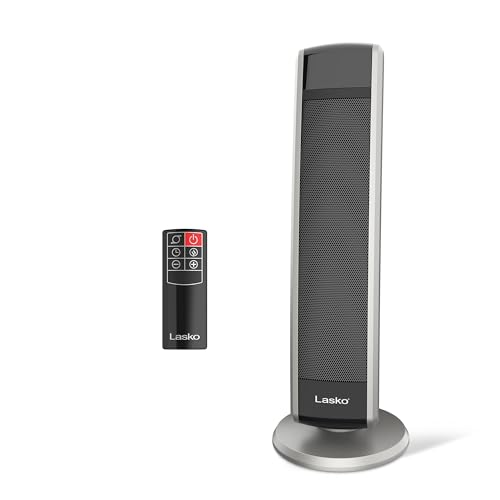
- BWP Score8.6
BWP Score is a ranking system developed by Bestwinterproducts.com. BWP score has no relationship or impact from any manufacturers or sales agent websites. Learn more
- BrandLasko
Last update on 2026-09-30 / Affiliate links / Images, Product Titles, and Product Highlights from Amazon Product Advertising API
FAQs
Can a portable heater warm a 400-square-foot living room by itself?
A standard 1,500-watt portable heater cannot heat a 400-square-foot room from freezing temperatures on its own. It produces about 5,120 BTUs, which is enough primary heat for roughly 150 square feet. In a larger space, it works best as supplemental zone heating to raise the temperature around your seating area by several degrees while your central furnace runs on a lower setting.
Which type of portable heater uses the least electricity over eight hours?
All electric space heaters use the same amount of electricity when running at 1,500 watts. However, an oil-filled radiator often costs less to run over several hours because its heavy metal fins retain thermal energy long after the heating element cycles off. Combined with an accurate thermostat, it cycles on and off less frequently than a fan-forced heater.
Will running a 1,500-watt heater trip my circuit breaker?
A 1,500-watt heater draws about 12.5 amps, which is close to the 15-amp limit of a standard household circuit. If you plug the heater into a circuit that is already powering a television, computer, or lighting, the combined load can easily trip the breaker. To prevent trips, plug the heater into an outlet on a circuit that is not running other high-power devices.
Is an infrared heater better than a ceramic heater for rooms with high ceilings?
Yes, an infrared heater is usually more effective in rooms with tall or vaulted ceilings. Fan-forced ceramic heaters warm the air, which immediately rises to pool near the ceiling where you cannot feel it. Infrared heaters emit radiant heat waves that directly warm people and furniture at floor level, keeping you comfortable regardless of ceiling height.


Best Warm Winter Scarves 2026 For Cozy Comfort

Best Green Ski Goggles 2026 For Clear Vision On Slopes

12 Best Corner Electric Fireplace 2026: My Ultimate Guide To Pick One

Best Battery Powered Snow Blower 2026 For Effortless Snow Clearing

Best Ski Goggles Under 30 Inches For Crisp Vision And Comfort

Best Cooling Scarf 2026 For Instant Relief And Comfort

Fake Snow for Grass: Create a Realistic Winter Lawn Display

Dimplex Prism Wall Mount Fireplace: Sleek Heat With Modern Flame Style





