
Which Space Heater Style Actually Warms a Large Room?

Convection heaters warm large rooms best. A flat wall panel or an oil-filled radiator draws cold air off the floor, warms it, and lets it rise to fill the whole area with steady, even heat. On the other hand, a tall oscillating ceramic tower works better if you need immediate warmth blown right toward your couch while the rest of the space catches up.
The right style depends on how drafty the room feels and how quickly you want relief. High ceilings and loose window seals swallow rising heat, making direct airflow from a fan more practical. Sound matters too, since oil radiators run completely silent while fan towers make a steady hum. Here is how each design handles cold air so you can keep your space warm without wasting electricity.
Convection Panels And Ceramic Towers Serve Two Different Heating Needs
Sitting in a chilly living room with high ceilings or wide doorways can feel frustrating. Central heating often leaves large rooms several degrees cooler than the rest of the house. Grabbing a compact personal heater rarely solves the problem because it only warms a few inches of air directly in front of its grille.
To make a large room comfortable, you have two practical choices: warm the entire volume of air steadily over time, or push a sweeping stream of hot air directly across your seating area.
Convection panel heaters excel at steady warmth through natural warm air circulation. Cool air enters the bottom, warms across internal heating elements, and gently rises. Over an hour or two, this natural air movement creates an even temperature from wall to wall without any noisy fan blowing.
Tall ceramic tower heaters excel at fast, direct warmth. They use a ceramic heating element that warms up in seconds, paired with an internal fan that pushes warm air across the room. When you sit on a sofa ten feet away, you feel direct warmth almost immediately. An oscillating fan spreads that heat back and forth across a wide arc rather than baking one corner.
If you want quiet background warmth for hours, a convection panel is the better choice. If you want fast relief while watching television, a tall ceramic tower heater is the right tool.
All Standard Portable Heaters Share The Same Power Limit
Many shoppers assume a larger space heater produces more heat than a compact one. In the United States, however, almost every electric space heater sold for standard household wall outlets produces the exact same maximum amount of heat.
Standard home wall outlets deliver electricity at 120 volts. For safety reasons, consumer heaters are capped at 1,500 watts of electrical draw on their highest heat setting. Wattage is simply the amount of electricity a heater draws from your home wiring. Because 1,500 watts converts to roughly 5,100 British Thermal Units (BTU) of heat per hour, a tiny plastic cube heater produces the exact same total thermal energy as a tall metal tower.
The difference between models is never raw heat output. The difference is how effectively the heater moves and distributes that heat into your living area.
As a general sizing rule in American homes, heating guidelines suggest roughly 10 watts of power per square foot of living space. A 1,500-watt space heater can act as the sole heat source for a closed 150 square foot room with standard eight-foot ceilings.
In a 300 or 500 square foot open living room, a 1,500-watt heater cannot replace your furnace. Instead, it serves as supplemental zone heating, raising the temperature around your seating cluster by several degrees so you stay comfortable without turning up the thermostat for the whole house.
Different Heater Styles Distribute Warmth In Completely Different Ways
Understanding how different heater designs move heat helps you avoid buying a unit that leaves you shivering. Electric heaters fall into three main categories: convection heaters, fan-forced ceramic heaters, and radiant heaters.
Convection heaters include flat wall panels and classic oil-filled radiators. An oil-filled radiator contains sealed thermal oil that gets hot and radiates warmth through metal fins, circulating steady, lasting warmth through natural airflow. These units produce zero fan noise, kick up no dust, and do not dry out room air. They also retain heat long after switching off. Their main drawback is patience: an oil radiator needs twenty to thirty minutes before you notice a change in the room.
Ceramic fan heaters work through active mechanical airflow. Inside the unit, electric current passes through a ceramic heating element that warms up in seconds. A blower fan pulls room air across the hot ceramic block and fires it into the room. You feel warm air within two or three seconds of turning the power dial. The trade-offs are steady fan hum and focused airflow that can feel breezy if you sit directly in front of the grille.
Radiant heaters work on a completely different principle. Instead of heating the air, radiant units emit gentle heat that warms people and furniture directly like sunlight. The heat waves pass through cold air, transferring warmth only when they strike a solid surface like your clothing or a sofa.
Radiant heaters do not raise the overall air temperature of a large room. But they are useful in drafty spaces where warm air escapes quickly. If you have an uninsulated room or an open entryway, a radiant heater aimed directly at your chair keeps you warm while the surrounding air stays crisp.
Ceiling Height And Drafts Decide Which Model Actually Works
Room architecture plays a major role in whether a space heater feels effective. A model that keeps a closed bedroom cozy can completely fail in a high-ceiling great room.
High or vaulted ceilings present a tough challenge because hot air naturally rises to the highest point in the room. If you run a passive convection panel in a room with twelve-foot ceilings, the hot air floats straight to the ceiling joists while your feet stay cold. For high ceilings, choose a tall oscillating ceramic tower. The fan pushes warm air horizontally across the floor level, keeping heat down where you sit before it drifts upward.
Open floor plans also dilute warm air quickly. In a combined kitchen and family room, there are no interior doors to trap warmth. Placing a ceramic tower on an oscillating setting keeps warm air moving around your furniture cluster. Oscillation sweeps airflow back and forth across 70 degrees or more, mixing the air so one person does not overheat while someone across the coffee table shivers.
Drafty spaces and cold exterior walls require a targeted approach. Cold glass windows create falling curtains of cool air that spill across your floor. Placing a flat convection panel heater near a cold exterior wall helps counter this chill by warming that air as it enters.
In poorly insulated spaces, standard convective heaters struggle because drafts carry warm air away before the room equalizes. Looking into specialized options like the best heater for an enclosed porch helps you understand how directional heat overcomes drafty conditions. Similarly, if you need to heat an uninsulated workspace with cold concrete floors, reviewing the best electric heater for garage with thermostat controls shows why heavy-duty blowers are required to counteract intense cold.
Large Room Heaters Require Dedicated Outlets And Clear Space
Space heaters draw substantial electrical current, making basic fire and electrical safety critical in a large living area.
A standard 1,500-watt heater running on high draws about 12.5 amps on a 120-volt circuit. Most living rooms and bedrooms are wired with standard 15-amp circuit breakers. That leaves only 2.5 amps of spare capacity on that entire circuit. If you plug a 1,500-watt heater into an outlet on the same circuit running a television, soundbar, and floor lamps, you will likely trip the breaker.
To prevent tripped breakers, always plug your space heater into a dedicated wall outlet that does not share its circuit with other high-draw appliances. Never use an extension cord, power strip, or surge protector with a space heater. Most consumer extension cords cannot carry a continuous 12.5-amp load for hours. The internal wires can overheat, melt their plastic insulation, and spark a fire.
Proper physical placement protects your home and furniture. Always follow the 3-foot safety buffer:
- Keep the heater at least 3 feet (36 inches) away from curtains, bedding, upholstered furniture, and paper.
- Place the unit on a flat, level, hard surface where it cannot tip over.
- Keep pet beds and toys outside the clearance zone to prevent contact with hot grilles.
Look for built-in protection features before turning on any portable heater. A tip-over safety switch that cuts power instantly if the unit is knocked over or tilted is essential in busy living rooms. The heater should also include an automatic overheat sensor that shuts the unit off if internal parts get dangerously hot due to blocked air intake grilles.
Pay attention to how your electrical equipment behaves during use. If the wall outlet feels hot to the touch, if you smell hot plastic, or if the cord prongs feel scorching, turn the unit off immediately. Unplug it, allow it to cool completely, and contact a licensed electrician to inspect your household wiring.
Smart Features Ensure Efficient Warmth In Large Living Spaces
Finding the best heater style for a large room requires balancing your heating priorities with your room layout. Before selecting a unit, evaluate several essential design features to ensure you get comfortable warmth without wasting electricity.
First, look at the physical format of the heater. For living rooms with standard floor layouts, a tall oscillating tower heater provides excellent coverage. The vertical height discharges air across a broader plane than a squat floor cube, warming your legs and torso simultaneously while taking up minimal floor space. For bedrooms or quiet dens, a slim convection panel that stands on stable feet or mounts to a wall provides silent, gentle heat that will not disrupt sleep or conversation.
Second, check the thermostat controls. A digital temperature dial that clicks on and off to hold your set warmth is far more efficient than a basic manual dial. A digital thermostat monitors ambient room temperature, cycling the heating element off when your room reaches your target warmth and kicking back on when the temperature drops. This prevents running continuously at maximum power, keeping electric bills under control.
Third, inspect the power levels and heat settings. Look for models offering multiple heat settings, such as 750-watt low power and 1,500-watt high power. Starting on high to take the initial chill out and then dropping down to low maintains comfort while drawing roughly half the electrical current, reducing breaker strain.
Fourth, examine the oscillation angle and fan sound ratings. If you choose a fan-forced ceramic tower, a wide oscillation sweep of 70 degrees or more is vital for circulating air across a large seating area. Look for quiet fan engineering with sound ratings under 30 decibels on lower settings.
Finally, verify the certification label. Always check the manufacturer label on the housing to confirm the unit carries an established safety listing from a nationally recognized safety organization, such as UL or ETL. This confirms the heater complies with strict North American electrical and fire safety standards.

- BWP Score9.6
BWP Score is a ranking system developed by Bestwinterproducts.com. BWP score has no relationship or impact from any manufacturers or sales agent websites. Learn more
- BrandDREO
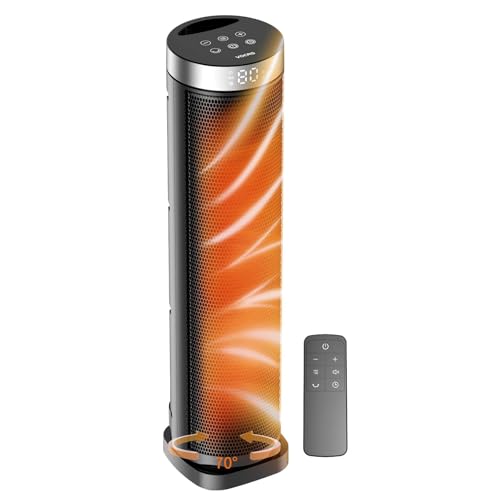
- BWP Score9.6
BWP Score is a ranking system developed by Bestwinterproducts.com. BWP score has no relationship or impact from any manufacturers or sales agent websites. Learn more
- BrandVOCRS
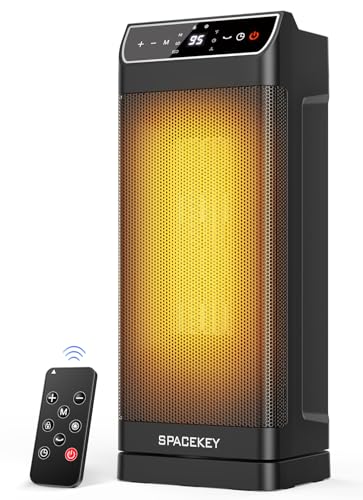
- BWP Score9.6
BWP Score is a ranking system developed by Bestwinterproducts.com. BWP score has no relationship or impact from any manufacturers or sales agent websites. Learn more
- BrandSpacekey

- BWP Score9.2
BWP Score is a ranking system developed by Bestwinterproducts.com. BWP score has no relationship or impact from any manufacturers or sales agent websites. Learn more
- BrandDREO

- BWP Score8.8
BWP Score is a ranking system developed by Bestwinterproducts.com. BWP score has no relationship or impact from any manufacturers or sales agent websites. Learn more
- BrandDREO

- BWP Score8.8
BWP Score is a ranking system developed by Bestwinterproducts.com. BWP score has no relationship or impact from any manufacturers or sales agent websites. Learn more
- BrandDREO

- BWP Score8.6
BWP Score is a ranking system developed by Bestwinterproducts.com. BWP score has no relationship or impact from any manufacturers or sales agent websites. Learn more
- BrandVerminget

- BWP Score8.0
BWP Score is a ranking system developed by Bestwinterproducts.com. BWP score has no relationship or impact from any manufacturers or sales agent websites. Learn more
- BrandBallu
Last update on 2026-09-29 / Affiliate links / Images, Product Titles, and Product Highlights from Amazon Product Advertising API


Best Warm Winter Scarves 2026 For Cozy Comfort

Best Green Ski Goggles 2026 For Clear Vision On Slopes

12 Best Corner Electric Fireplace 2026: My Ultimate Guide To Pick One

Best Battery Powered Snow Blower 2026 For Effortless Snow Clearing

Best Ski Goggles Under 30 Inches For Crisp Vision And Comfort

Best Cooling Scarf 2026 For Instant Relief And Comfort

Fake Snow for Grass: Create a Realistic Winter Lawn Display

Dimplex Prism Wall Mount Fireplace: Sleek Heat With Modern Flame Style





