
Are Gas or Electric Pool Heaters More Efficient?

Electric heat pumps are far more energy-efficient than gas pool heaters because they transfer warmth from the surrounding air rather than burning fuel. Gas heaters change the equation if you need to heat water quickly in cold weather. While an electric heat pump sips power to maintain a steady temperature day after day, a gas burner creates intense heat on demand to warm a cold pool in just a few hours.
The right choice comes down to your swimming habits, local climate, and utility rates. Heat pumps lose their heating power when outdoor temperatures drop below 50 degrees Fahrenheit, while gas units run reliably in freezing conditions. Keeping a pool warm every day favors the low running cost of electric, while occasional weekend parties often favor gas. Here is how both systems compare so you can choose the right heater without running into surprise energy bills.
The Short Version
- Electric heat pumps are far more energy-efficient: By pulling warmth from outdoor air rather than burning fuel, heat pumps transfer up to five times more heat energy than the electricity they consume.
- Gas heaters warm water much faster: Natural gas and propane burn hot and fast, making gas heaters ideal if you want to heat a chilly pool or spa quickly on short notice.
- Outside weather sets the boundary: Heat pumps lose efficiency when air drops below 50 degrees Fahrenheit, while gas heaters produce steady heat in any climate.
- Your swim schedule dictates your costs: Maintaining steady daily warmth is much cheaper with a heat pump, while heating a pool only on occasional weekends costs less with gas.
Efficiency Basics: Why Moving Heat Beats Burning Fuel
To understand pool heater efficiency, you have to look at how each system produces warmth. Many people assume electric pool heaters work like a resistance heater (heating water directly with an electric element like a kettle). While small electric elements exist for portable spas, using them on a full-size pool draws massive electricity and creates overwhelming utility bills.
Instead, efficient electric pool heating relies on an electric heat pump (a machine that pulls warmth from outdoor air). A heat pump works like a reverse air conditioner. A fan pulls outside air across an evaporator coil filled with liquid refrigerant. That refrigerant captures heat from the air, warms up, and passes through a compressor that concentrates it into hot vapor. Cooler pool water flows past this hot vapor inside a heat exchanger, absorbs the warmth, and returns to your pool.
This process changes the efficiency math completely. Heating power is measured in BTU (measurement of heating power, or British Thermal Units). Heat pump efficiency is measured by COP (rating showing how much heat you get per watt of electricity, or Coefficient of Performance). Most heat pumps have a COP between 4.0 and 6.0 in mild weather. That means for every unit of electricity the unit draws, it delivers four to six units of heat into your water, yielding 400 to 600 percent energy efficiency.
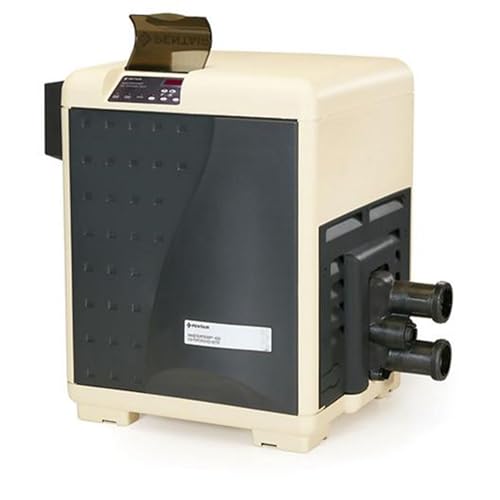
Gas heaters operate on direct combustion. A burner ignites natural gas or propane to produce open flames inside a combustion chamber. Pool water circulates through hot metal tubes positioned above the fire. Because a gas heater creates heat from scratch, it can never produce more energy than the fuel contains. High-efficiency gas heaters run at 82 to 95 percent efficiency, meaning 5 to 18 percent of your fuel escapes straight out of the exhaust stack as wasted heat.
Heating Speed vs Steady Warmth: How Each System Treats Your Water
Energy efficiency is only half the equation. You also need to consider how quickly you want your water to reach a comfortable temperature. This is where gas pool heaters show their greatest advantage.
Gas heaters are built for rapid, high-power warmth. Standard residential gas units produce 200,000 to 400,000 BTU per hour. That massive heat output can raise the temperature of a 15,000-gallon pool by 1 to 2 degrees Fahrenheit every hour. If you decide on Friday afternoon to host friends on Saturday morning, a gas heater can warm cold 65-degree pool water to a pleasant 82 degrees overnight. For an attached spa, gas can raise the water to 102 degrees in under 45 minutes.
Electric heat pumps take a slow-and-steady approach. Most residential models produce between 50,000 and 140,000 BTU per hour under warm conditions. Because their heat output is smaller, a heat pump typically raises water temperature by only one-third of a degree to one full degree Fahrenheit per hour. Raising that same 15,000-gallon pool by 15 degrees can take two full days of steady running.
Your swimming habits determine which heating speed works best:
- The spontaneous swimmer: If you use your pool mainly on occasional weekends, waiting two days for water to warm up is inconvenient. A gas heater lets you heat on demand without planning days ahead.
- The daily swimmer: If your family swims every afternoon or you do morning water exercise, you want the water ready every day. Leaving an electric heat pump running on its digital thermostat maintains that warmth constantly with minimal electrical draw.
Monthly Running Costs vs Upfront Installation Expenses
A heater that seems inexpensive to buy can become costly to run if you pick the wrong power source. You have to balance upfront equipment and installation costs against what you will pay in monthly utility bills.
Electric heat pumps cost more to purchase upfront than gas heaters. They are heavy machines containing compressors, fans, and metal heat exchangers. Installing one also requires substantial electrical capacity. You will need a dedicated 240-volt circuit, usually requiring a 40-amp to 60-amp breaker. If your home breaker panel is full, hiring an electrician to install a subpanel adds upfront expense.
Gas heaters usually cost less to buy initially. However, installation becomes expensive if you do not already have a gas supply at your pool pad. Running a new underground gas line requires trenching your yard and using large-diameter pipe to feed the burner adequate fuel volume. Your local utility may also require an upgraded household gas meter. If you use propane, you must buy or rent a dedicated storage tank and schedule delivery trucks.
Heat pumps prove their value in ongoing operating costs. Because heat pumps transfer existing warmth rather than burning fuel, keeping a pool warm all season with a heat pump typically costs one-third to one-half as much as running a natural gas heater. Propane is even more expensive, often costing three to four times more per month than a heat pump. If your pool uses a salt chlorine generator, water chemistry is especially harsh on equipment. Checking corrosion-resistant pool heaters for saltwater pools will show how titanium components prevent early rust and protect your investment.
Weather Limits: How Cold Air Changes Performance
Your local climate and the months you like to swim determine whether a heat pump can do the job. Electric heat pumps rely entirely on the heat present in outdoor air. Their listed efficiency ratings are based on warm summer air around 80 degrees Fahrenheit.
When autumn arrives and the air drops below 50 degrees Fahrenheit, a heat pump struggles to pull enough warmth from the atmosphere to offset pool heat loss. Moisture in the air can freeze on the outdoor evaporator coils, causing the unit to stop heating while it runs an automatic defrost cycle. Most standard heat pumps shut down completely when outside air reaches 45 degrees to protect internal parts.
Gas heaters do not rely on outdoor air conditions. A gas burner produces an open flame inside an insulated firebox. That flame burns just as hot whether the outdoor air is 85 degrees or 30 degrees. If you live in a northern climate and want to swim in early April or keep an attached hot tub steaming during winter snowfalls, gas heating is the only option that delivers dependable heat in freezing weather.
Decision Checklist: Matching Heater Type to Your Swim Habits
Use this straightforward checklist to match your pool setup and lifestyle to the right heating technology.
Choose an electric heat pump if:
- You want your pool water held at a steady, comfortable temperature all season long.
- You swim almost daily throughout late spring, summer, and early autumn.
- Your local daytime temperatures stay consistently above 50 to 55 degrees Fahrenheit during your swim season.
- You do not have a natural gas connection and want to avoid refilling propane tanks.
- You want the lowest possible monthly energy bills over the next ten years.
Choose a gas pool heater if:
- You swim only on occasional weekends, holidays, or for planned pool parties.
- You have an attached spa that you want to heat quickly on short notice.
- You live in a colder climate and want to extend your swim season into early spring and late fall.
- You already have an adequate natural gas line connected at your home.
- You prefer a lower upfront equipment cost and do not mind higher fuel bills for occasional use.
What to Check Before Choosing Your Pool Heater
Before purchasing a pool heater, verify a few critical details about your pool pad and utility hookups to avoid installation headaches.
First, calculate your pool surface area and water volume. An undersized heater runs constantly without reaching your desired temperature, while an oversized model costs more upfront than necessary. Ensure your pool pump can deliver the minimum flow rate required by the heater you choose.
Second, inspect your electrical service and fuel lines. For an electric heat pump, confirm with an electrician that your main panel can handle a dedicated 240-volt circuit with the necessary amperage. For a gas heater, have a qualified gas technician confirm that your gas meter and line diameter supply sufficient pressure without starving other gas appliances.
Finally, measure the clearance around your equipment pad. Heat pumps need open vertical clearance and several feet of space around the perimeter to allow proper airflow. Gas heaters require clearance from windows, soffits, and combustible walls to vent exhaust fumes safely. Always hire a licensed professional to handle electrical wiring and gas connections.

- BWP Score9.6
BWP Score is a ranking system developed by Bestwinterproducts.com. BWP score has no relationship or impact from any manufacturers or sales agent websites. Learn more
- BrandRaypak
- BWP Score9.0
BWP Score is a ranking system developed by Bestwinterproducts.com. BWP score has no relationship or impact from any manufacturers or sales agent websites. Learn more
- BrandPentair

- BWP Score8.7
BWP Score is a ranking system developed by Bestwinterproducts.com. BWP score has no relationship or impact from any manufacturers or sales agent websites. Learn more
- BrandXtremepowerUS

- BWP Score8.7
BWP Score is a ranking system developed by Bestwinterproducts.com. BWP score has no relationship or impact from any manufacturers or sales agent websites. Learn more
- BrandHayward

- BWP Score8.6
BWP Score is a ranking system developed by Bestwinterproducts.com. BWP score has no relationship or impact from any manufacturers or sales agent websites. Learn more
- BrandRaypak
- BWP Score8.5
BWP Score is a ranking system developed by Bestwinterproducts.com. BWP score has no relationship or impact from any manufacturers or sales agent websites. Learn more
- BrandRaypak
Last update on 2026-10-09 / Affiliate links / Images, Product Titles, and Product Highlights from Amazon Product Advertising API
FAQs
Can you use a solar cover to make your pool heater more efficient?
Yes, using a solar cover is the most effective way to lower heating costs with either system. Around 75 percent of heat loss happens through surface evaporation, especially during cool nights. Covering your pool traps heat inside, cutting heater run times and utility bills by up to half.
Should I leave my pool heater running all the time or only when swimming?
That depends on your heater type. Electric heat pumps run most efficiently when left on their thermostat setting to maintain steady warmth gradually around the clock. Gas heaters burn fuel quickly, so keeping one running constantly produces very high fuel bills. Only turn a gas heater on several hours before you swim.
Can an electric heat pump heat a spa quickly?
An electric heat pump warms a spa very slowly compared to a gas heater. While a gas heater can bring a 500-gallon spa to 102 degrees in 30 to 45 minutes, a heat pump can take several hours to reach the same temperature. If you use your spa spontaneously, gas is the better choice.
How can I tell if my pool heater is losing efficiency?
The main signs are longer run times to reach your target temperature and rising energy bills during normal weather. First, check your pool filter and pump basket for debris, as low water flow hurts heat transfer. If water flow is normal, inspect heat pump coils for dirt or gas burners for soot, and call a qualified technician if issues continue.


Best Warm Winter Scarves 2026 For Cozy Comfort

Best Green Ski Goggles 2026 For Clear Vision On Slopes

12 Best Corner Electric Fireplace 2026: My Ultimate Guide To Pick One

Best Battery Powered Snow Blower 2026 For Effortless Snow Clearing

Best Ski Goggles Under 30 Inches For Crisp Vision And Comfort

Best Cooling Scarf 2026 For Instant Relief And Comfort

Fake Snow for Grass: Create a Realistic Winter Lawn Display

Dimplex Prism Wall Mount Fireplace: Sleek Heat With Modern Flame Style





