
How Much Electricity Does Each Electric Heater Type Use?

Nearly all electric heaters use identical power. On their high setting, almost every portable model pulls 1,500 watts of electricity. An oil-filled radiator, an infrared heater, and a small ceramic fan all draw the exact same power from a standard wall outlet. None of them create heat more efficiently than another.
What changes your monthly electric bill is how quickly that heat reaches you and how often the unit turns off. Radiant styles warm your body right away, while fan and panel heaters slowly warm the surrounding air. Lower power settings cut the electrical draw in half, and an accurate thermostat saves energy by shutting off the heating element once the room is warm. Here is how each heater style works and what it means for your daily energy use.
The Short Version
- Almost every standard portable electric space heater sold in the United States draws roughly 1,500 watts on its highest setting, consuming about 1.5 kilowatt-hours (kWh) of electricity for each continuous hour of operation.
- No electric heater type is fundamentally more efficient than another at converting power into warmth, because all electric-resistance elements turn 100 percent of their electric energy into heat.
- Real-world power bills vary based on heat delivery style: infrared units warm your body immediately like sunshine, while convection and oil-filled radiators heat the surrounding room air slowly and hold that warmth longer.
- You can lower electricity consumption by switching to a low heat setting like 750 watts, closing the door of the room you are occupying, and using a dependable temperature dial that clicks the heating element off when your space is comfortable.
The 1,500-Watt Reality Behind Portable Electric Heat
Walk down the heating aisle of any hardware store, and you will see dozens of heaters in different shapes and materials. Some look like miniature radiators, some look like sleek modern towers, and others look like compact utility boxes. Despite their distinct designs and marketing claims, almost every single one of them shares the exact same maximum power rating: 1,500 watts.
This universal 1,500-watt ceiling comes down to standard residential electrical limits across the United States. Most residential wall outlets run on a 120-volt household circuit backed by a standard 15-amp breaker. According to standard electrical safety guidelines, a continuous electrical load should never exceed 80 percent of a circuit's total capacity. For a standard 15-amp circuit, that safe continuous threshold sits right at 12 amps, which equals roughly 1,440 to 1,500 watts of electrical power draw.
Because of this physical rule, a basic $25 fan heater and an expensive $150 cabinet heater pull the exact same amount of electricity out of your wall when both are running on high. Neither model produces extra heat from thin air. The difference lies entirely in how each style disperses that warmth into your living space, how fast it makes you feel comfortable, and how frequently its internal thermostat can cycle the heating element off.
Plugging any 1,500-watt appliance into an overloaded circuit will trip the breaker. Always plug your heater directly into a dedicated wall outlet that is not sharing heavy power with coffee makers, microwaves, or hair dryers. Never connect a portable space heater to an extension cord, power strip, or surge protector. Those cords are rarely built to handle a continuous 12.5-amp draw, which can cause the plug to overheat, melt, or spark a house fire. Keep a 3-foot safety buffer between your heater and any combustible materials, including blankets, curtains, and upholstered furniture.
Electricity Use Across Common Electric Heater Types
While the maximum power draw remains identical across standard full-size heaters, different designs use distinct mechanisms to transfer heat. Understanding how each heater style moves warmth helps you decide which design will satisfy your comfort needs with the shortest operating time.
Ceramic Fan Heaters
Ceramic heaters rely on a ceramic heating element that warms up in seconds, paired with a small electric fan that pushes warm air across the room. On high, these units pull 1,500 watts, while their low setting generally draws between 750 and 900 watts. Because the internal fan forces warm air directly outward, you feel immediate relief from the chill. However, once the unit clicks off, moving air stops instantly and the room can cool down quickly. They work best for active living rooms or drafty offices where you want quick, targeted warmth.
Infrared Quartz Heaters
Infrared heaters work completely differently from fan blowers. Instead of heating the air, they produce gentle heat that warms people and furniture directly like sunlight. Most full-size quartz heaters pull 1,500 watts on high, with eco or low settings drawing between 750 and 1,000 watts. Because infrared rays do not waste energy trying to warm cold drafts or high ceilings, you feel warm the second you step into the beam. If you are trying to heat uninsulated rooms or heaters built to warm drafty spaces, infrared heating delivers personal comfort without demanding hours of continuous air circulation.
Oil-Filled Radiator Heaters
An oil-filled radiator acts as a silent radiator heater that circulates steady, lasting warmth through natural air movement. These sealed steel units do not burn oil; instead, an internal electrical element heats diathermic oil sealed inside the fins. Like other heaters, they pull 1,500 watts on their highest setting and usually offer stepped lower options like 600 watts and 900 watts. While they take 20 to 30 minutes to warm up, the thick fluid stores thermal mass. This thermal storage means the metal fins continue radiating gentle heat into the room long after the electric element switches off, making them exceptionally quiet and comfortable for bedrooms and nurseries.
Convection Panel Heaters
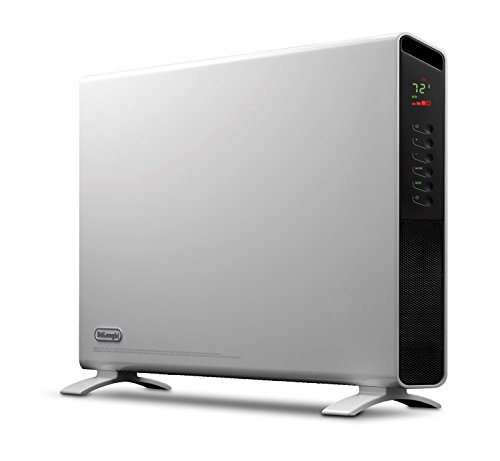
Convection panel heaters are slim, flat-panel appliances designed to hang on a wall or stand upright on floor feet. They pull cold air in through the bottom, warm it across an internal aluminum element, and release rising warm air out through the top grille. Drawing 1,500 watts on high, they work entirely in silence when fanless. Because they circulate warm air evenly without blowing harsh gusts, they work well for steady, medium-sized bedroom heating throughout chilly evenings.
Mini Plug-In Wall Outlet Heaters
Miniature wall heaters plug directly into a socket without a floor cord, taking up virtually no floor space. Unlike full-size floor units, these compact designs run on a low wattage draw, typically pulling between 400 and 500 watts. While 450 watts will not heat a master bedroom, it draws about one-third the power of a standard space heater. This modest power draw makes them ideal for targeted personal warmth right beside your keyboard at a desk or inside a small bathroom, without the risk of tripping a shared circuit breaker.
How to Calculate Your Hourly Running Costs
Figuring out what an electric heater costs to run does not require an engineering degree. You only need the wattage rating from the back of the unit and your local electricity rate from your monthly power bill. Follow these four simple steps to calculate your exact running costs.
- Find the heater's wattage rating: Look at the white product safety sticker on the back or underside of your heater. Find the wattage listed for the mode you plan to use, such as 1,500W on High, 900W on Medium, or 750W on Low.
- Convert watts to kilowatts: Electricity is billed in kilowatt-hours (kWh). Divide your heater's wattage by 1,000 to find its kilowatt rating. For example, 1,500 watts divided by 1,000 equals 1.5 kW. A 750-watt low setting divided by 1,000 equals 0.75 kW.
- Check your electricity rate: Look at your latest utility bill to find your cost per kilowatt-hour. Across the United States, average electricity rates typically range from 12 cents to 26 cents per kWh depending on your state and seasonal utility pricing.
- Multiply kilowatts by your electric rate: Multiply the kilowatt figure by your electric rate to see what one continuous hour of heating costs. If your electricity rate is 16 cents per kWh, running a 1,500-watt heater on high for one hour costs 1.5 multiplied by $0.16, which comes out to $0.24 per hour. Running that same heater on a 750-watt low setting costs 0.75 multiplied by $0.16, which is $0.12 per hour.
Remember that this math calculates continuous running time. If your heater has an active thermostat that cycles off for twenty minutes out of every hour, your real-world power consumption drops by a third. A 1,500-watt heater running on a 50 percent duty cycle in a closed room uses only 0.75 kilowatt-hours of electricity over an hour.
Matching Heater Styles to Your Heating Needs
A good rule of thumb for standard indoor spaces with eight-foot ceilings is to allocate roughly 10 watts of heating power per square foot of floor space. That means a standard 1,500-watt portable heater is sized to warm an enclosed room up to 150 square feet, like a bedroom or home office. Matching the heating method to your routine prevents you from leaving a heater running constantly.
- For spot heating a desk or couch: Pick an infrared quartz heater or a compact 450-watt plug-in unit. Radiant warmth keeps your skin comfortable immediately without forcing you to spend money heating thousands of cubic feet of empty air.
- For steady overnight bedroom warmth: Pick an oil-filled radiator or a flat convection panel. They run without any fan noise or glowing coils that disrupt sleep, and their gentle heat prevents sharp room temperature swings.
- For fast morning warmth in a dressing area: Pick a ceramic fan heater. The ceramic heating element warms up in seconds, giving you quick relief while getting dressed before you head out the door.
- For chilly basements and garages: Pick a heavy-duty ceramic or utility fan heater with a grounded plug. When heating cold concrete rooms, check out electric heaters with built-in thermostats that can automatically maintain a steady baseline temperature to keep tools and pipes safe from freezing.
Simple Habits That Cut Heater Power Consumption
Small operational adjustments reduce the number of minutes your heater draws power from the wall without sacrificing your physical comfort.
- Practice zone heating: Instead of keeping your whole-house central heating thermostat set at 72°F all day, lower it to 65°F and run a portable space heater only in the single room you are occupying. Warming one closed bedroom takes far less total energy than heating an entire house.
- Close the door to the room: A portable 1,500-watt heater cannot warm a large open-concept floor plan. If you leave the door open, warm air escapes down the hallway, forcing the heater to run continuously on high. Shutting interior doors traps warmth where you need it.
- Drop down to the low heat setting: When you first enter a cold room, run the heater on high for fifteen minutes to break the chill. Once the room reaches a pleasant temperature, manually switch the dial from 1,500 watts down to the 750-watt or 900-watt setting. Low power keeps the air comfortable while cutting your electricity draw in half.
- Set a moderate target temperature: Setting a digital temperature dial to 68°F allows the internal thermostat to satisfy its setpoint and switch off periodically. Setting the dial to maximum forces the element to pull power non-stop without making the room warm up any faster.
- Block basic window and door drafts: Slide a fabric draft stopper against the bottom of exterior doors and close heavy window blinds at dusk. Trapping existing heat inside stops cold floor drafts from triggering your heater's thermostat prematurely.
What to Look for in an Energy-Conscious Electric Heater
When selecting a portable heater to manage utility bills, prioritize designs that offer flexible power control and automatic shutoff capabilities rather than falling for vague efficiency promises. Look for a unit that provides at least two distinct heat settings, such as a 750-watt low mode alongside the standard 1,500-watt high mode, so you are never forced to draw full power when gentle supplemental heat is all you require.
An accurate digital temperature dial that clicks on and off to hold your set warmth is essential for controlling electric consumption. Programmable timers are equally valuable, ensuring that the heater automatically powers down after you fall asleep or leave for work. Always verify that any model you consider carries an independent safety certification mark, such as UL, ETL, or CSA, printed directly on the rating label. Essential safety components must include an automatic overheat sensor that shuts the unit off if internal parts get dangerously hot, as well as a tip-over safety switch that cuts power instantly if the unit is knocked over or tilted. If a wall outlet ever feels warm to the touch or a circuit breaker trips repeatedly, turn the heater off, unplug the power cord, and have a licensed electrician inspect your wiring before running the unit again.

- BWP Score9.0
BWP Score is a ranking system developed by Bestwinterproducts.com. BWP score has no relationship or impact from any manufacturers or sales agent websites. Learn more
- BrandQQT

- BWP Score9.3
BWP Score is a ranking system developed by Bestwinterproducts.com. BWP score has no relationship or impact from any manufacturers or sales agent websites. Learn more
- BrandPELONIS

- BWP Score9.0
BWP Score is a ranking system developed by Bestwinterproducts.com. BWP score has no relationship or impact from any manufacturers or sales agent websites. Learn more
- BrandDR. INFRARED HEATER

- BWP Score8.9
BWP Score is a ranking system developed by Bestwinterproducts.com. BWP score has no relationship or impact from any manufacturers or sales agent websites. Learn more
- BrandGiveBest

- BWP Score7.2
BWP Score is a ranking system developed by Bestwinterproducts.com. BWP score has no relationship or impact from any manufacturers or sales agent websites. Learn more
- BrandYOUCIDI
- BWP Score7.2
BWP Score is a ranking system developed by Bestwinterproducts.com. BWP score has no relationship or impact from any manufacturers or sales agent websites. Learn more
- BrandDe'Longhi
Last update on 2026-10-09 / Affiliate links / Images, Product Titles, and Product Highlights from Amazon Product Advertising API
Frequently Asked Questions
Do oil-filled radiators use less electricity than ceramic fan heaters?
On their high settings, both styles consume the exact same 1,500 watts of electrical power. An oil-filled radiator does not produce more total heat, but it retains warmth inside its fluid-filled fins after the heating element shuts off. This thermal retention allows an oil-filled unit to maintain steady room comfort with less frequent on-off cycling compared to a ceramic fan unit.
Can I plug a 1,500-watt space heater into an extension cord?
You should never plug a space heater into an extension cord, power strip, or multi-outlet adapter. Most household extension cords are rated for lighter electrical loads and cannot safely carry a continuous 12.5-amp current without overheating. Running a 1,500-watt appliance through an undersized cord creates a severe fire hazard, so always plug your heater directly into a permanent wall socket.
How many square feet can a standard 1,500-watt space heater warm?
A standard 1,500-watt heater comfortably warms an enclosed living area of roughly 150 square feet with standard eight-foot ceilings and average insulation. In an open-plan home or a drafty space with high ceilings, that same 1,500 watts will struggle to raise the ambient air temperature, making an infrared heater pointed directly at your seating area a much more practical choice.
Why does my circuit breaker trip whenever I run my space heater?
A standard 15-amp household circuit can safely support around 1,440 to 1,500 watts of continuous electrical draw. If your space heater is running on high and you switch on another appliance on the same circuit, like a television, computer, or vacuum cleaner, the combined current exceeds 15 amps and trips the breaker. To prevent trips, move the heater to a dedicated circuit that does not share power with other high-draw devices.


Best Warm Winter Scarves 2026 For Cozy Comfort

Best Green Ski Goggles 2026 For Clear Vision On Slopes

12 Best Corner Electric Fireplace 2026: My Ultimate Guide To Pick One

Best Battery Powered Snow Blower 2026 For Effortless Snow Clearing

Best Ski Goggles Under 30 Inches For Crisp Vision And Comfort

Best Cooling Scarf 2026 For Instant Relief And Comfort

Fake Snow for Grass: Create a Realistic Winter Lawn Display

Dimplex Prism Wall Mount Fireplace: Sleek Heat With Modern Flame Style





