
How Much Electricity Does a Portable Oil Heater Use?

Most people assume a portable oil heater pulls maximum electricity the entire time it stays plugged in, causing a huge winter bill. That is only half true: while a standard unit draws 1,500 watts on its highest setting, it does not pull power non-stop. Once the fluid inside heats up, an internal temperature switch cuts the electricity completely while the metal fins continue radiating warm air into the room.
Your total energy use changes based on the dial setting you pick, how drafty your room is, and how often that internal switch cycles off. Your local electric rate per kilowatt-hour (the standard unit on your electric bill) turns those numbers into real dollars. Here is how that power draw breaks down across settings and how to find your actual cost before flipping the switch.
The Short Version
- Standard power draw: Most portable oil heaters feature three power levels: Low at 600 watts, Medium at 900 or 1,000 watts, and High at 1,500 watts.
- Thermostats cycle power off: An oil heater does not pull electricity continuously. A built-in thermostat (a temperature switch that cuts power on and off) shuts off the heating element once the room reaches your set comfort level.
- Stored warmth radiates for free: The sealed fluid provides thermal mass (heat stored in the liquid that radiates outward without power), keeping the metal fins warm for 30 to 45 minutes after power cuts out.
- Manageable running costs: At a standard US rate of 16 cents per kilowatt-hour, running an oil heater on High costs roughly 24 cents per active hour. Intermittent thermostat cycling typically cuts real-world costs down to 10 to 15 cents per hour.
Wattage Breakdown Across Low, Medium, and High Settings
Your heater's electric power draw is measured in watts. Portable oil-filled radiators sold in the United States operate on standard 120-volt household circuits and cap their maximum output at 1,500 watts. Most models feature two switches that let you choose between three distinct power settings: Low (600 watts), Medium (900 or 1,000 watts), and High (1,500 watts).
The Low setting draws 600 watts, which equals 5 amps of electrical current. This mode powers a single internal heating element. It takes longer to warm cold oil, but it works well for maintaining overnight warmth in a closed 150 sq ft bedroom without overloading your electrical system. The Medium setting draws 900 to 1,000 watts (about 7.5 to 8.3 amps), providing balanced warmth for small living rooms on mild winter days.
The High setting engages both heating elements at once to draw the full 1,500 watts, pulling about 12.5 amps. Standard US home circuits are protected by 15-amp breakers. Because drawing 12.5 amps exceeds the 12-amp safe continuous load for a 15-amp circuit (80 percent of the breaker rating), running on High leaves no room for other electronics. Plugging a vacuum or hair dryer into that same circuit will trip the breaker.
Always plug a 1,500-watt oil heater directly into a dedicated wall outlet. Never use an extension cord, power strip, or surge protector. These accessories are rarely built for continuous 12.5-amp loads, meaning their internal wiring can overheat, melt the casing, and spark a house fire.
How Thermal Retention and Thermostat Cycling Lower Actual Power Use
Many people worry about an electric bill spike because they assume a 1,500-watt heater draws maximum power every minute it is plugged in. Portable oil heaters do not run continuously. Their true power consumption drops substantially thanks to thermal retention and thermostat cycling.
Inside the metal fins rests a reservoir of specially formulated diathermic oil. This fluid is permanently sealed at the factory, never burns away, and never needs refilling. When electricity flows into the submerged heating element, the oil warms up and circulates naturally through the internal channels. The warm fluid transfers heat directly to the heavy steel fins, which then warm the air in your room.
As room temperature rises, the built-in thermostat monitors the ambient air. Once the room reaches the warmth level you selected on the dial, the thermostat switch clicks open. Power draw drops immediately to zero watts, and the heating element shuts off completely.
Unlike a fan heater that blows cool air the moment its coil shuts off, an oil radiator stores heat in its fluid and metal body. The radiator continues releasing steady, silent heat into the room for 30 to 45 minutes while drawing zero electricity from the wall outlet. In a sealed, draft-free room, an oil heater might only draw power for 20 to 30 minutes each hour, effectively cutting your electric usage in half.
How to Calculate Your Hourly and Overnight Heating Costs
You can calculate your operating costs in three simple steps using numbers from your electric bill. Utility companies bill you in kilowatt-hours (kWh), which equals 1,000 watts of power running continuously for one hour.
- Convert your wattage setting to kilowatts: Divide your heater's wattage by 1,000. Low (600W) equals 0.6 kW. Medium (900W) equals 0.9 kW. High (1,500W) equals 1.5 kW.
- Estimate your active run time: Factor in thermostat cycling. During the first hour in a cold room, the heater may run continuously (1.0 hour). Once the room warms up, the thermostat often runs for only 40 to 60 percent of each hour (0.4 to 0.6 hours of actual power draw).
- Multiply by your electric rate: Check your electric bill for your rate per kWh. In the United States, rates typically range from 12 to 24 cents per kWh, averaging around 16 cents. Multiply your kilowatts by your active run time, then multiply that by your local electric rate.
For an eight-hour night in a bedroom on Low (0.6 kW) cycling half the time (4 active hours), power use totals 2.4 kWh. At 16 cents per kWh, heating your bedroom all night costs roughly 38 cents.
Oil Radiators vs Ceramic Fan Heaters: Which Consumes Less Power?
Both oil radiators and ceramic fan heaters cap their maximum draw at 1,500 watts on High. Standard electrical physics dictates that 1,500 watts of resistance heat produces roughly 5,120 British Thermal Units (BTUs) of heat per hour regardless of the heater type. However, the way each unit delivers that warmth affects how much energy it uses over a full day.
A ceramic heater uses a ceramic heating element that warms up in seconds, paired with a fan that pushes warm air across the room. It gives you fast, directional heat right away. But because air holds very little heat, the room cools rapidly the moment the fan stops. In drafty areas, ceramic units cycle on and off constantly, creating noticeable temperature dips and frequent power draws.
An oil radiator takes 15 to 25 minutes to get hot, making it slower to start. But once hot, it acts as a silent radiator heater that circulates steady, lasting warmth without blowing dust. It gently warms the surrounding air and furniture, holding an even baseline temperature. If you need steady warmth over several hours, an oil radiator provides smoother comfort than a fan heater. That stability is why an electric heater for a garage with a thermostat works well in colder utility areas, just as choosing an appropriate heater for an enclosed porch helps balance cold exterior drafts.
Simple Habits to Keep Your Oil Heater Energy Consumption Down
Running an oil radiator economically comes down to daily habits. You can easily minimize energy consumption while staying warm by following this checklist:
- Set the thermostat with the mechanical click: Turn the thermostat dial to maximum until the room reaches your preferred warmth, then slowly turn it backward until you hear a soft click. Stop right there. The heater will now cycle automatically to maintain that exact temperature.
- Start on High, then shift down: Use the 1,500-watt setting only to bring a cold room up to temperature. Once the space feels comfortable, switch the power toggle down to 600 or 900 watts. Maintaining warmth requires far less electrical current than heating cold air from scratch.
- Trap the heat: Close doors to unheated rooms, hallways, and closets. Place a draft stopper along the bottom of exterior doors. Because oil radiators rely on natural convective air circulation, blocking drafts keeps your warm air in the living space.
- Practice zone heating: Lower your central home thermostat to 62°F at night and use your portable oil heater to warm only the bedroom you sleep in. Heating 150 sq ft takes significantly less energy than heating an entire home.
- Maintain the 3-foot safety buffer: Keep furniture, bedding, and curtains at least 3 feet (36 inches) away from all sides of the heater. This clearance ensures safe operation and lets air circulate freely through the fins.
What to Look for in an Energy-Conscious Oil Heater
To keep seasonal heating bills low, select a portable radiator built for flexible power control. Look for a unit with three separate heat settings (Low, Medium, and High) so you can manually restrict electric draw to 600 or 900 watts instead of running at 1,500 watts continuously. An adjustable thermostat dial with clear temperature markers is essential for allowing the heater to cycle off once your room is warm.
Check the radiator construction as well. Look for heavy steel fins permanently filled with sealed oil to ensure silent, maintenance-free heating without leaks. Safety features also protect your home and prevent wasted electricity. Confirm that the heater carries an ETL or UL safety mark on its label, and check for an automatic tip-over safety switch that cuts power instantly if the unit is knocked over or tilted, along with an automatic overheat sensor that shuts the unit off if internal parts get dangerously hot.

- BWP Score9.3
BWP Score is a ranking system developed by Bestwinterproducts.com. BWP score has no relationship or impact from any manufacturers or sales agent websites. Learn more
- BrandElectactic

- BWP Score8.4
BWP Score is a ranking system developed by Bestwinterproducts.com. BWP score has no relationship or impact from any manufacturers or sales agent websites. Learn more
- BrandAmazon Basics
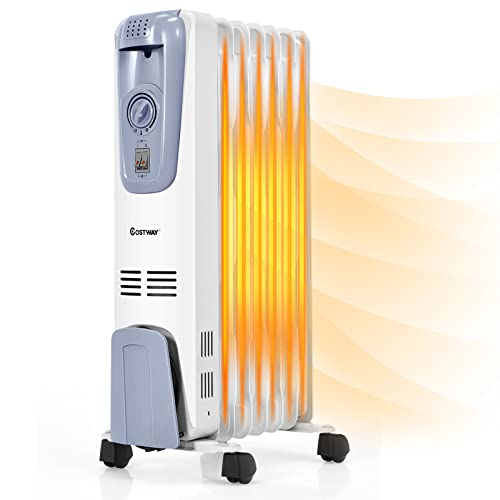
- BWP Score8.3
BWP Score is a ranking system developed by Bestwinterproducts.com. BWP score has no relationship or impact from any manufacturers or sales agent websites. Learn more
- BrandCOSTWAY

- BWP Score8.1
BWP Score is a ranking system developed by Bestwinterproducts.com. BWP score has no relationship or impact from any manufacturers or sales agent websites. Learn more
- BrandAmazon Basics

- BWP Score8.0
BWP Score is a ranking system developed by Bestwinterproducts.com. BWP score has no relationship or impact from any manufacturers or sales agent websites. Learn more
- BrandElectactic

- BWP Score7.8
BWP Score is a ranking system developed by Bestwinterproducts.com. BWP score has no relationship or impact from any manufacturers or sales agent websites. Learn more
- BrandAmazon Basics

- BWP Score7.2
BWP Score is a ranking system developed by Bestwinterproducts.com. BWP score has no relationship or impact from any manufacturers or sales agent websites. Learn more
- BrandSageNest
Last update on 2026-10-11 / Affiliate links / Images, Product Titles, and Product Highlights from Amazon Product Advertising API
FAQs
Does a portable oil heater use electricity while the fins stay warm?
No, the heater draws zero electricity once the thermostat clicks off. The unit stays warm because the specialized fluid holds thermal mass, slowly radiating stored heat into the room without pulling any power from the outlet.
Can running an oil heater on High trip my circuit breaker?
Yes, it can trip the breaker if other appliances share that circuit. On High, drawing 12.5 amps leaves only 2.5 amps of breathing room on a standard 15-amp breaker. Always plug the heater directly into its own wall outlet and avoid running other high-draw appliances on the same line.
Does the oil inside an electric radiator heater ever need to be refilled?
No, the oil is permanently sealed inside the steel fins and never needs to be refilled or replaced. The fluid does not burn away during normal operation. If you ever notice an oil leak or liquid dripping from the heater, stop using it immediately, unplug it, and dispose of the unit safely.
Is an oil heater cheaper to run than central heating?
An oil heater is cheaper only when used for zone heating, which means warming a single occupied room while lowering your main home thermostat. Trying to heat an entire house using portable electric heaters will cost significantly more than running a central furnace or heat pump.


Best Warm Winter Scarves 2026 For Cozy Comfort

Best Green Ski Goggles 2026 For Clear Vision On Slopes

12 Best Corner Electric Fireplace 2026: My Ultimate Guide To Pick One

Best Battery Powered Snow Blower 2026 For Effortless Snow Clearing

Best Ski Goggles Under 30 Inches For Crisp Vision And Comfort

Best Cooling Scarf 2026 For Instant Relief And Comfort

Fake Snow for Grass: Create a Realistic Winter Lawn Display

Dimplex Prism Wall Mount Fireplace: Sleek Heat With Modern Flame Style





