
What Size Tankless Water Heater Replaces a 50-Gallon Tank?

Aim for seven to nine gallons per minute. That capacity easily replaces a standard 50-gallon tank for a typical family of three or four. Because tankless units heat water instantly as it runs instead of storing it in a large container, you size them by flow speed rather than tank volume. For a gas setup, that usually means a unit rated around 160,000 to 199,000 BTU of heating power.
A few everyday details will nudge that number up or down. Your peak morning routine matters most, especially if two people shower while the dishwasher runs. Cold winter tap water also cuts flow speed because the heater must warm icy water much longer before it reaches your shower head. Lastly, your home needs a gas line or electrical panel large enough to feed that power. Here is how to match your household demand and pick the right capacity.
The Short Version
- To replace a standard 50-gallon storage tank for a home with three to four people, choose a tankless heater rated between 7.0 and 9.5 gallons per minute (GPM), or roughly 160,000 to 199,000 BTU for natural gas or propane.
- Tankless heaters do not hold stored water, so you size them by how many hot faucets and showers run at the exact same moment rather than total storage gallons.
- Cold groundwater in northern states forces the heater to work twice as hard, cutting your actual hot water flow down during the winter months.
- Before purchasing any replacement, confirm whether your home has a 3/4-inch gas line or enough electrical panel space, because high-powered on-demand heaters need substantial energy input.
Why Tank Gallons Do Not Match Tankless Ratings
Replacing a traditional water heater can feel confusing because storage tanks and on-demand units measure capacity in entirely different ways. A standard 50-gallon water heater holds a giant reservoir of hot water ready to use at all times. When your family uses hot water, you pull directly from that stored pool. Once those 50 gallons are drained during a busy morning, the tank runs cold. You then have to wait 30 to 45 minutes for the burner or electric elements to reheat a fresh batch of cold water.
A tankless water heater has no storage tank at all. Cold water rests in your plumbing lines until someone turns on a hot water tap. That movement of water triggers an internal sensor, firing up a powerful heating element or gas burner. Cold water travels through a tight series of copper pipes called a heat exchanger, absorbing heat instantly on its way to your faucet. Because the water warms up continuously as it moves, you never run out of hot water over time.
You cannot walk into a store and buy a 50-gallon tankless water heater because storage volume does not apply to on-demand equipment. Instead, tankless systems are measured by flow speed and heating power. Flow speed is listed as gallons per minute, or GPM, which indicates how many gallons of hot water the heater can push through your pipes every 60 seconds. Heating power for gas units is measured in British Thermal Units, or BTU, which tells you how much heat energy the gas burner produces per hour.
When you swap out an old 50-gallon tank, your goal is not matching a gallon number. Your goal is matching the peak volume of water your household uses at any single moment. A 50-gallon tank easily supported two people showering at the same time because both shower heads simply shared the warm pool in the basement. To get that same freedom from an on-demand system, your new heater must produce enough gallons per minute to supply both shower heads simultaneously without dropping the water temperature.
Calculating Your Peak Hot Water Demand
To find the right tankless size, think about the busiest 15 minutes in your house on a typical weekday morning. Sizing a tankless unit is all about handling the worst-case scenario. If someone turns on a second shower while the dishwasher is running, an undersized heater will either cut the water pressure or blast you with an unexpected burst of cold water.
Every plumbing fixture in your home consumes a specific flow rate of hot water. You can find your peak demand by adding together the fixtures you expect to run at the exact same time. Here are the standard flow rates for typical household fixtures:
- Modern water-saving shower head: 1.5 to 2.0 gallons per minute.
- Standard shower head: 2.0 to 2.5 gallons per minute.
- Bathroom sink faucet: 0.5 to 1.5 gallons per minute.
- Kitchen sink faucet: 1.5 to 2.0 gallons per minute.
- Automatic dishwasher: 1.0 to 1.5 gallons per minute.
- Washing machine: 1.5 to 2.5 gallons per minute.
Now, map out a realistic morning routine for your home. Imagine one person is taking a shower in the master bathroom using 2.0 GPM. At the same time, a second family member starts a shower down the hall using another 2.0 GPM. In the kitchen, someone starts rinsing dishes in the sink, adding 1.5 GPM to the load. In this realistic scenario, your home is demanding 5.5 gallons of hot water every minute.
If you purchase a compact unit rated for only 4.0 GPM, it cannot keep up with that load. The heater will throttle the flow, leaving both showers feeling weak, or fail to heat the water to your set temperature. For an average family home that previously relied on a 50-gallon tank, sizing for a peak demand between 5.0 and 7.0 GPM ensures everyone enjoys steady, hot water without scheduling their morning routines.
How Cold Tap Water Drops Your Real Flow Rate
The flow rating printed on the front of a tankless heater box does not tell the whole story. Manufacturers often print the absolute maximum flow rate the unit can achieve under ideal summer conditions. In the real world, the actual flow rate you get depends directly on the temperature of the water entering your home from underground municipal pipes or a private well.
This difference is called temperature rise. Temperature rise is simply how many degrees the heater must warm up cold incoming water to reach your desired tap temperature. Most household water heaters are set to heat water to 120 degrees Fahrenheit, which provides comfortable showers while protecting children and pets from accidental burns. To calculate your needed rise, subtract your incoming water temperature from 120 degrees.
Groundwater temperatures vary drastically across the United States. In warm southern regions like Florida, southern Texas, and Arizona, tap water comes out of the ground between 65 and 75 degrees Fahrenheit year-round. To reach a comfortable 120 degrees, the heater only needs to produce a modest 45 to 55-degree temperature rise. In that climate, the burner easily heats water as fast as it flows, allowing the unit to run near its advertised maximum capacity.
In northern states like Minnesota, Michigan, or New York, winter groundwater can drop down to 35 or 40 degrees Fahrenheit. Heating that icy water up to 120 degrees requires an intense 80 to 85-degree temperature rise. Because the heating burner can only output a fixed amount of heat energy every second, the unit must slow down the water flow so the liquid stays inside the heat exchanger long enough to reach 120 degrees. A heater advertised at 9.5 GPM might easily deliver its full rating in Orlando, but slow down to 5.0 GPM during a January morning in Chicago.
Because of this climate reality, northern homeowners must choose a heater with higher heating power (more BTUs) to get the same everyday flow as someone living down south. If your plumbing runs through an unheated space or an exterior garage, cold ambient air can lower pipe temperatures even further. Homeowners managing mechanical equipment in exposed spaces often install a heater for an unheated garage with a thermostat to keep surrounding equipment above freezing and maintain system reliability.
Checking Gas Lines and Electrical Panel Capacity
The biggest surprise homeowners encounter when replacing a 50-gallon tank is not the water heater itself, but the utility connections feeding it. An old storage tank uses a relatively small heat source, often around 35,000 to 40,000 BTU for natural gas, or a simple 4,500-watt heating element for electric. Because the tank stores water all day, it has hours to bring that water up to temperature using gentle, slow heat.
A whole-house tankless unit must heat high volumes of icy water in real time, which requires massive bursts of raw power. A whole-house gas tankless heater usually burns between 160,000 and 199,000 BTU per hour when running at full blast. That is roughly five times the fuel consumption of an old tank. Because of this high fuel demand, most tankless gas heaters require a 3/4-inch dedicated gas pipe. Many older homes were built with 1/2-inch gas lines running to the water heater closet. Hooking a high-demand tankless unit to an undersized 1/2-inch line will starve the burner, triggering error codes and shutting the unit off whenever you demand hot water.
If you are considering an electric tankless water heater to replace your 50-gallon electric tank, the electrical requirements are substantial. Whole-house electric tankless units draw between 18,000 and 27,000 watts of continuous power. That often requires three or four separate 40-amp circuit breakers and up to 120 to 150 amps of available service. If your home has an older 100-amp or 150-amp main electrical panel, you cannot install a whole-house electric tankless heater without paying for a costly main panel upgrade. For most existing homes, gas-fired tankless models provide a much more practical replacement path.
You must also verify exhaust venting and structural clearances. Gas tankless units produce acidic condensation and high-velocity exhaust that cannot share an old chimney or metal B-vent pipe with your home furnace. They require dedicated direct-vent piping made from approved materials like PVC or stainless steel routed directly through an exterior wall or roof. Homes with specific structural requirements, such as manufactured housing, must follow strict HUD guidelines and clearance rules, similar to selecting a heater designed specifically for mobile homes. Always have a licensed plumber or gas technician check your gas line diameter, meter size, and vent path before purchasing.
Choosing the Right Tankless Size for a Whole-House Replacement
When matching a tankless water heater to a home built around a 50-gallon tank, you can use clear regional benchmarks to pick the correct model capacity. A 50-gallon tank generally served two full bathrooms and a family of three to five people. Here is how that translates into real tankless sizing based on where you live.
If you live in the southern half of the country with mild winters and warm groundwater, choose a unit rated between 7.0 and 7.6 GPM, powered by roughly 160,000 to 180,000 BTU. Because your incoming water only needs a 45-degree rise, a 7.0 GPM heater can comfortably run two showers and an appliance at the same time without losing temperature or pressure. You get all the endless hot water you want without paying for excess heating capacity you will never use.
If you live in the central or northern United States where winter tap water drops into the 40s or below, choose a unit rated between 8.5 and 9.5 GPM, powered by 190,000 to 199,000 BTU. In freezing conditions, that 9.5 GPM rating will shrink down to roughly 5.0 to 5.5 GPM of usable hot water. That still gives you enough continuous hot water to run two showers at the same time on the coldest morning of the year. Choosing anything smaller in a northern climate risks disappointing performance when the ground freezes.
If your home features high-demand fixtures like a large jetted garden tub, a rain shower system with multiple body sprays, or if your household frequently runs laundry and showers simultaneously, step up to the largest residential class available: 9.5 GPM and 199,000 BTU. Having that extra heating margin guarantees that filling a giant bathtub will not strip the rest of the house of warm water.
What to Look for in a Whole-House Tankless Heater
When shopping for an on-demand heater to replace your traditional tank, focus on equipment designed specifically for whole-house residential use. Look for a unit that runs on your home's exact fuel type, whether that is natural gas or liquid propane, as internal gas valves and burner orifices are built specifically for one fuel source.
Pay close attention to the unit's energy factor ratings and internal safety systems. Choose models with safety certifications like CSA or UL marks on the data plate. Reliable units feature built-in freeze prevention, boil-dry protection, overheat cutoff sensors, and flame-out detection to safeguard your home. A clear digital display on the front panel helps you set your target water temperature precisely and shows clear diagnostic error codes if your water filter ever clogs or your gas pressure fluctuates.
Make sure to purchase an installation kit that includes service isolation valves. These brass valves sit directly beneath the heater on the cold inlet and hot outlet lines. They allow you or a technician to shut off the home's water supply and flush the internal heating coils with a cleaning solution once a year, keeping mineral scale from shortening the life of your equipment.
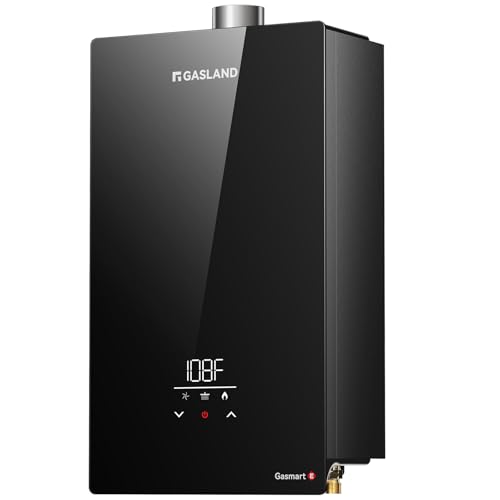
- BWP Score8.9
BWP Score is a ranking system developed by Bestwinterproducts.com. BWP score has no relationship or impact from any manufacturers or sales agent websites. Learn more
- BrandGASLAND

- BWP Score8.9
BWP Score is a ranking system developed by Bestwinterproducts.com. BWP score has no relationship or impact from any manufacturers or sales agent websites. Learn more
- BrandRheem

- BWP Score8.3
BWP Score is a ranking system developed by Bestwinterproducts.com. BWP score has no relationship or impact from any manufacturers or sales agent websites. Learn more
- Brandthermomate
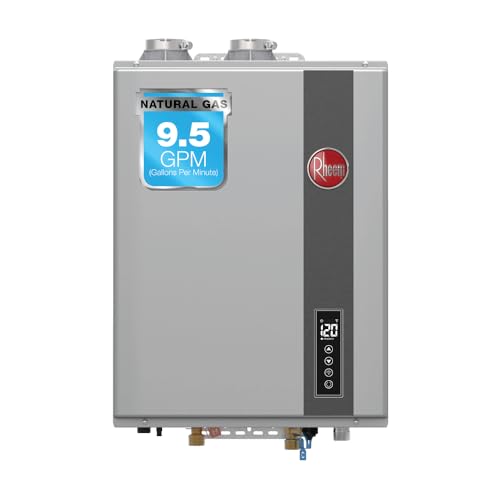
- BWP Score8.2
BWP Score is a ranking system developed by Bestwinterproducts.com. BWP score has no relationship or impact from any manufacturers or sales agent websites. Learn more
- BrandRheem
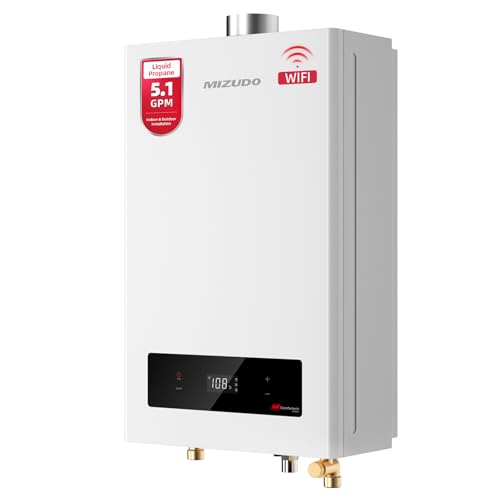
- BWP Score8.0
BWP Score is a ranking system developed by Bestwinterproducts.com. BWP score has no relationship or impact from any manufacturers or sales agent websites. Learn more
- BrandMIZUDO

- BWP Score7.8
BWP Score is a ranking system developed by Bestwinterproducts.com. BWP score has no relationship or impact from any manufacturers or sales agent websites. Learn more
- BrandRanein

- BWP Score7.1
BWP Score is a ranking system developed by Bestwinterproducts.com. BWP score has no relationship or impact from any manufacturers or sales agent websites. Learn more
- BrandRheem
Last update on 2026-10-08 / Affiliate links / Images, Product Titles, and Product Highlights from Amazon Product Advertising API
FAQs
Can a tankless water heater run out of hot water?
A tankless water heater cannot run out of hot water over time because it heats water continuously as long as the tap is open. It does, however, have a strict limit on how much hot water it can supply at any single moment. If you run more fixtures than the unit's gallons-per-minute rating allows, the water temperature or pressure will drop until someone turns off a faucet.
Will a tankless water heater lower my utility bills compared to a 50-gallon tank?
A tankless heater generally uses less energy than a traditional tank because it eliminates standby heat loss, which is the wasted energy a tank burns keeping 50 gallons warm while everyone is sleeping or away at work. Tankless gas units operate at higher efficiency levels, which can trim your water heating gas consumption. Your actual dollar savings will depend on local utility rates and how much total hot water your household uses each day.
Can I install a whole-house tankless water heater myself?
Installing a whole-house tankless water heater is not a beginner do-it-yourself project. It requires cutting and rerouting water lines, installing dedicated high-flow gas piping, drilling exterior vent penetrations through walls or roofing, and wiring electrical circuits. Mistakes can cause gas leaks, carbon monoxide hazards, or water damage, so you should always hire a licensed plumber or HVAC technician to install and permit the unit.
Why does hot water take a few seconds to reach my faucet with a tankless heater?
A tankless heater takes about 5 to 10 seconds to detect water flow, ignite the burner, and warm the copper heat exchanger to operating temperature. After that initial warm-up, the water must still travel through the existing pipes in your walls to reach your faucet. If your bathroom is far from the heater, you will wait the same amount of pipe-clearing time you did with a traditional tank.


Best Warm Winter Scarves 2026 For Cozy Comfort

Best Green Ski Goggles 2026 For Clear Vision On Slopes

12 Best Corner Electric Fireplace 2026: My Ultimate Guide To Pick One

Best Battery Powered Snow Blower 2026 For Effortless Snow Clearing

Best Ski Goggles Under 30 Inches For Crisp Vision And Comfort

Best Cooling Scarf 2026 For Instant Relief And Comfort

Fake Snow for Grass: Create a Realistic Winter Lawn Display

Dimplex Prism Wall Mount Fireplace: Sleek Heat With Modern Flame Style





