
Does a Space Heater Use More Power Than Central Heating?

Check the central thermostat setting before plugging in a portable room heater. That simple check matters because central heating uses far more total power than a single plug-in heater. While a central system works to warm every room across the house, a standard portable heater draws around 1,500 watts of electric power for just one spot.
Whether this saves you money depends on your home setup and your daily habits. Fuel type makes a huge difference, especially if the central system uses natural gas or a heat pump rather than electric coils. Power use also climbs quickly if someone runs multiple portable units at once or leaves one running on high all afternoon. Here is how both heating methods stack up so you can keep warm without spiking your winter energy bills.
Power Draw Side by Side: How Plug-In Heaters Compare to Central Heating
Electric power draw measures how quickly an appliance pulls energy from your electrical system, expressed in watts. To see whether a portable unit or a whole-house system takes more power, look at the continuous electrical pull of each system while it is actively heating your home.
In standard US homes, wall outlets supply electricity at 120 volts. A standard portable electric space heater running on its highest heat setting pulls up to 1,500 watts, which equals about 12.5 amps of electric current. If you switch that heater down to a low power level, it typically pulls between 750 and 1,000 watts. That 1,500-watt limit is the ceiling for portable electric plug-in units because standard household wiring cannot safely supply more continuous power through a regular wall socket.
Central heating systems operate on a completely different scale. If your home uses an electric resistance furnace, that central unit relies on massive metal heating coils to warm air before pushing it into your ductwork. A central electric furnace usually draws between 10,000 and 20,000 watts of electric power. That means running an electric furnace pulls as much electricity as running 7 to 13 portable space heaters at maximum power at the exact same moment.
If your home has a central electric heat pump, the power draw is noticeably lower than an electric furnace. A heat pump acts as a central electric heating system that gathers heat from outdoor air and moves it indoors rather than generating heat directly with high-draw coils. In typical winter conditions, an electric heat pump draws between 2,500 and 4,500 watts while running its outdoor compressor and indoor fan. While this is far more efficient than electric resistance coils, an operating heat pump still draws two to three times more raw electric power than a single 1,500-watt room heater.
Natural gas or propane central furnaces work differently because their heat comes from burning fuel rather than drawing heavy electrical power. However, a gas furnace still relies on electricity to power its electronic control board and run the indoor blower fan that forces warm air through your ducts. That electric blower fan generally draws between 400 and 800 watts while running. In terms of electricity alone, a gas furnace blower pulls fewer watts from your wall wires than a 1,500-watt space heater. But that calculation does not include the cost of the gas burned in the furnace, which appears on your gas utility bill.
The difference in power draw connects directly to coverage area. Central systems condition your entire house, warming 1,500 to 2,500 square feet of living space, including hallways, utility closets, and unoccupied rooms. A standard 1,500-watt portable heater is designed to warm a single closed space of roughly 150 square feet, following the standard sizing guideline of roughly 10 watts per square foot of living space.
The Zone Heating Rule and the Multi-Heater Tipping Point
The only reason a space heater can save you money on your winter utility bills is a strategy called zone heating. Zone heating simply means heating the specific room you are actively occupying while letting the rest of your house stay cooler. Instead of paying to heat empty guest rooms, hallways, and formal dining areas all day, you direct warmth exactly where you are resting or working.
Consider a common everyday scenario. You work remotely from home in an office from morning until late afternoon. If you leave your central thermostat set to 70 degrees Fahrenheit, your furnace will fire up regularly to warm every single room in your 2,000-square-foot house. If you dial your central thermostat down to 62 degrees Fahrenheit and close the door to your home office, the central furnace will rarely kick on. Running a 1,500-watt space heater in that closed office will keep you warm, pulling 1.5 kilowatt-hours of electricity per hour of active run time. That targeted draw uses far less total energy than running a 15,000-watt electric furnace across the entire building.
Targeted room heating also solves comfort problems in cold or drafty rooms without forcing your central system to overwork. If you have an uninsulated sunroom or enclosed patio, pumping central heat into that space is wasteful because the warmth bleeds quickly through large glass windows. Using a specialized heater for an enclosed porch allows you to enjoy that room when needed without driving your central furnace into constant, expensive overdrive.
The strategy falls apart when homeowners try to heat their entire home with multiple plug-in heaters. This creates a tipping point where electric bills explode far higher than any central heating bill.
The math behind the multi-heater mistake is straightforward. If you run one 1,500-watt heater in the living room, a second in the kitchen, and a third in a child's bedroom, those three units pull 4,500 watts of electric power continuously. At 4,500 watts, you are drawing as much electricity as a central electric heat pump, but without the benefit of even duct distribution or whole-house temperature control. If you turn on a fourth heater in a master bedroom, your combined power draw hits 6,000 watts.
Fuel costs make this mistake even worse for homes with natural gas heating. In most parts of the United States, retail electricity costs significantly more per unit of delivered heat energy than natural gas. If your furnace runs on gas, running two or three electric space heaters throughout your house replaces cheap gas heat with expensive electric resistance heat. The slight drop in your monthly gas bill will be wiped out by a massive jump in your electric bill.
Another common error is placing a portable heater in an open floor plan. A 1,500-watt heater cannot warm a large open living room with high ceilings and open doorways leading to the kitchen and stairs. Warm air escapes upward and spreads across the house. Because the room never gets warm, the heater's temperature sensor never shuts the unit off. It runs at full 1,500-watt power draw for 12 to 16 hours every day, adding dozens of kilowatt-hours to your electric bill while leaving you feeling chilly.
How to Balance Your Thermostat and Space Heater for Real Savings
Combining your central thermostat with a portable heater requires a deliberate routine. If you leave your central thermostat at its regular comfort setting while running a space heater, you are simply adding extra electrical power on top of your existing utility bills. Follow these steps to set both systems up for the lowest overall energy use:
- Turn down your central thermostat by 7 to 10 degrees Fahrenheit. Drop the central setting from your normal 70 degrees down to 62 or 63 degrees Fahrenheit. This drop is the foundation of your savings, as it significantly reduces how often your central furnace or heat pump cycles on during the day or night.
- Close the door to the room you want to warm. Portable heaters rely on keeping warmed air confined to a single area. Shutting the bedroom or office door prevents warm air from spilling into cold hallways and stops cool drafts from entering your living space.
- Set the heater's digital temperature dial to your comfort level. Avoid leaving the heater running on constant high heat. Use the digital temperature dial that clicks on and off to hold your set warmth, choosing 68 or 70 degrees Fahrenheit. Once the room reaches that level, the heating element shuts off automatically, dropping power draw to zero until the room cools down.
- Keep airflow balanced throughout the house. Keep closet doors and unused guest room doors closed to minimize the volume of air your central system needs to maintain. But avoid closing off more than one or two central air vents, because blocking too many vents increases pressure inside your ductwork and strains your central furnace blower fan.
- Shut the portable heater off immediately when you leave the room. Zone heating only saves money when the heat stays with the person. If you walk away to make dinner or run errands and leave the space heater running in an empty room, you are burning electricity with zero return.
Because portable heaters draw heavy electric current, running them safely is just as important as saving money. In US homes, standard branch circuits are protected by a 15-amp circuit breaker, which is the safety switch in your electrical panel. At 120 volts, a 15-amp breaker can support up to 1,800 watts total, but continuous heating loads should stay under 1,440 watts to prevent wires from overheating inside your walls. A 1,500-watt heater operating on high is already operating right at that safety threshold.
Use this short checklist before running your portable heater:
- Plug directly into a dedicated wall outlet: Never use an extension cord, power strip, or surge protector. These add-on cords are rarely rated for continuous 12.5-amp power draw and can melt, smoke, or ignite an electrical fire.
- Keep a dedicated electrical circuit: Avoid running high-draw appliances like hair dryers, desktop computers, or laser printers on the same circuit while your heater is on high, or the safety switch in your panel will trip.
- Maintain the 3-foot safety buffer: Keep all blankets, curtains, clothing, upholstered couches, and papers at least 3 feet (36 inches) away from the front, sides, and rear of the heater.
- Check the plug and wall faceplate after 30 minutes: Place your hand on the plastic wall plate and power cord plug. If either feels hot to the touch, shut the unit off immediately, unplug it from the wall, and contact a licensed electrician to inspect the outlet wiring.
- Verify official safety certification: Confirm the heater's rating label displays a recognized safety mark, such as UL, ETL, or CSA, showing it passed standard electrical safety requirements.
What to Look for in a Room Heater for Supplemental Warmth
If you decide to use zone heating to reduce your central furnace usage, choosing the right style of room heater makes a noticeable difference in comfort and electricity use. Different heating mechanisms suit different daily routines, and matching the heater to your space prevents wasted watts.
For quick, responsive warmth during the workday, look for a unit with a ceramic heating element that warms up in seconds paired with a fan that pushes warm air across the room. These compact ceramic heaters circulate warm air quickly into small offices and sitting areas, warming the air around your desk within minutes of being switched on.
For bedrooms where you need steady warmth through the night without disturbance, consider a silent radiator heater that circulates steady, lasting warmth. These units use internal fluid that absorbs heat and radiates it slowly into the room. Because they do not rely on an electric fan, they run in complete silence and do not create dry drafts that can irritate your eyes or throat while you sleep.
If you spend time in uninsulated spaces like a workshop, a home gym, or a garage, convection heaters that warm the air will struggle against concrete floors and cold drafts. In those environments, an electric heater for a garage with a thermostat provides gentle heat that warms people and furniture directly like sunlight, allowing you to stay comfortable without attempting to heat hundreds of cubic feet of chilly air.
Before purchasing any supplemental heater, check the product specifications for several vital efficiency and safety features:
- A digital temperature dial that clicks on and off to hold your set warmth: Units with adjustable thermostats automatically regulate their power draw instead of pulling continuous maximum wattage.
- Multiple heat settings or power levels: Having both a 1,500W high setting and a 750W low setting lets you warm the room quickly on high, then drop down to low power to maintain the temperature using half the electricity.
- A tip-over safety switch that cuts power instantly if the unit is knocked over or tilted: This safety switch prevents hot elements from resting against carpet, rugs, or wood floors if bumped by children or pets.
- An automatic overheat sensor that shuts the unit off if internal parts get dangerously hot: This sensor protects the unit if airflow becomes blocked by a blanket or curtain.
- A programmable auto-off timer: A built-in timer allows you to program the heater to turn off after two or three hours once you fall asleep, ensuring it does not draw power all night long.
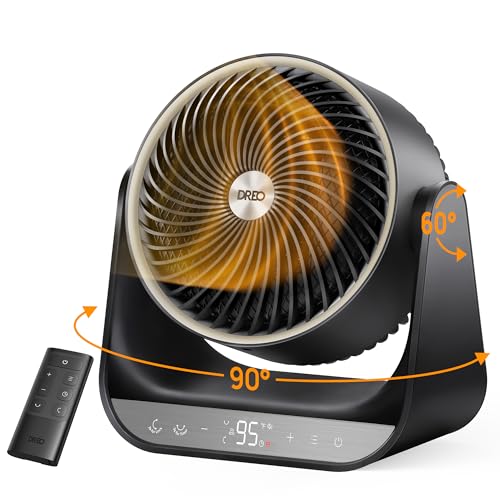
- BWP Score9.6
BWP Score is a ranking system developed by Bestwinterproducts.com. BWP score has no relationship or impact from any manufacturers or sales agent websites. Learn more
- BrandDREO

- BWP Score9.6
BWP Score is a ranking system developed by Bestwinterproducts.com. BWP score has no relationship or impact from any manufacturers or sales agent websites. Learn more
- BrandLYNBKLS

- BWP Score8.0
BWP Score is a ranking system developed by Bestwinterproducts.com. BWP score has no relationship or impact from any manufacturers or sales agent websites. Learn more
- BrandEZ-HEAT

- BWP Score7.4
BWP Score is a ranking system developed by Bestwinterproducts.com. BWP score has no relationship or impact from any manufacturers or sales agent websites. Learn more
- BrandHeat Storm
Last update on 2026-10-11 / Affiliate links / Images, Product Titles, and Product Highlights from Amazon Product Advertising API
FAQs
How many watts does a space heater use compared to an electric furnace?
A standard portable electric space heater pulls up to 1,500 watts on its highest power level. In comparison, a central electric resistance furnace pulls between 10,000 and 20,000 watts to force heated air through the ductwork of an entire home. That means an electric central furnace draws roughly 7 to 13 times more electrical power every hour it runs than a single plug-in room heater.
Will running a space heater overnight trip my circuit breaker?
A space heater will not trip your circuit breaker if it is plugged into a dedicated wall outlet on a circuit with no other heavy electrical loads. Because a 1,500-watt heater draws about 12.5 amps, it uses most of the capacity on a standard 15-amp household circuit. If you plug a television, laptop charger, or heating pad into that same electrical circuit, the combined draw can easily exceed the circuit limit and trip the safety switch.
Can I run two space heaters on the same electrical circuit?
No, you should never run two 1,500-watt space heaters on the same household circuit. Two heaters running on high draw 3,000 watts, which pulls roughly 25 amps of electric current. Standard household bedroom and living room circuits are protected by a 15-amp or 20-amp safety switch in your panel, so operating both units simultaneously will overload the circuit and trip the breaker immediately.


Best Warm Winter Scarves 2026 For Cozy Comfort

Best Green Ski Goggles 2026 For Clear Vision On Slopes

12 Best Corner Electric Fireplace 2026: My Ultimate Guide To Pick One

Best Battery Powered Snow Blower 2026 For Effortless Snow Clearing

Best Ski Goggles Under 30 Inches For Crisp Vision And Comfort

Best Cooling Scarf 2026 For Instant Relief And Comfort

Fake Snow for Grass: Create a Realistic Winter Lawn Display

Dimplex Prism Wall Mount Fireplace: Sleek Heat With Modern Flame Style





