
Which Water Heater Type Fits Your Home and Budget?

No single water heater fits every home. A standard storage tank is usually the easiest swap to keep upfront costs low. On the other hand, an on-demand tankless unit frees up floor space and cuts wasted energy, provided your household wiring or gas supply can handle it. Picking the wrong setup often leads to sudden cold showers or pricey utility surprises.
Finding what works best hinges on three details: your power source, your daily routine, and where you need hot water. An older electrical panel might struggle with a powerful electric tankless unit without costly upgrades. Running multiple showers, a dishwasher, and laundry at the same time demands higher flow than a single tap in a remote workshop. Here is how to match each style to your living space and habits without paying for unneeded electrical work.
The Short Version
- Standard storage tanks cost the least to install and work with your current utility lines, but they take up floor space and waste energy keeping 40 to 50 gallons warm all day.
- Tankless systems provide continuous hot water and eliminate standby loss (energy wasted keeping stored water hot 24/7), but whole-house electric models frequently require costly electrical panel upgrades.
- Hybrid heat pump heaters slash annual electricity bills by pulling heat from surrounding air, though they need ample ceiling clearance, open airflow, and a higher upfront investment.
- Point-of-use units install directly underneath a remote sink or in an outbuilding, solving long waits for hot water without forcing you to reconfigure your entire home plumbing network.
The Main Water Heater Types Compared
Every water heater design balances purchase price, everyday running costs, and physical footprint differently. Picking the wrong category leads to either sudden blasts of ice-cold water in the shower or surprise bills from your electrician.
Standard Storage Tank Heaters
A standard tank heater holds a dedicated reservoir of water, usually between 30 and 60 gallons, inside an insulated metal cylinder. An electric element or a gas burner at the base switches on whenever the stored water temperature dips below your thermostat setting. Because water sits hot around the clock, you experience standby loss continuously, even when your household is asleep or on vacation.
The primary advantage of a tank is simple affordability. The equipment is familiar to every licensed plumber, parts are available at any local hardware store, and replacement is straightforward if you keep the same fuel type. However, when the tank runs dry after back-to-back showers or filling a deep soaking tub, you must wait 30 to 60 minutes for the cold replacement water to reheat.
Tankless Water Heaters
A tankless unit heats water on demand without a storage tank. When you turn on a hot water tap, cold water passes through a small metal box where high-powered electric coils or concentrated gas burners heat it instantly as it flows. Turn off the faucet, and the burners shut down immediately, completely eliminating standby energy waste.
Tankless systems take up zero floor space, mounting neatly on a utility room wall or inside a closet. They deliver continuous hot water that will not run out during a long shower. The main trade-off is flow rate. While a tankless unit can produce hot water indefinitely, it can only produce a fixed volume at any single moment. Running two showers and a washing machine at the exact same minute can overwhelm the burners, causing water temperatures to plummet across all fixtures.
Hybrid Heat Pump Heaters
A hybrid heat pump heater is a storage tank with an electric compressor mounted on top. Instead of generating heat directly through energy-hungry electric resistance coils, it absorbs warmth from the surrounding basement or garage air and transfers it into the water tank. This process works like a refrigerator running in reverse.
These units use up to 70 percent less electricity than standard electric tanks, saving substantial money over time. But hybrid units have distinct physical demands. They blow out cool, dry air as a byproduct, meaning they require at least 700 to 1,000 cubic feet of surrounding open air to pull warmth effectively. They also operate with a low humming fan and stand taller than standard tanks, making them a poor fit for low-ceiling crawlspaces or finished utility closets.
Point-of-Use Mini Heaters
A point-of-use heater is a small heater installed directly at a single sink, vanity, or workstation. These units come as tiny electric tanks holding 2 to 6 gallons, or as miniature on-demand flow-through boxes that tuck inside a standard cabinet base. They do not replace your central utility room system. Instead, they handle localized tasks where running hot water from a distant basement heater takes minutes of pipe drainage and wasted water.
Matching Your Heater Type to Existing Fuel Lines and Electrical Service
Your current utility connections determine what you can realistically install without spending thousands of dollars on infrastructure changes. Swapping like-for-like fuel types is almost always the smoothest path forward.
Natural gas and liquid propane provide immense heating power quickly. A standard residential gas line delivers high heat output effortlessly, which makes gas tankless heaters very popular. Gas tanks also vent exhaust fumes through existing chimney flues or metal pipes. If your home already has natural gas piped to the utility room, staying with gas is typically the most budget-friendly route for both installation labor and monthly operating cost.
All-electric homes face very different realities. Standard electric tank water heaters run on a single 240-volt, 30-amp circuit. Hybrid heat pump heaters use that exact same electrical circuit, making a jump from an electric tank to a hybrid unit relatively painless. You simply set the hybrid unit in place and wire it to your existing breaker box without altering your home electrical service.
Whole-house electric tankless units, by contrast, create extreme electrical demands. Heating a whole home's water supply instantly with electricity requires between 80 and 150 amps of electrical current. That means installing three or four separate 40-amp double-pole breakers in your main electrical panel. If your home has a standard 100-amp or older 150-amp main service panel, adding a whole-house electric tankless heater will overload the entire system, necessitating an expensive panel upgrade and a new service drop from your electric utility.
Sizing for Peak Household Demand
Sizing a water heater is not about the square footage of your home. It comes down to peak water usage: the maximum amount of hot water your household uses at the exact same moment on a cold winter morning.
For storage tank heaters, look at the first-hour rating listed on the yellow EnergyGuide label on the front of the tank. This number indicates how many gallons of hot water the tank can deliver in 60 minutes starting from a fully heated tank. A family of four typically needs a first-hour rating between 60 and 75 gallons to handle simultaneous morning routines.
For tankless systems, capacity is measured strictly by GPM, which is water flow in gallons per minute, combined with temperature rise. Temperature rise is the difference between incoming groundwater temperature and your desired faucet temperature (usually 120 degrees Fahrenheit). In northern states where winter groundwater enters the house at 40 degrees Fahrenheit, a tankless unit must work twice as hard to heat water compared to homes in southern states where ground water stays at 70 degrees Fahrenheit.
To avoid sudden cold showers, calculate your peak simultaneous fixture demand:
- Water-saving showerhead: 1.5 to 2.0 GPM
- Standard rainfall showerhead: 2.5 GPM
- Kitchen sink faucet: 1.5 GPM
- Bathroom vanity sink faucet: 0.5 to 1.0 GPM
- Automatic dishwasher: 1.0 to 1.5 GPM
- Washing machine hot wash cycle: 2.0 GPM
If your household regularly runs two showers and a dishwasher at the same time, your peak demand is roughly 5.5 to 6.0 GPM. A tankless unit rated for only 4.0 GPM under winter temperature conditions will fail, delivering lukewarm water until someone turns off a faucet.
Hidden Renovation and Installation Costs
Homeowners often buy a replacement water heater based on the price tag at the store, only to discover installation costs that double or triple the final invoice. Uncovering these hidden structural requirements beforehand prevents expensive surprises.
Venting requirements frequently surprise buyers switching from a standard gas tank to a gas tankless system. Traditional tanks use metal draft hoods that vent hot exhaust gases naturally up through an existing chimney or roof pipe. Gas tankless units burn fuel with intense forced-air combustion, producing acidic, moisture-rich exhaust. This condensation eats through standard metal chimneys. A gas tankless system requires sealed stainless steel or specialized plastic venting routed directly through an exterior wall or dedicated roof flashing.
Gas supply line sizing is another common hurdle. A standard gas tank uses a modest burner requiring roughly 35,000 to 40,000 BTUs of gas per hour, which easily runs off an existing 1/2-inch black iron pipe. A whole-house gas tankless unit fires up to 199,000 BTUs the second a faucet opens. Feeding that burner requires a 3/4-inch or even 1-inch gas line running back to your gas meter. If your gas supply lines are undersized, firing the water heater can starve your central furnace or gas range of fuel.
Water quality also dictates unexpected maintenance costs. Tankless units contain narrow copper or stainless steel water passages. In areas with hard municipal or well water, dissolved calcium and magnesium bake onto these internal surfaces, choking water flow and causing heating elements to overheat. Homeowners with hard water must budget for an annual descaling flush with food-grade vinegar, or install a whole-house water softener to keep manufacturer warranties valid.
Targeted Fixes for Distant Kitchen Sinks, Workshops, and Cabins
Many homeowners search for a new water heater simply because they hate waiting two full minutes for warm water to reach a distant kitchen sink or guest bathroom. In sprawling ranch homes or multi-story floor plans, hot water cools completely inside the supply pipes between uses. Dumping gallons of treated tap water down the drain every morning while waiting for warmth is wasteful and frustrating.
Replacing your central basement water heater will not fix this problem, because the physical distance through your walls remains unchanged. The ideal solution here is a compact point-of-use unit mounted inside the cabinet directly under that remote sink. Tapping into the cold water line under the counter, the small heater supplies immediate hot water to the faucet. If you plumb it in line with the main hot water pipe, the mini heater provides hot water instantly and then seamlessly blends into the central water supply once hot water finally travels across the house.
Detached workspaces, utility sheds, and seasonal cabins present a similar challenge. Tearing up a lawn or driveway to bury insulated hot water plumbing lines from the main house is financially impractical. If you already have electricity routed to support a thermostat-controlled electric workshop heater, you can easily tap that electrical supply to power a dedicated under-sink mini tank or small on-demand box. This delivers warm water for washing greasy hands or cleaning tools without disturbing the central home plumbing.
Similarly, for small recreational properties, detached pool houses, or setups adapted with a vented heating unit for compact living spaces, adding a localized mini heater eliminates the need to maintain an entire 50-gallon utility tank. You heat water only where you need it, exactly when you need it.
Choosing a Compact Heater for Dedicated Hot Water Spots
When selecting a small secondary heater to fix a single sink, remote bathroom, or outbuilding, you must evaluate a few clear specifications before bringing the unit home. Small heaters fall into two main designs: compact storage tanks holding 2 to 4 gallons, and small instant flow-through heaters.
First, measure your available cabinet space. A mini-tank heater is roughly the size of a five-gallon bucket or a large cooler. You need enough clearance inside the cabinet for the heater body, flexible water supply lines, and the temperature and pressure relief valve (a spring-loaded safety valve that opens to release water if heat or pressure inside the tank builds to unsafe levels). Instant flow-through boxes are much smaller, often measuring no larger than a hardcover dictionary, making them easier to mount on the rear wall of crowded vanity cabinets.
Second, verify your electrical receptacle. Most compact under-sink tanks operate on standard 110-volt or 120-volt household current and draw 1,500 watts. While they plug into a standard wall outlet, they require a dedicated circuit (an electrical wire serving only one appliance) to prevent tripping circuit breakers when someone runs a microwave or hair dryer on the same line. Small instant under-sink heaters draw between 3,000 watts and 6,000 watts, which often necessitates a dedicated 240-volt circuit. Never plug any water heater into a lightweight extension cord or multi-outlet power strip, as high electrical loads will melt plastic connectors and spark fires.
Third, confirm the plumbing fitting sizes. Standard under-sink water connections in North America use 1/2-inch national pipe thread (NPT) fittings or 3/8-inch compression lines. Look for units that include standard plumbing ports so you do not have to piece together multiple brass adapter fittings from the plumbing aisle.

- BWP Score9.6
BWP Score is a ranking system developed by Bestwinterproducts.com. BWP score has no relationship or impact from any manufacturers or sales agent websites. Learn more
- Brandxwdzswgs
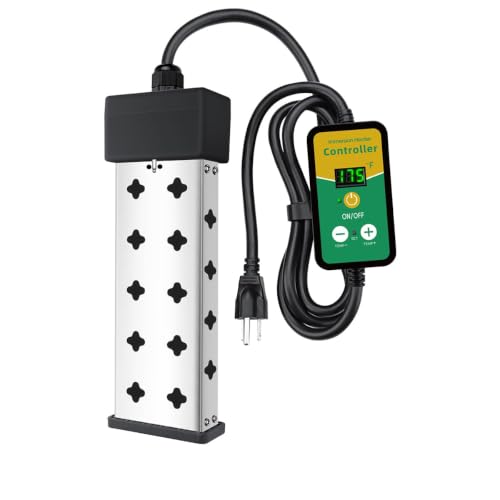
- BWP Score8.9
BWP Score is a ranking system developed by Bestwinterproducts.com. BWP score has no relationship or impact from any manufacturers or sales agent websites. Learn more
- Brandyoisie

- BWP Score9.4
BWP Score is a ranking system developed by Bestwinterproducts.com. BWP score has no relationship or impact from any manufacturers or sales agent websites. Learn more
- BrandNiaoChao

- BWP Score8.9
BWP Score is a ranking system developed by Bestwinterproducts.com. BWP score has no relationship or impact from any manufacturers or sales agent websites. Learn more
- BrandHenSinTc

- BWP Score8.5
BWP Score is a ranking system developed by Bestwinterproducts.com. BWP score has no relationship or impact from any manufacturers or sales agent websites. Learn more
- BrandKENUOS

- BWP Score7.1
BWP Score is a ranking system developed by Bestwinterproducts.com. BWP score has no relationship or impact from any manufacturers or sales agent websites. Learn more
- BrandQENIVO

- BWP Score7.8
BWP Score is a ranking system developed by Bestwinterproducts.com. BWP score has no relationship or impact from any manufacturers or sales agent websites. Learn more
- BrandLumiHol

- BWP Score7.6
BWP Score is a ranking system developed by Bestwinterproducts.com. BWP score has no relationship or impact from any manufacturers or sales agent websites. Learn more
- BrandECOAPTUNIT
Last update on 2026-10-09 / Affiliate links / Images, Product Titles, and Product Highlights from Amazon Product Advertising API
FAQs
Will an electric tankless water heater overload my home breaker panel?
Yes, an electric tankless heater can easily overload a typical home panel if you choose a whole-house unit. Whole-home electric models draw between 80 and 150 amps, which often requires an upgrade to a 200-amp or 300-amp main electrical service panel. Small point-of-use electric heaters designed for a single sink draw far less power, but they still require their own dedicated circuit.
How long does a standard water heater last compared to a tankless model?
A standard storage tank water heater typically lasts 8 to 12 years before mineral corrosion eats through the inner steel tank lining. A tankless water heater usually lasts 15 to 20 years or longer because it has no large storage tank holding standing water. Regular maintenance, such as flushing hard mineral scale from the heating tubes, is necessary to reach that full lifespan.
Why does my shower turn freezing cold when someone starts the washing machine?
In a home with a storage tank, simultaneous use drains hot water faster than the heating elements can recover, exhausting the stored supply. In a home with a tankless unit, running multiple fixtures exceeds the maximum flow rate the burner can heat at once. When water moves through a tankless heat exchanger faster than the burners can warm it, the unit cannot raise the water to your set temperature.
Can I install a new tankless water heater in the exact same footprint as my old tank?
You can mount a tankless heater on the wall near your old tank's location, but the connection points rarely match up. A tankless unit requires different venting materials, a relocated cold water inlet and hot water outlet, and frequently an enlarged gas supply pipe or new high-amperage electrical wiring. A licensed plumber must adapt your existing supply lines to meet the new unit's specifications.


Best Warm Winter Scarves 2026 For Cozy Comfort

Best Green Ski Goggles 2026 For Clear Vision On Slopes

12 Best Corner Electric Fireplace 2026: My Ultimate Guide To Pick One

Best Battery Powered Snow Blower 2026 For Effortless Snow Clearing

Best Ski Goggles Under 30 Inches For Crisp Vision And Comfort

Best Cooling Scarf 2026 For Instant Relief And Comfort

Fake Snow for Grass: Create a Realistic Winter Lawn Display

Dimplex Prism Wall Mount Fireplace: Sleek Heat With Modern Flame Style





