
When Should You Use a Water Heater Blanket?

A spike in your monthly utility bill can feel stressful, but figuring out how to stop wasted heat is nothing to lose sleep over. In short, use an insulation blanket only if the outside of your tank feels warm to the touch, especially if the unit sits in a chilly garage or unheated basement. Units that stay cool on the outside already trap heat effectively, so adding another layer provides zero extra savings.
A few clear factors change the decision for your specific setup. Older tanks often leak warmth through thin metal walls, while newer models feature dense foam insulation built directly into the jacket. Location and fuel type play an equally big role. Electric units are simple to cover, but gas heaters need open clearance around air intakes and vent pipes to keep exhaust fumes from backing up into your living space. Checking a few key spots will quickly show what your heater needs.
The Quick Touch Check for Standby Heat Loss
Standby heat loss is heat escaping through tank walls while water sits idle. Your water heater stores 40, 50, or even 80 gallons of hot water, keeping it ready at around 120 degrees Fahrenheit throughout the day. When the insulation inside the steel tank walls is thin or worn out, that thermal energy steadily escapes outward into the outer metal shell. The metal shell warms up and releases that heat straight into the surrounding room. Because the water inside slowly cools down on its own, your burner or electric elements must fire up repeatedly just to hold your set temperature, even when nobody has turned on a faucet for hours.
You do not need specialized tools, thermal cameras, or electrical meters to check if your tank is losing heat. All you need is your bare hand and thirty seconds.
Follow this simple checklist to inspect your water heater:
- Walk up to your water heater when your household has not run hot water for at least an hour.
- Place your bare palm flat against the painted metal jacket along the middle of the tank.
- Move your hand around the circumference and check the upper third of the tank wall.
- Note whether the metal feels distinctly warm to your skin or stays near room temperature.
If the outer metal jacket feels warm to the touch, like a warm mug of tea, heat is steadily radiating into the room. That warmth proves the internal insulation is failing to hold the heat inside, making an external blanket a practical way to stop the waste. If the metal jacket feels cool or matches the ambient temperature of the room, your tank already has dense, effective insulation sealed inside its shell. Adding a wrap over a cool tank saves virtually no extra energy because there is no escaping heat to block.
How Tank Age and Cold Rooms Change Your Savings
The age of your water heater is one of the most reliable indicators of whether you need extra insulation. Storage tanks built before the mid-2010s were produced under older energy standards that required only modest factory insulation. Manufacturers at that time typically used loose fiberglass batting between the inner steel tank and the outer metal shell. Over years of regular heating cycles, that fiberglass can settle, sag, or thin out, leaving portions of the tank walls unprotected. If your water heater is more than ten years old and feels warm on the outside, an insulation blanket can make an immediate difference in how often the heating cycle turns on.
Modern storage tanks tell a very different story. Newer units feature dense, polyurethane foam insulation blown directly into the wall cavity during manufacturing. This foam expands into a rigid, airtight barrier that blocks conductive heat transfer far better than old fiberglass batting. Most modern tanks stay completely cool on the outside even when the water inside is piping hot. As a result, newer models rarely need an extra blanket.
The space where your water heater lives matters just as much as how old it is. If your tank sits in an interior utility closet, a heated laundry room, or an insulated basement, the surrounding air stays comfortable throughout every season. The temperature difference between the 120-degree water inside the tank and the 70-degree room air is only about 50 degrees. Heat escapes slowly across that small gap, so standby losses remain modest.
Put that same water heater in an unheated garage, a drafty crawlspace, or an exterior shed, and the physics change completely. During winter cold snaps, temperatures in an unheated garage can drop close to freezing. When the air around the tank drops to 35 degrees, the temperature difference between the stored water and the room spikes to 85 degrees or more. Cold air acts like a sponge, pulling warmth through the metal tank shell much faster than warm air does. If you work to keep a cold outbuilding comfortable with an electric heater for a garage with a thermostat, you already know how quickly drafty spaces sap heat from warm surfaces. In a freezing garage, a warm water heater acts like an unintended space heater, burning fuel or drawing electricity all night to warm empty air. A quality insulation blanket creates an essential buffer that slows this rapid heat drain.
Critical Safety Clearances and When to Skip a Blanket
Wrapping a water heater is not as simple as throwing a blanket over a barrel. Doing it improperly can create serious fire hazards, trap deadly combustion gases inside your living space, or cause dangerous pressure spikes. Before you install any insulation wrap, you must understand the safety boundaries for your specific fuel type.
Gas water heaters demand the highest level of caution because they rely on open flames and continuous exhaust ventilation. The flue pipe (the metal pipe carrying exhaust gas outside) extends out of the top center of the tank and gets scorching hot whenever the burner fires. You must never cover the top of a gas water heater or let blanket insulation touch the flue pipe or the metal draft hood sitting above the tank. Placing insulation over the top can start a fire from the pipe heat or disrupt the natural upward draft of exhaust gases, spilling lethal carbon monoxide fumes into your home.
At the base of a gas unit, the burner air intake and access panel draw in fresh oxygen to sustain the burner flame. You must never drape insulation over the bottom six to eight inches of a gas heater or block the burner access door. Choking off the combustion air intake starves the flame, causing incomplete combustion, soot accumulation, and hazardous fume buildup. Always leave plenty of clearance around the bottom of the tank so the burner can breathe freely.
Electric water heaters have no exhaust vents or combustion chambers, making their exterior safer to wrap. You can safely cover the top of an electric storage tank with an insulation cap. However, electric units have two thermostat access panels on the side that house electrical wiring, heating elements, and safety switches. Never cover these access covers with insulation. Trapping excessive heat around the electrical terminals can overheat the wiring, melt protective coatings, or trip internal safety switches. Cut neat openings in the blanket so the inspection plates remain fully visible and ventilated.
Certain parts on every water heater must stay completely exposed regardless of fuel source. Never cover the temperature and pressure relief valve (the emergency valve that releases water if pressure spikes) or the discharge tube running down toward the floor. If pressure or temperature climbs dangerously high inside the tank, this valve must open instantly. Covering this valve can jam the safety lever or hide early water leaks. Also, keep the drain valve near the bottom accessible, and leave all manufacturer warning stickers and rating plates visible for service technicians.
Skip an insulation blanket entirely under three clear conditions. First, skip it if your touch check shows the tank is already cool to the touch. Second, skip it if the warning sticker on your tank explicitly forbids external wraps, as extra insulation can cause internal sensors to misread temperatures and void your warranty. Third, skip it if you own a tankless water heater. Tankless units heat water on demand as it flows through internal coils, meaning they store no standing water and suffer no standby heat loss.
What to Look for in a Water Heater Insulation Wrap
If your touch check confirms your storage tank is leaking heat and your manufacturer guidelines allow a wrap, choosing the right insulation material ensures you get lasting energy savings without safety headaches. Water heater blankets generally fall into two categories: reflective foil foam and vinyl-faced fiberglass.
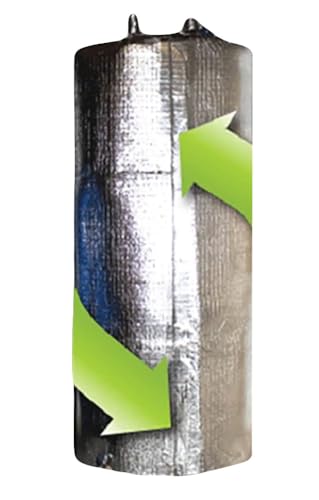
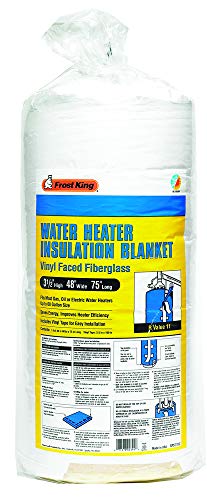
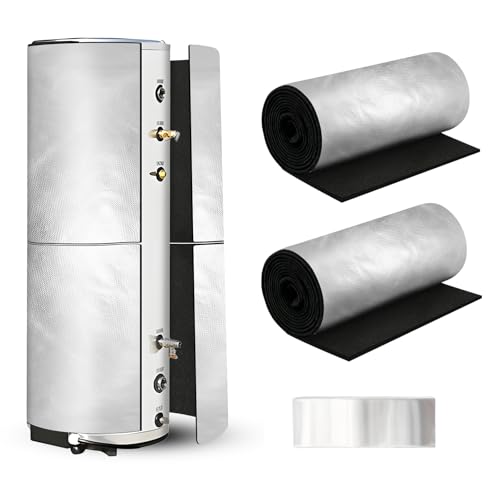
Reflective foil blankets use closed-cell foam or bubble barriers sandwiched between aluminum foil panels. These wraps work by reflecting escaping radiant heat back into the tank shell. They are lightweight, thin, and easy to trim with standard utility scissors, and they produce zero loose fibers, so you can handle them without skin irritation or specialized safety gear. Vinyl-faced fiberglass wraps use thick glass fiber batting covered by a protective outer vinyl skin. Fiberglass provides traditional bulk insulation that blocks conductive heat transfer. If you handle fiberglass blankets, always wear work gloves, long sleeves, and a dust mask to keep stray glass fibers off your skin and out of your lungs.
Pay close attention to the R-value of the blanket. R-value is the measurement of how well insulation blocks heat, with higher numbers indicating better heat resistance. Most water heater wraps range between R-8 and R-12. If your heater sits in a cold garage or drafty basement, choosing an option with a higher R-value provides the extra thermal barrier needed to overcome cold ambient air.
Check the sizing dimensions to ensure the blanket fits your specific tank capacity. Storage tanks come in different heights and widths depending on whether they hold 40, 50, 60, or 80 gallons. Measure your tank height and circumference before ordering so you have enough material to wrap around the cylinder with a slight overlap. Look for kits that include heavy-duty aluminum foil tape to seal the seams tightly. Standard duct tape dries out, turns brittle from the heat of the tank, and peels away over time, leaving open gaps that allow heat to escape.

- BWP Score9.6
BWP Score is a ranking system developed by Bestwinterproducts.com. BWP score has no relationship or impact from any manufacturers or sales agent websites. Learn more
- BrandAES
- BWP Score9.1
BWP Score is a ranking system developed by Bestwinterproducts.com. BWP score has no relationship or impact from any manufacturers or sales agent websites. Learn more
- BrandTrade Winds

- BWP Score8.4
BWP Score is a ranking system developed by Bestwinterproducts.com. BWP score has no relationship or impact from any manufacturers or sales agent websites. Learn more
- BrandFrost King
- BWP Score8.3
BWP Score is a ranking system developed by Bestwinterproducts.com. BWP score has no relationship or impact from any manufacturers or sales agent websites. Learn more
- BrandFrost King
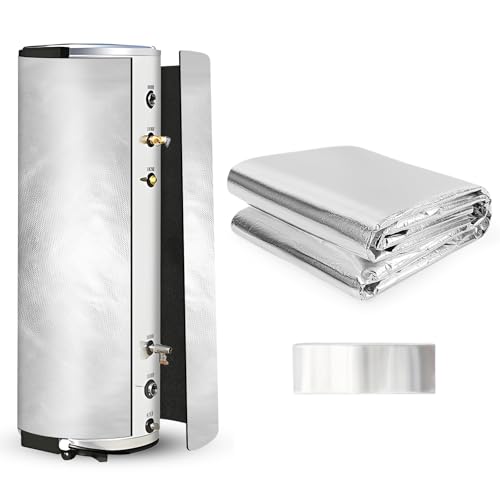
YIBOBO Upgraded Water Heater Insulation Blanket, 76"x48" Pre-Oxidized Fiber Technology
View on Amazon- BWP Score8.1
BWP Score is a ranking system developed by Bestwinterproducts.com. BWP score has no relationship or impact from any manufacturers or sales agent websites. Learn more
- BrandYIBOBO
- BWP Score8.1
BWP Score is a ranking system developed by Bestwinterproducts.com. BWP score has no relationship or impact from any manufacturers or sales agent websites. Learn more
- BrandYIBOBO

- BWP Score7.5
BWP Score is a ranking system developed by Bestwinterproducts.com. BWP score has no relationship or impact from any manufacturers or sales agent websites. Learn more
- BrandYIBOBO

- BWP Score7.1
BWP Score is a ranking system developed by Bestwinterproducts.com. BWP score has no relationship or impact from any manufacturers or sales agent websites. Learn more
- BrandYIBOBO
Last update on 2026-10-08 / Affiliate links / Images, Product Titles, and Product Highlights from Amazon Product Advertising API
FAQs
Does an electric water heater benefit more from a blanket than a gas unit?
Electric water heaters often gain more practical benefit from an insulation blanket because you can safely cover their top dome in addition to the side walls. Gas units must leave the top flue pipe and bottom combustion intake completely open, which naturally limits where insulation can go. Even so, both types see measurable energy savings if the outer shell feels warm to the touch and sits in an unheated room.
Will putting an insulation blanket on my water heater void the warranty?
Installing a blanket can void the warranty on certain modern water heaters if the manufacturer explicitly prohibits external wraps in the user manual. Some manufacturers design their units with sensitive internal thermostats and safety sensors that can overheat if extra insulation traps heat against the outer metal casing. Check the printed warning sticker on the side of your tank or review your manual before purchasing an insulation wrap.
Can I wrap the hot water pipes connected to the tank as well?
Insulating the first three to six feet of exposed hot and cold water pipes connected to your tank is an effective way to stop heat from escaping. Foam pipe sleeves slip directly over exposed copper or plastic pipes, keeping water hotter as it travels to your fixtures and reducing wait times at the tap. If you have a gas water heater, keep all foam pipe insulation at least six inches away from the metal flue exhaust pipe to prevent melting or fire hazards.


Best Warm Winter Scarves 2026 For Cozy Comfort

Best Green Ski Goggles 2026 For Clear Vision On Slopes

12 Best Corner Electric Fireplace 2026: My Ultimate Guide To Pick One

Best Battery Powered Snow Blower 2026 For Effortless Snow Clearing

Best Ski Goggles Under 30 Inches For Crisp Vision And Comfort

Best Cooling Scarf 2026 For Instant Relief And Comfort

Fake Snow for Grass: Create a Realistic Winter Lawn Display

Dimplex Prism Wall Mount Fireplace: Sleek Heat With Modern Flame Style





