
Why Does a 1500W Hanging Infrared Patio Heater Stand Out?

Most people assume that staying warm outdoors requires massive propane towers or giant commercial heaters. That belief overlooks how radiant heat works: it warms people directly like sunlight instead of wasting energy on moving air. Because the unit suspends overhead, it clears up tight floor space and plugs right into an ordinary household outlet without special rewiring.
Getting the most comfort depends on your patio setup. The unit needs enough overhead clearance to sit safely above chairs, a sheltered roof to block driving rain, and an electrical circuit that is not already overloaded by other appliances. Here is why this hanging design solves common cold-weather deck problems and how to confirm it fits your porch.
Infrared Heats People Directly Instead of Blowing Moving Air
Standard outdoor space heaters struggle because of basic physics. Most common indoor heaters use fan-forced heat, which warms the surrounding air and circulates it through a room. That method fails the moment you step outside. On an open deck or covered patio, outdoor air moves constantly. Even on a calm evening, light breezes pull warm air away into the yard before you can ever feel it. You end up wasting electricity trying to heat the outdoor atmosphere while remaining chilled in your chair.
A hanging infrared heater solves this issue by using radiant warmth that works like sunlight. Instead of trying to warm the air, infrared waves travel in straight lines until they hit a solid object. When those waves reach your clothing, your skin, or your patio furniture, the surface absorbs the heat directly. You feel warming comfort across your upper body right away. A sudden gust of wind cannot push infrared rays aside or carry your warmth away.
Most hanging ceiling heaters feature a carbon fiber heating tube that begins radiating heat in just one second. This element operates silently with no humming fan motor and no blowing air. Because there is no blower, the unit will not kick up dust, scatter leaves across the deck, or blow napkins off your outdoor dining table. It delivers quiet warmth with a cozy ambient glow that makes an evening patio comfortable without interrupting conversation. If your outdoor space includes screen panels or glass windows, adding a dedicated heater for an enclosed porch to warm drafty spaces can lock in that direct warmth even more effectively against chilly night drafts.
A 1500-Watt Rating Plugs Into Standard Household Outlets
Outdoor heating options often fall into two extremes. On one side are tall propane heaters. While propane produces plenty of heat, it forces you to haul heavy 20-pound fuel tanks, wrestle with tank refills in freezing weather, and monitor open flames near ceiling rafters. On the other side are commercial electric heaters drawing 3,000 to 5,000 watts. Those powerful models require 240-volt electrical lines, meaning you must hire an electrician to run thick cables and install specialized double-pole breakers in your main electrical panel.
A 1500-watt electric heater stands out because it balances effective warmth with everyday household convenience. In American homes, standard residential outlets supply 120 volts. Running a heater at 1500 watts on a 120-volt line draws roughly 12.5 amps of electrical current. This matches the safe design limit for common household plug-in appliances. You do not need to rewire your home, drill through foundation walls for commercial conduits, or schedule costly electrical upgrades just to enjoy your deck in late autumn.
Understanding how your circuit handles this electrical load helps prevent unexpected power cuts. Most general outdoor circuits use a 15-amp circuit breaker, which can safely carry up to 1,800 watts. Standard safety practices limit continuous heating loads to 80 percent of a breaker capacity, which equals roughly 1,440 to 1,500 watts. Because a 1500-watt heater takes up that entire allowance, you should plug it into an outdoor circuit that is not running other high-draw appliances. If you share that line with an outdoor refrigerator, an electric grill, or a blender, the breaker will trip to protect the wiring from overheating.
Always plug the heater directly into an outdoor wall outlet rather than using an indoor extension cord or power strip. Light household extension cords have thin wires that can overheat, melt, and spark fires when carrying 12.5 amps continuously. If you must use an extension cord, choose a heavy-duty outdoor cord labeled 12-gauge (12 AWG) or 14-gauge (14 AWG) and keep the connection dry. For homeowners who divide time between a patio lounge and a workshop bench, choosing an electric heater for a garage with a thermostat allows you to keep utility rooms warm without overloading your main circuits.
Hanging Heaters Save Floor Space and Prevent Tip-Over Accidents
Floor space on any patio, deck, or balcony is limited. Between dining tables, chairs, planters, and walkways, there is rarely room for a bulky floor heater. Freestanding propane towers use wide weighted bases that clutter valuable square footage. They also create awkward obstacles, forcing guests to squeeze past hot metal shields to reach their seats.
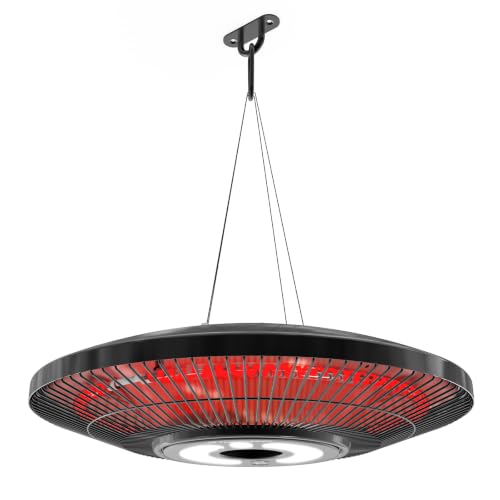
Suspending a heater from your patio ceiling or pergola roof clears the floor completely. Lifting the unit overhead reclaims your walkway and keeps your entertaining space open. The heater hangs like a chandelier directly above your seating group. From this overhead position, its reflector casts 360-degree radiant warmth across everyone seated below, rather than heating one person while leaving others cold.
Elevating the heat source also removes the risk of tip-over accidents. Freestanding heaters can get knocked over by energetic dogs, bumped by children, or tipped by sudden winds. While many floor heaters include a tip-over safety switch that cuts power if tilted, a hanging heater cannot be knocked over in the first place. It stays securely suspended out of reach from kids, pets, and patio furniture.
Hanging heaters also include an automatic overheat sensor. This safety sensor continuously monitors internal operating temperatures. If debris or an unusual power surge causes internal parts to get dangerously hot, the sensor cuts power automatically before damage can occur. These built-in protections let you entertain guests without worrying about hot metal surfaces at floor level.
Proper Mounting Height Keeps Ceilings Safe and Heat Focused
Hanging an infrared heater overhead requires following exact clearance measurements. If you hang the unit too high, the radiant heat rays disperse and feel weak by the time they reach you. If you hang it too low, tall guests might bump their heads, and the heat can feel uncomfortably intense. You must also maintain adequate space between the heater and your ceiling materials to prevent fire risks.
Follow this practical safety checklist when measuring and securing your hanging heater:
- Set the bottom of the heater between 6.5 feet and 7 feet (78 to 84 inches) above the floor. This provides comfortable headroom for tall adults while keeping radiant warmth close enough to heat your upper body.
- Maintain at least 12 to 18 inches of clearance between the top of the heater and the ceiling. This buffer prevents trapped heat from scorching wood beams, vinyl soffits, or gazebo fabric.
- Keep a 3-foot safety buffer between the heater and surrounding objects. Keep patio curtains, outdoor blinds, hanging plants, and furniture at least 36 inches away from the heating element.
- Anchor the suspension chain directly into solid structural framing. Screw a heavy-duty steel eye hook into a solid wood ceiling joist or structural beam. Never hang the unit from thin vinyl panels or decorative lattice that cannot support continuous weight.
- Remove all packing materials before switching the unit on. Look inside the wire grille and remove any foam shipping pads protecting the carbon fiber heating tube. Leaving protective foam in place can cause it to melt, smoke, and catch fire immediately.
After securing your ceiling hook, attach the steel chain using the included carabiner clips. Adjust the chain links until the unit hangs level at your target height. Fasten the power cord neatly along the ceiling beam with exterior clips, keeping the wire from resting against the hot heater casing.
Weatherproof Ratings Protect Your Heater From Outdoor Rain Splashes
Because outdoor areas face humidity, morning dew, and windblown rain, an outdoor heater must handle damp conditions. You should never hang an ordinary indoor space heater outside, as moisture entering an unsealed casing can cause short circuits and electrical shocks. A dedicated outdoor hanging heater uses sealed components designed for wet weather.
When comparing models, check the IP rating. The IP rating (Ingress Protection rating, a two-digit code indicating resistance to dust and moisture) shows how well the housing seals out the elements. Many quality hanging models carry an IP65 rating. The number 6 means the housing is completely sealed against blowing dust. The number 5 means the unit resists water spray and rain splashes from any direction without moisture reaching internal wiring.
Durable outdoor units pair water resistance with a heavy-duty aluminum housing. Aluminum naturally resists rust and corrosion, even in humid climates or coastal areas with salt air. The metal shell protects the carbon fiber heating tube and internal reflector, letting the heater hang outside through changing seasons without deteriorating.
Safe outdoor operation also depends on your electrical outlet. Your outdoor receptacle should be a GFCI outlet (ground fault circuit interrupter, a safety outlet with a reset button that cuts power instantly if it detects moisture). The outlet should also have an in-use weatherproof cover, which shields the plug from falling rain while the cord is connected. During freezing winter months or extended periods without use, unclip the heater from its chain and store it indoors to prolong the life of the heating tube.
What to Check Before Choosing an Outdoor Hanging Heater
Choosing the right hanging infrared patio heater comes down to matching your outdoor shelter with the right hardware features. First, inspect your ceiling structure to confirm you have a solid wood beam or metal frame capable of supporting a suspended fixture. Look for a model that includes an adjustable steel suspension chain and locking carabiner clips so you can dial in the exact hanging height your space needs without buying extra mounting brackets.
Pay close attention to how you will control the heater once it is suspended overhead. Because the unit hangs 7 feet in the air, reaching up to press a physical power button on the casing can be awkward or unsafe. Look for a model that includes a wireless handheld remote control or a long, sturdy pull cord that hangs down within easy reach. Remote controls allow you to switch the power on, toggle between heat settings, and turn off the ambient glow directly from your patio chair.
Next, verify the build quality and official safety markings on the product label. Choose a heater crafted with rust-resistant aluminum housing and certified with recognized US safety marks such as ETL or CSA. These certification seals confirm that the unit meets strict electrical safety standards for outdoor residential use. Finally, check the length of the attached power cord to ensure it reaches your outdoor weatherproof outlet without straining or hanging near the heat path. A properly matched hanging infrared heater will keep your covered patio warm, safe, and open all season long.

- BWP Score9.6
BWP Score is a ranking system developed by Bestwinterproducts.com. BWP score has no relationship or impact from any manufacturers or sales agent websites. Learn more
- Brandsundate

- BWP Score9.1
BWP Score is a ranking system developed by Bestwinterproducts.com. BWP score has no relationship or impact from any manufacturers or sales agent websites. Learn more
- BrandDanluke
- BWP Score9.4
BWP Score is a ranking system developed by Bestwinterproducts.com. BWP score has no relationship or impact from any manufacturers or sales agent websites. Learn more
- Brandthermomate

- BWP Score7.7
BWP Score is a ranking system developed by Bestwinterproducts.com. BWP score has no relationship or impact from any manufacturers or sales agent websites. Learn more
- BrandDanluke

- BWP Score8.8
BWP Score is a ranking system developed by Bestwinterproducts.com. BWP score has no relationship or impact from any manufacturers or sales agent websites. Learn more
- BrandDR. INFRARED HEATER

- BWP Score8.3
BWP Score is a ranking system developed by Bestwinterproducts.com. BWP score has no relationship or impact from any manufacturers or sales agent websites. Learn more
- BrandParaheeter

- BWP Score8.0
BWP Score is a ranking system developed by Bestwinterproducts.com. BWP score has no relationship or impact from any manufacturers or sales agent websites. Learn more
- Brandsundate
Last update on 2026-10-08 / Affiliate links / Images, Product Titles, and Product Highlights from Amazon Product Advertising API


Best Warm Winter Scarves 2026 For Cozy Comfort

Best Green Ski Goggles 2026 For Clear Vision On Slopes

12 Best Corner Electric Fireplace 2026: My Ultimate Guide To Pick One

Best Battery Powered Snow Blower 2026 For Effortless Snow Clearing

Best Ski Goggles Under 30 Inches For Crisp Vision And Comfort

Best Cooling Scarf 2026 For Instant Relief And Comfort

Fake Snow for Grass: Create a Realistic Winter Lawn Display

Dimplex Prism Wall Mount Fireplace: Sleek Heat With Modern Flame Style





