
Why a 50-Inch Electric Fireplace Heater Fits Most Homes

Most people assume electric fireplaces are just weak decorative novelties that drive up electric bills without warming a room. That skepticism makes sense, but 50-inch linear heaters actually hit the ideal balance between room scale and supplemental warmth. They deliver enough heat to comfortably warm up to 400 square feet, all while running on standard household power without needing a chimney or vent.
Whether one fits your home comes down to a few basic layout checks. Room size determines if you only need supplemental heat (extra warmth for a single room) or a primary furnace replacement. Your television width and wall space decide if the proportions look balanced, while your circuit capacity determines if the wall outlet can handle the load. Here is how this specific size solves common living room dilemmas without complicated renovations.
The Short Version
- Matches popular televisions: At roughly 50 inches wide, this size aligns naturally beneath 50-inch to 65-inch flat screens, creating clean vertical balance without dominating the room.
- Practical supplemental warmth: A standard 1500-watt heating coil warms up to 400 square feet, providing supplemental heat (extra warmth for one room) without touching the central thermostat.
- Front-venting TV safety: Heated air discharges forward into the living area rather than upward, protecting overhead televisions and drywall when safe clearances are maintained.
- Year-round ambiance: Independent flame controls let you enjoy flickering fire visuals without heat, using only pennies of electricity per hour during warmer months.
The Visual Balance: Why 50 Inches Matches Living Room Walls and TVs
Televisions and fireplaces are measured differently, which often confuses homeowners planning a media wall. A television is measured diagonally from corner to corner. A 55-inch television is about 48 inches wide from side to side, while a 65-inch television is roughly 57 inches wide. An electric fireplace is measured straight across the outer frame, so a 50-inch model spans nearly 50 horizontal inches.
Placing a 50-inch fireplace directly beneath a 50-inch to 55-inch television creates a balanced vertical column. The fireplace base is slightly wider than the screen, anchoring the wall so the television does not appear top-heavy. Even beneath a 65-inch screen, a 50-inch fireplace provides enough visual weight to look intentional and proportional.
Wall construction also makes 50 inches practical. Standard American home walls feature vertical wooden studs spaced 16 inches apart on center. A 50-inch unit spans across three stud cavities. To set the unit recessed (set flush into the wall), an installer cuts two interior studs and frames a horizontal header. Most 50-inch models measure between 3.5 and 6 inches deep. A standard interior wall built with two-by-four studs provides 3.5 inches of internal cavity depth. Slim models slide directly into that space, while deeper units fit smoothly into custom shallow bump-out walls without consuming floor space.
Realistic Heating Power: What 1500 Watts Can and Cannot Warm
Homeowners often worry that an electric fireplace is merely a decorative novelty that blows lukewarm air. Understanding the electrical limits helps set realistic expectations. Plug-in electric fireplaces designed for US homes run on a 120-volt household circuit. Electrical safety standards limit continuous plug-in heaters to 1500 watts, producing roughly 5,000 BTUs of heat per hour.
As a general rule, electric heaters require roughly 10 watts of power per square foot of living space. In a closed bedroom, 1500 watts can act as the main heat source for about 150 square feet. In an open living room, however, the fireplace functions as supplemental heat (extra warmth for one room). It comfortably warms a 300 to 400 square foot seating area around your sofa, taking the chill off the room while family members relax.
Most units offer two power levels: a low 750-watt mode for mild days and a high 1500-watt mode for rapid heating. An internal fan pushes warm air across the room quietly, circulating warmth without the roaring blower noise of an older furnace.
An electric fireplace cannot replace your central heating system or warm a drafty, uninsulated house. If you need to heat an uninsulated porch or sunroom, you would need a heavy-duty heater to warm drafty spaces rather than an indoor linear unit. For living rooms, using targeted zone heat lets you lower your main thermostat by a few degrees and save on central heating bills.
Mounting a Television Above the Fireplace: Safety and Clearances
The most common way to install a 50-inch fireplace is directly beneath a wall-mounted television. Homeowners naturally worry that heat rising from the fire will damage internal television electronics or warp the screen. Traditional wood-burning and gas hearths release intense heat directly upward, but electric linear fireplaces are engineered specifically for media walls.
Electric fireplaces pull cool air in through intake slots and blow warm air out through front-facing vents. Because heated air pushes forward into the room rather than traveling up the drywall, the wall surface above stays safe. Follow these steps to protect your electronics:
- Confirm front-vent airflow: Verify that the discharge vents face forward into the room. Avoid top-venting models for recessed installations, as trapping heat inside a wall cavity creates a fire hazard and triggers the safety cutoff.
- Maintain safe clearance: Safe empty space around the heater is critical. Keep at least 8 to 12 inches of vertical clearance between the top of the fireplace frame and the bottom edge of your television.
- Add a deflector mantel if space is tight: If your ceiling height forces you to mount the television closer than 8 inches, install a shallow floating shelf between them. The shelf acts as a physical shield, deflecting rising warm air out into the room before it touches the television screen.
- Check wall temperature by hand: Run the fireplace heater on high for 30 minutes, then place your hand on the drywall beneath the television mount. The wall should feel mildly warm. If the drywall feels hot to the touch, raise the television mounting bracket or install a deflector shelf.
Year-Round Comfort: Flame Visuals Without the Heat
Traditional wood or gas fireplaces sit unused for six to eight months every year. Lighting a real fire during spring or summer produces unwanted heat that overworks your air conditioner and makes your home uncomfortable.
A 50-inch electric fireplace solves this limitation by separating the visual flame effects from the heating element. Modern units use low-power LED light strips paired with rotating mirrors or digital screens to produce flickering flames and glowing embers. This lighting system works independently from the heating coil and fan.
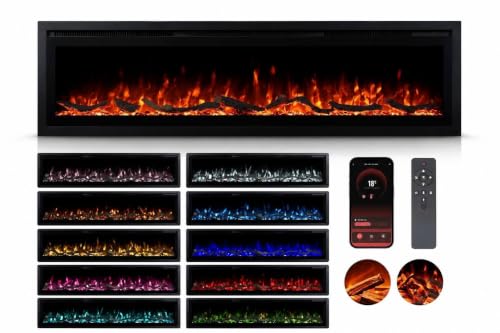
You can turn on the flame visuals in the middle of summer without generating any heat. This lets you enjoy the calming ambiance of a fire during dinner parties, movie nights, or quiet evenings. Many models also let you cycle through different flame colors, adjust brightness levels, or switch between crystal beds and realistic faux birch logs.
Running the flame display alone uses very little electricity. The LED lighting draws only 15 to 30 watts of power, which is comparable to one or two household light bulbs. You can run the flame effects all evening for just pennies per day.
Power and Wiring: Standard Outlets Versus Hardwired Setups
Before installing your fireplace, you need to decide how it will connect to electrical power. You can plug the unit into a standard wall outlet or hardwire it directly into your home wiring.
Most units include a three-prong grounded power cord that plugs into an ordinary 120-volt wall outlet. But you must consider the electrical load. At its full 1500-watt heat setting, the heater draws roughly 12.5 amps. A standard household circuit breaker is rated for 15 amps, meaning the fireplace consumes over 80 percent of the circuit's total capacity.
To avoid tripping breakers, keep other heavy-draw appliances off that same circuit while the heater runs on high. Never plug an electric fireplace into an extension cord, power strip, or surge protector. Extension cords add electrical resistance, which causes wires to overheat and melt, creating an immediate fire hazard. Always plug directly into a firmly seated wall outlet.
If you want a clean look with no visible cords, you can have the unit hardwired (connected directly to house wiring without a plug). The installer removes the unit's metal knockout plate, feeds non-metallic cable into the internal junction box, and caps the connections securely. If you need a new dedicated 15-amp line from your service panel, call a licensed electrician. For specialized spaces with heavy electrical needs like an unheated workshop, you would look at a 240-volt heater for steady warmth, but a standard 120-volt 15-amp circuit easily powers your living room fireplace.
What to Look for in a 50-Inch Electric Fireplace
Choosing the right 50-inch model depends on your room layout, wall construction, and heating goals. Start by measuring your available wall cavity depth. Slim models measuring around 3.5 inches deep slide directly between standard interior wall studs without requiring structural framing changes. Deeper models measuring 5 to 6 inches deep allow for layered faux logs and larger crystal beds, but they usually require building a shallow bump-out feature wall into the room.
Check the heat discharge vent location. If you plan to recess the unit flush into drywall or mount a television overhead, choose a model with front-facing vents. Top-venting models are designed only for hanging flat on the wall surface; recessing a top-vent unit traps heat inside the wall cavity and creates a fire hazard.
Look for a model with a digital temperature dial that clicks on and off to hold your set warmth. A built-in thermostat lets you set a specific target temperature, like 72 degrees Fahrenheit, and automatically powers down the heating element once the room reaches that level. This prevents the living room from overheating and saves electricity throughout the day. Always verify that the fireplace carries recognized US safety certification marks, such as UL or ETL listings, on the product label.

- BWP Score8.9
BWP Score is a ranking system developed by Bestwinterproducts.com. BWP score has no relationship or impact from any manufacturers or sales agent websites. Learn more
- BrandTouchstone

- BWP Score8.5
BWP Score is a ranking system developed by Bestwinterproducts.com. BWP score has no relationship or impact from any manufacturers or sales agent websites. Learn more
- BrandTouchstone
- BWP Score8.0
BWP Score is a ranking system developed by Bestwinterproducts.com. BWP score has no relationship or impact from any manufacturers or sales agent websites. Learn more
- BrandWEKA FIREPLACE

- BWP Score8.0
BWP Score is a ranking system developed by Bestwinterproducts.com. BWP score has no relationship or impact from any manufacturers or sales agent websites. Learn more
- BrandPRISMASTER ...KEEPS YOUR HOME STYLISH

- BWP Score7.8
BWP Score is a ranking system developed by Bestwinterproducts.com. BWP score has no relationship or impact from any manufacturers or sales agent websites. Learn more
- BrandTehanld

- BWP Score7.3
BWP Score is a ranking system developed by Bestwinterproducts.com. BWP score has no relationship or impact from any manufacturers or sales agent websites. Learn more
- BrandElectactic
Last update on 2026-10-06 / Affiliate links / Images, Product Titles, and Product Highlights from Amazon Product Advertising API
Frequently Asked Questions
Can a 50-inch electric fireplace heat a room if the power goes out?
No, an electric fireplace relies entirely on household electricity to run the heating element, blower fan, and flame display. If a winter storm cuts your power, the unit will not produce heat. If you need emergency backup heat during utility outages, you must rely on a generator or a non-electric heat source.
Does an electric fireplace require a chimney, vent pipe, or gas line?
No venting or chimney is required. Electric fireplaces create warmth by blowing air across an electric heating coil, producing zero smoke, soot, or carbon monoxide. You do not need to cut exterior vent pipes through your roof or exterior siding.
Will running an electric fireplace cause high power bills?
It depends on how often you turn on the heat function. Running only the LED flame visual draws between 15 and 30 watts, costing only pennies per day. Using the 1500-watt heater for several hours each evening will increase your electric bill, but using it as supplemental heat while lowering your central thermostat can actually reduce total winter heating expenses.
Can I mount a 50-inch fireplace on drywall without cutting into the wall?
Yes, many models include surface-mounting brackets that let you hang the unit directly on your wall just like a heavy picture frame. While setting the fireplace flush into the wall creates a sleeker profile, surface mounting avoids drywall cutting and lets you install the unit in under an hour.


Best Warm Winter Scarves 2026 For Cozy Comfort

Best Green Ski Goggles 2026 For Clear Vision On Slopes

12 Best Corner Electric Fireplace 2026: My Ultimate Guide To Pick One

Best Battery Powered Snow Blower 2026 For Effortless Snow Clearing

Best Ski Goggles Under 30 Inches For Crisp Vision And Comfort

Best Cooling Scarf 2026 For Instant Relief And Comfort

Fake Snow for Grass: Create a Realistic Winter Lawn Display

Dimplex Prism Wall Mount Fireplace: Sleek Heat With Modern Flame Style





