
Why the Costway 1500W Oil Radiator Stands Out for Silent Heat

A chilly bedroom at midnight often means waking up to a rattling fan heater blowing parched air across the blankets. This heating design shines because it delivers completely silent, continuous warmth by letting sealed oil gently radiate heat without any noisy blower. Because the thick fluid holds its temperature, it keeps the room cozy long after cycling off, without drying out sensitive sinuses or clicking repeatedly through the night.
That steady comfort works best under certain conditions. It warms enclosed rooms like bedrooms and home offices far better than drafty living areas with tall ceilings. The metal fins also need roughly fifteen minutes to heat up, so it rewards patience rather than instant-blast demands. Lower wattage settings let you run gentle heat overnight without tripping a shared bedroom circuit. Here is a closer look at how this heating design works and why it fits quiet spaces so well.
Silent Natural Airflow: Why Sealed Oil Beats Forced-Air Blowers for Sleep
When winter temperatures drop, heating a bedroom or home office often turns into an annoying compromise. Ceramic fan blowers push warmth into the room quickly, but they bring irritating noise that disrupts light sleepers. A standard fan heater whirs, hums, and rattles through the night, waking you every time the motor cycles on. Forced-air blowers also whip dust and pet dander through the room while blowing dry air across your face. That constant air movement dries out nasal passages, leading to scratchy throats and morning sinus headaches.
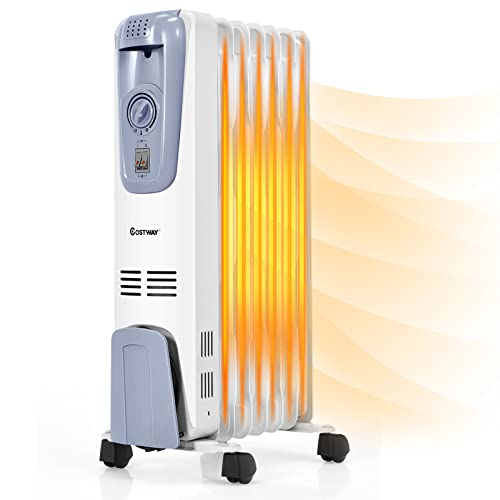
The Costway 1500W oil-filled radiator heater solves these comfort problems by ditching the motorized blower fan altogether. Instead of blasting air across red-hot electric coils, it relies on natural airflow (warm air rising gently on its own without a blower fan). Electrical elements heat a reservoir of permanently sealed diathermic oil inside the unit. This fluid circulates through 7 vertical heating fins (the vertical metal sections holding the warm oil). As the oil flows through the sealed chambers, it warms the exterior steel fins. Cool air near the floor naturally flows upward between the fins, absorbs the heat, and floats into the room on gentle thermal currents.
This natural heating process produces completely silent operation. Because there are no moving fans or motor bearings, the radiator operates with zero drone. The only sound you might notice is an occasional gentle click as the temperature dial switches the heating element on or off. You get continuous warmth that lets you sleep soundly, work without distraction, or watch television in peace.
Another advantage of this sealed oil design is thermal retention. Ceramic fan heaters provide quick heat, but the room cools down the moment their motor stops. An oil radiator behaves like a heat battery. The warm oil inside the 7 steel fins retains thermal energy for a long time, continuing to release gentle warmth into the room even after the electrical element cycles off.
Oil radiators trade instant startup speed for lasting, stable comfort. A fan heater blows hot air within seconds, whereas a sealed oil radiator needs roughly 15 to 20 minutes to heat its fluid reservoir and warm the room air. Giving the unit that short warmup window rewards you with steady, quiet warmth that avoids dry air and temperature swings.
Flexible Power Management: How Three Heat Settings Protect Your Breakers
Tripping a circuit breaker is a common winter headache in older homes and apartments. In standard American homes, bedrooms, living rooms, and offices are generally wired with 15-amp branch circuits operating at 120 volts. Under standard household electrical guidelines, you should never place more than an 80 percent continuous load on a single breaker. On a standard 15-amp breaker, that continuous threshold is roughly 1,440 watts.
When you run a space heater at its maximum 1500-watt power level, it pulls roughly 12.5 amps of electrical current on its own. If you have a computer, television, or light fixtures running on that same shared circuit, the total power draw quickly exceeds 15 amps. The breaker clicks off, cutting power to the entire room.
The Costway 1500W radiator prevents these sudden blackouts with 3 distinct heat settings: 600 watts on Low, 900 watts on Medium, and 1500 watts on High. Having access to lower wattage tiers lets you match the heater's electrical draw to whatever else is running in your room:
- Start on High (1500W) when entering a cold room to quickly heat the internal oil and steel fins.
- Switch down to Medium (900W) or Low (600W) once the room feels comfortable. At the 600-watt setting, the heater draws only 5 amps, leaving ample electrical capacity for laptops and lighting.
- Set the temperature dial (the knob that turns heat on and off to hold room warmth) to maintain your comfort level. Turn the dial clockwise to build heat, then slowly rotate it back until it clicks. The unit will hold that room temperature by cycling automatically.
Running the heater on 600W or 900W prevents unexpected electrical overloads. You can keep your work setup powered without worrying about tripped breakers. Balancing electrical loads is equally critical when heating other household areas, such as choosing the best electric heater for garage with thermostat setups where heavy tools and heaters share limited panel capacity.
Built-In Safety and Everyday Handling Around the House
Safety is always the top priority when running an electric space heater overnight or near energetic pets and children. Because an oil radiator runs continuously for hours, protective features are necessary to prevent fire hazards and surface scorching. The Costway radiator addresses these concerns with automatic safety mechanisms that cut power the moment an unsafe condition occurs.
The heater includes an internal tip-over safety switch that cuts power instantly if the unit is knocked over or tilted. If a playful dog bumps into the side or someone trips on the base in the dark, the internal pendulum switch disconnects electrical power immediately. The heater will not restart until it sits flat and upright again.
It also features an automatic overheat sensor that shuts the unit off if internal parts get dangerously hot. If blankets, laundry, or curtains fall over the heating fins, heat builds up rapidly inside the steel columns. The overheat sensor detects this spike and breaks the electrical circuit before metal or nearby fabrics can scorch.
Even with automated shutoffs, following basic safety practices prevents accidents. Use this checklist to confirm your radiator is operating safely in your living space:
- Maintain a 3-foot safety buffer: Keep at least 3 feet (36 inches) of open clearance on all sides away from bedding, drapes, furniture, clothing, and papers.
- Plug directly into a wall outlet: Never connect the heater to an extension cord, power strip, or surge protector, as these accessories can overheat and melt under sustained loads.
- Place on a flat, level surface: Always set the heater on a solid, level floor so the tip-over sensor stays upright, avoiding shaggy rugs that cause tilting.
- Keep the fins uncovered: Never drape wet laundry, towels, or socks over the steel fins to dry, because trapping heat triggers the emergency shut-off switch.
- Check the plug temperature: Feel the wall outlet after 30 minutes of heating; if the faceplate feels uncomfortably hot, unplug the unit and contact a licensed electrician.
Moving the heater between rooms is easy thanks to its compact build. The unit weighs between 18 and 19.3 pounds and stands around 25 inches high, fitting neatly into room corners. Smooth caster wheels and a built-in carry handle let you roll the unit across hard floors or low-pile carpet without heavy lifting. The permanently sealed oil reservoir ensures you never have to deal with fluid refills or messy leaks. Maintaining proper clearance is just as important when adding supplemental heat to drafty areas, like those covered in guides for the best heater for enclosed porch options.
What to Look for in a Steady Radiator Heater
Choosing the right convection heater for steady, quiet warmth comes down to matching its heating capacity and physical design to your room. When shopping for an oil-filled radiator to heat a bedroom, office, or living area, focus on the structural and electrical features that ensure long-term comfort and safety.
Start by sizing the heater to your space. A practical guideline for standard rooms with eight-foot ceilings is roughly 10 watts of heating power per square foot. A 1500-watt maximum capacity works well as the primary heat source for an enclosed room up to 150 square feet. In larger rooms, that same capacity serves as supplemental zone heating, warming your immediate seating area without raising central heating bills. In draftier buildings or older homes, such as living quarters evaluated for the best heater for mobile home heating, an oil radiator's thermal mass helps retain comfortable warmth far better than blowers that push air out through gaps.
Examine the fin construction and power controls. Choose units with multiple heavy-gauge steel fins that offer ample surface area for natural air circulation. Multiple power settings are essential for managing your home's electrical load while dialing back power use once the room is warm. Simple mechanical dials are also preferable, as sturdy knobs hold your temperature setting through minor power blinks and outlast delicate electronic screens.
Finally, inspect the mobility and safety ratings. Make sure the heater sits on a wide, stable wheel base with smooth casters and a heat-resistant handle for easy repositioning once cool. Check the manufacturer label for recognized safety marks such as UL or ETL certification, confirming that the tip-over switch and thermal cutoff meet strict household safety standards.
- BWP Score8.3
BWP Score is a ranking system developed by Bestwinterproducts.com. BWP score has no relationship or impact from any manufacturers or sales agent websites. Learn more
- BrandCOSTWAY

- BWP Score8.1
BWP Score is a ranking system developed by Bestwinterproducts.com. BWP score has no relationship or impact from any manufacturers or sales agent websites. Learn more
- BrandCOSTWAY
Last update on 2026-10-07 / Affiliate links / Images, Product Titles, and Product Highlights from Amazon Product Advertising API
FAQs
How long does an oil radiator take to warm up a bedroom?
An oil-filled radiator usually takes about 15 to 20 minutes to start warming a room. The internal element needs time to heat the sealed oil before that thermal energy transfers to the steel fins and begins circulating air. Once up to full temperature, the radiator releases steady, continuous heat that keeps the room cozy.
Does an oil-filled heater use less electricity than a ceramic fan heater?
Both heaters use the same amount of power at maximum 1500-watt output. However, an oil radiator often saves electricity overnight because its thermal fluid retains heat and continues warming the room while the heating element cycles off. Lower power modes like 600W or 900W also let you maintain warmth using far less continuous electricity.
Can you safely leave an oil-filled radiator heater running all night?
Yes, an oil-filled radiator is one of the safest portable electric heaters to run overnight in an enclosed bedroom. Its enclosed steel fins have no exposed heating coils, and built-in tip-over and overheat sensors shut down power automatically if the unit tilts or traps excess heat. Always plug it directly into a wall outlet and keep at least 3 feet of open clearance around it.


Best Warm Winter Scarves 2026 For Cozy Comfort

Best Green Ski Goggles 2026 For Clear Vision On Slopes

12 Best Corner Electric Fireplace 2026: My Ultimate Guide To Pick One

Best Battery Powered Snow Blower 2026 For Effortless Snow Clearing

Best Ski Goggles Under 30 Inches For Crisp Vision And Comfort

Best Cooling Scarf 2026 For Instant Relief And Comfort

Fake Snow for Grass: Create a Realistic Winter Lawn Display

Dimplex Prism Wall Mount Fireplace: Sleek Heat With Modern Flame Style





