
Why the Dreo 1500W Oil Heater Warms Cold Rooms Better

Struggling with a stubborn cold room does not mean your space is impossible to keep cozy. The solution comes down to steady heat distribution, because sealed panels filled with heat-retaining oil produce gentle, long-lasting warmth that settles into the room instead of blowing dry air that disappears the second a fan shuts off.
How well this style of heat works in your space depends on a few everyday factors. Tall ceilings and drafty window frames let warmth slip away faster, and the oil requires twenty to thirty minutes to fully heat up before the room gets cozy. Running a full fifteen-hundred-watt heater also requires a dedicated wall outlet so you do not trip a breaker. Knowing what to expect makes it much easier to balance quiet comfort and steady room temperatures all winter long.
How Heat-Retaining Oil Creates Steady Warmth
Cold rooms often feel impossible to heat because most small space heaters create a rollercoaster of temperatures. You sit in front of a blower, feel a blast of scorching air on your face, and then shiver the moment the machine turns off.
A silent radiator heater that circulates steady, lasting warmth works on an entirely different principle. Inside the welded steel body, an electric heating element sits fully submerged in a reservoir of heat-retaining oil.
This specialized oil never burns away, never needs refilling, and never serves as fuel. Instead, it acts as an internal heat battery. When electricity passes through the heating element, the oil absorbs the thermal energy and slowly transfers that warmth into the thick steel exterior.
A standard ceramic heating element that warms up in seconds loses its heat just as quickly when the power cuts out. An oil-filled radiator does the opposite. It takes about 20 to 30 minutes to reach its maximum operating temperature, but it holds onto that heat for a long time.
Once the oil is hot, the metal exterior continues to release gentle radiant warmth into the surrounding air even after the unit pauses power draw. This natural heat retention smooths out the cold dips in a drafty bedroom or living room. You get a calm, consistent blanket of warmth that stays in the room instead of vanishing the second the motor stops.
Why Shaped Metal Heating Panels Eliminate Cold Corners
Traditional space heaters often fail in cold rooms because they only warm the small patch of floor directly in front of their plastic grilles. If you walk five feet away toward an exterior wall or a drafty window, the air feels as frigid as before.
Oil radiators solve this problem through natural convection, which is the physical process of warm air rising and cool air falling. Cool air near the floor gets drawn into the base of the heater, flows upward between the hot metal heating panels, and gently rises toward the ceiling. As that warm air moves outward, it pushes cooler air back down toward the radiator to be reheated.
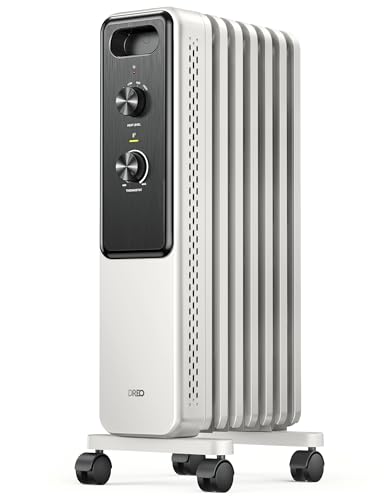
Modern designs make this air circulation much faster by using shaped metal heating panels. Dreo designs these units with specialized M-shaped panels that expose significantly more metal to the surrounding room. Standard flat panels have limited surface contact with circulating air. The 7-fin models expand the heating area by 39.5 percent, while larger 8-fin versions provide a 59.5 percent larger heat dissipation area.
That expanded surface area pulls cold drafts across the heated steel continuously. Instead of a violent gust of hot air that rises straight to the ceiling and gets trapped, you get a wide, circulating loop of gentle warmth that reaches into far corners.
If you are trying to balance temperatures in challenging areas, such as learning how to warm drafty spaces, broad surface coverage makes all the difference. It prevents uncomfortable hot spots near the unit while lifting the overall temperature of the entire living space.
Fanless Operation and Bedroom Comfort
The biggest frustration with a traditional heater in a bedroom or home office is the noise. A fan that pushes warm air across the room relies on a high-speed electric motor that hums, vibrates, and clicks throughout the night.
Every time a fan heater kicks on, the sudden noise can wake light sleepers, startle pets, or interrupt video calls. An oil-filled radiator operates in total silence because it contains no moving parts, no motor, and no fan blades. You might hear a faint, soft click from the internal switch when the unit turns on, but otherwise it creates zero decibels of background sound.
Air quality is another major reason these heaters excel in sleeping areas. Fan-forced blowers churn up household dust, pet dander, and allergens, scattering them directly into your breathing zone. They also pass room air directly over glowing, superheated ceramic or wire coils, which can scorch airborne dust particles and leave a dry, irritating smell.
That direct contact with red-hot elements strips moisture from the air, often leaving you with dry eyes, a scratchy throat, or morning sinus congestion. An oil radiator heats the room gently without disturbing dust or scorching the air. The warmth feels much like sunlight resting on a brick patio, keeping your bedroom comfortable, calm, and easy to sleep in all night long.
Managing Power Draw and Safe Room Placement
Understanding electrical demand is essential when heating any cold room safely. In standard US households, a portable space heater draws up to 1,500 watts on its high setting, which equals roughly 12.5 amps of electricity on a standard 120-volt household circuit.
Because standard household circuit breakers are rated for 15 amps, a 1500W heater uses most of the available electrical capacity on that single line. Plugging a hair dryer, a vacuum, or another appliance into the same circuit while the heater runs at full power will trip the breaker.
To keep your electric bill manageable, you do not need to blast 1,500 watts all day. You can use full power for the first 30 minutes to warm the oil, and then let the digital temperature dial that clicks on and off to hold your set warmth take over. Lower heat settings adjust power automatically, maintaining room warmth while drawing far less electricity over several hours. For more tips on temperature regulation, you can review methods to maintain steady warmth with a thermostat.
Safe placement in a cold room requires following a few direct steps to protect your home. Always keep these safety checks in mind before turning the unit on for the season:
- Keep a clear 3-foot safety buffer between all sides of the radiator and anything that can catch fire, including bedding, drapes, papers, and upholstered furniture.
- Plug the power cord directly into a dedicated wall outlet, and never run the heater through an extension cord, power strip, or surge protector.
- Place the heater on a firm, flat, level floor so the tip-over safety switch that cuts power instantly if the unit is knocked over or tilted remains fully engaged.
- Confirm that the automatic overheat sensor that shuts the unit off if internal parts get dangerously hot has adequate airflow around the base and top of the unit.
- Inspect the wall outlet and plug head after the first hour of use; if the wall plate feels hot to the touch, shut the unit off, unplug it, and call a licensed electrician.
What to Look for When Choosing an Oil Radiator
Selecting an oil-filled radiator comes down to matching the physical size of your room with the heater's heat distribution design. As a standard sizing rule in US homes, plan for roughly 10 watts of heating power per square foot of living space. A 1500W unit is ideal for warming a closed 150 square foot bedroom, or for providing targeted supplemental comfort in a larger open living area.
Look closely at the construction of the metal panels before making a choice. Radiators with specially shaped fins that increase total surface contact area circulate warm air through natural convection much faster than older, narrow flat-fin designs.
Controls also play a major role in everyday convenience. Units equipped with a digital temperature dial and programmable shutoff timers allow you to set an exact room temperature rather than guessing with a vague low-to-high dial. This keeps the room at an even comfort level while preventing unnecessary power consumption.
Always verify that any heater you select carries a recognized US safety mark on the product label, such as an ETL or UL listing. These marks confirm that the appliance meets strict fire safety and electrical construction standards, giving you peace of mind throughout the coldest months of winter.
- BWP Score9.5
BWP Score is a ranking system developed by Bestwinterproducts.com. BWP score has no relationship or impact from any manufacturers or sales agent websites. Learn more
- BrandDREO

- BWP Score9.4
BWP Score is a ranking system developed by Bestwinterproducts.com. BWP score has no relationship or impact from any manufacturers or sales agent websites. Learn more
- BrandDREO

- BWP Score7.7
BWP Score is a ranking system developed by Bestwinterproducts.com. BWP score has no relationship or impact from any manufacturers or sales agent websites. Learn more
- BrandDREO

- BWP Score8.2
BWP Score is a ranking system developed by Bestwinterproducts.com. BWP score has no relationship or impact from any manufacturers or sales agent websites. Learn more
- BrandDreo
Last update on 2026-10-07 / Affiliate links / Images, Product Titles, and Product Highlights from Amazon Product Advertising API
FAQs
How long does an oil filled heater take to warm up a cold room?
An oil radiator generally requires 20 to 30 minutes to heat its internal fluid and start radiating noticeable warmth into the room. Because it relies on natural air circulation rather than a loud fan, warming an entire 150 square foot room usually takes about 45 to 60 minutes. Once the room reaches your desired temperature, the heavy steel panels maintain that comfortable warmth with minimal effort.
Can you safely leave an oil radiator running overnight while sleeping?
Yes, modern oil radiators are among the safest space heaters to run overnight when placed properly. They feature sealed heating elements with no exposed glowing coils, along with built-in tip-over switches and automatic overheat shutoff sensors. Just be sure to maintain a clear 3-foot buffer from bedding and curtains, and plug the unit directly into a dedicated wall outlet.
Will running a 1500 watt oil heater increase my electric bill dramatically?
The impact on your electric bill depends on your local electricity rates and how you operate the heater. Running any appliance at a continuous 1,500 watts uses 1.5 kilowatt-hours of power per hour. However, once the heat-retaining oil warms up, a digital thermostat automatically cycles the power on and off to maintain your set temperature, which significantly cuts total electrical consumption over a full night.


Best Warm Winter Scarves 2026 For Cozy Comfort

Best Green Ski Goggles 2026 For Clear Vision On Slopes

12 Best Corner Electric Fireplace 2026: My Ultimate Guide To Pick One

Best Battery Powered Snow Blower 2026 For Effortless Snow Clearing

Best Ski Goggles Under 30 Inches For Crisp Vision And Comfort

Best Cooling Scarf 2026 For Instant Relief And Comfort

Fake Snow for Grass: Create a Realistic Winter Lawn Display

Dimplex Prism Wall Mount Fireplace: Sleek Heat With Modern Flame Style





