
Why the Dreo DR-HTP01 Heats Large Rooms Evenly

Someone pulls a fleece blanket tighter across the couch while a small heater on the floor bakes their shins and leaves the rest of the living room icy. Tall tower units change this pattern because they spread warmth across a wide sweeping arc at seated body height rather than blasting heat into a single corner.
How well this works in practice still depends on the space itself. Every portable electric heater maxes out at a standard 1,500-watt power draw, which reliably warms areas up to 300 square feet with standard ceilings. Gaps around drafty window frames, open stairwells, or high ceilings will quickly bleed that comfort away. Circuit limits on a shared wall outlet also restrict where you can safely run one. The breakdown below explains how this airflow works and how to set it up for steady warmth.
Use Tall Vertical Airflow to Spread Warmth Across Your Living Space
Small box heaters placed on the floor of a large room usually create one blazing hot spot while the rest of the space stays freezing. Compact heaters push air forward in a narrow, low beam. That hot air quickly floats straight to the ceiling before reaching anyone sitting on a couch or chair, leaving family members cold.
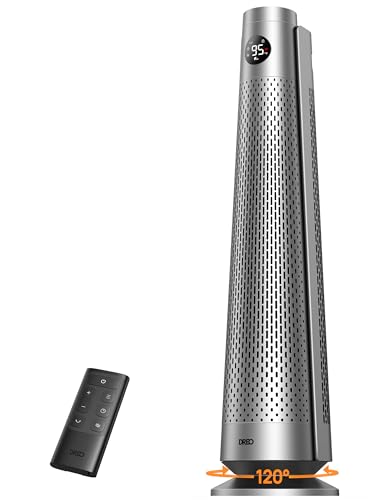
A tall tower heater changes how warm air travels across an open room. Standing nearly 30 inches tall with a compact 7.9 by 7.9-inch base, it releases heat along a long vertical grille. Inside, a fast-heating ceramic stone block (a 308mm large PTC element) heats up in seconds when switched on. Because the air outlet extends upward, warm air blows directly across your seated body instead of pooling at your ankles or rushing to the ceiling.
Adding 120-degree oscillation (a wide side-to-side sweeping motion) fixes the cold spots common in spacious rooms. Standard heaters only pivot 60 or 70 degrees, missing the edges of the room. A 120-degree sweep spreads warm air in a wide arc across sofas and chairs, helping the entire living area reach a balanced warmth.
Match the 1,500-Watt Limit to Your Actual Room Dimensions
Every portable electric space heater for home use in the United States runs on a standard 120-volt circuit and draws up to 1,500 watts, which is about 12.5 amps. Regardless of how well an internal fan is built, it cannot produce more heat than that 1,500-watt ceiling allows. Knowing this boundary helps set realistic heating goals.
A reliable guideline is 10 watts of power per square foot of living space. In a closed 150-square-foot room, a 1,500-watt ceramic heater can serve as the primary heat source. In a large room up to 300 square feet, such as an open living room or master suite, 1,500 watts functions as supplemental zone heating to raise comfort without turning up the central furnace.
How well that power warms a 300-square-foot space depends on room conditions:
- Ceiling height: Standard 8-foot ceilings hold heat well. Vaulted or 10-foot ceilings trap warmth near the roof, requiring more runtime.
- Insulation and drafts: Drafty windows pull heat out quickly. Unsealed spaces lose warmth fast, similar to issues found when heating drafty areas like those in guides for the best heater for enclosed porch spaces.
- Open doors: Open hallways let warmth escape. Closing doors keeps heat contained in the living area.
A compact heater in a 300-square-foot room wastes 1,500 watts on one overheated corner. A tall tower heater distributes that same 1,500 watts evenly, noticeably improving room-wide comfort.
Keep Noise Low by Running Quiet Fan Speeds at Night
Warming a large room requires steady airflow, but you should not have to talk over a noisy fan. Many older space heaters use loud blower wheels that rattle, whine, or buzz, disrupting conversations and sleep. A calm living space needs heat without constant motor drone.
Fan sound is measured in decibels (dB), where lower numbers mean quieter operation. A whisper in a quiet library measures about 30 decibels. This Dreo tower operates down to 25 decibels on low, which is quieter than a whisper and blends easily into normal background sound.
Its 5 heat levels and 3 fan speeds give you flexible control over comfort and volume:
- Daytime heating: Use a higher fan speed when entering a cold room to circulate warm air quickly across the floor.
- Nighttime sleeping: Switch to low fan speed at bedtime. The motor drops to its 25-decibel hum, providing steady warmth without rattling or disturbing light sleepers.
Unlike older radiator heaters that hiss, click, or ping as oil warms up, a ceramic tower fan runs with a steady, smooth airflow that doubles as relaxing background noise.
Cut Power Waste by Dialing In Your Target Temperature
Running a 1,500-watt heater on maximum power non-stop can cause your electric bill to jump. In a large room, the goal is to stay comfortable without drawing peak power constantly. Use this checklist to keep energy costs down:
- Select your target temperature: Use the digital temperature dial to choose a setting like 68°F or 70°F. The heater monitors the room and shuts off once it reaches your target, restarting only when the room cools.
- Turn on ECO mode: This automatic power-adjusting heat setting manages wattage for you. It warms a cold room on high power, then drops to lower heat settings as the room reaches your target to save electricity.
- Set the automatic timer: Program the 1-to-12-hour timer before sleeping or relaxing. The heater shuts off automatically so you never warm an empty room.
- Close interior doors: Shut doors to unused hallways and staircases. Containing the warm air helps the thermostat satisfy its set point faster, cutting runtime.
Set Up a Safe Three-Foot Buffer Around a Dedicated Wall Outlet
Large living areas offer open space, but heaters still need careful placement to prevent accidents. Follow these ordered steps to set up your heater safely:
- Place the unit on a flat, firm floor: Set the heater on hardwood, tile, or firm vinyl flooring. Avoid thick rugs that can block bottom air intakes or make the 8-pound unit tip. The 7.9 by 7.9-inch base provides steady support on solid ground.
- Keep a three-foot safety buffer: Maintain at least 3 feet (36 inches) of clearance from drapes, couches, blankets, pet beds, and papers. Never squeeze the heater between furniture pieces.
- Plug directly into a dedicated wall outlet: Connect the cord directly into a standard 120-volt wall outlet. Never use an extension cord, power strip, or surge protector, as they can overheat and spark fires under a 12.5-amp load. Safe electrical connections are just as critical here as they are for the best electric heater for garage with thermostat setups.
- Check safety features before leaving it running: The heater includes 8 built-in protections, including a tip-over safety switch that cuts power instantly if tilted beyond 45 degrees, an automatic overheat sensor, V0 flame-retardant materials, and a cool-touch outer housing.
- Touch the wall outlet plate after thirty minutes: Check that the plastic outlet plate feels normal or slightly warm. If the outlet feels hot, smells like burnt plastic, or trips your breaker, unplug the heater immediately and consult a licensed electrician.
Look for Tall Ceramic Towers with Wide Oscillation Before You Buy
When picking a space heater for a room up to 300 square feet, heater design matters. Small desk heaters cannot reach across large spaces, while heavy radiator units take too long to heat up. A tall ceramic tower heater with broad oscillation offers the right blend of speed and coverage.
Before buying, verify these key features:
- Height: Choose a tower between 24 and 30 inches tall so heat blows at seated body level rather than staying on the floor.
- Oscillation range: Look for 90 to 120 degrees of side-to-side sweeping motion to cover multiple seating areas.
- Thermostat and smart modes: Ensure it has a digital temperature dial and an automatic power-adjusting ECO mode to reduce power waste.
- Sound levels: Look for fan ratings under 30 decibels on low speed for bedroom use.
- Safety listings: Confirm recognized US safety marks like UL or ETL on the label, along with tip-over and overheat shutoffs.
- BWP Score9.7
BWP Score is a ranking system developed by Bestwinterproducts.com. BWP score has no relationship or impact from any manufacturers or sales agent websites. Learn more
- BrandDREO
- BWP Score9.6
BWP Score is a ranking system developed by Bestwinterproducts.com. BWP score has no relationship or impact from any manufacturers or sales agent websites. Learn more
- BrandDREO

- BWP Score8.8
BWP Score is a ranking system developed by Bestwinterproducts.com. BWP score has no relationship or impact from any manufacturers or sales agent websites. Learn more
- BrandDREO

- BWP Score7.7
BWP Score is a ranking system developed by Bestwinterproducts.com. BWP score has no relationship or impact from any manufacturers or sales agent websites. Learn more
- BrandDREO

- BWP Score7.6
BWP Score is a ranking system developed by Bestwinterproducts.com. BWP score has no relationship or impact from any manufacturers or sales agent websites. Learn more
- BrandDREO

- BWP Score8.2
BWP Score is a ranking system developed by Bestwinterproducts.com. BWP score has no relationship or impact from any manufacturers or sales agent websites. Learn more
- BrandDREO

- BWP Score7.4
BWP Score is a ranking system developed by Bestwinterproducts.com. BWP score has no relationship or impact from any manufacturers or sales agent websites. Learn more
- BrandDREO
Last update on 2026-10-07 / Affiliate links / Images, Product Titles, and Product Highlights from Amazon Product Advertising API
FAQs
Can a 1,500-watt space heater fully heat a 300-square-foot room?
A 1,500-watt heater can warm a 300-square-foot room with standard 8-foot ceilings, average insulation, and closed doors. It serves as supplemental heat to take the chill out of your main seating area rather than replacing your central furnace. In rooms with high ceilings or drafty windows, it keeps nearby areas comfortable even if far corners stay cool.
Why does a tower heater warm large rooms better than a box heater?
A tall tower heater has an elongated vertical heating element that blows warm air at seated body height. Compact box heaters blow air low to the floor, where heat quickly rises to the ceiling before warming people. The tower's wide side-to-side sweep also spreads warmth across multiple chairs instead of creating a single hot spot.
Is it safe to run a ceramic tower heater overnight?
You can safely run it overnight when plugged directly into a wall outlet with a three-foot clearance from bedding and curtains. The heater includes an automatic overheat sensor and a tip-over switch that shuts power off if tilted. Using the built-in timer or setting the thermostat prevents the room from overheating while you sleep.
How does ECO mode lower heating bills?
ECO mode adjusts the heater's wattage automatically based on room temperature. When the room is cold, it runs at full power to warm the space, then drops to lower power levels as it nears your target temperature. This prevents the heater from drawing 1,500 watts non-stop, cutting total power use.


Best Warm Winter Scarves 2026 For Cozy Comfort

Best Green Ski Goggles 2026 For Clear Vision On Slopes

12 Best Corner Electric Fireplace 2026: My Ultimate Guide To Pick One

Best Battery Powered Snow Blower 2026 For Effortless Snow Clearing

Best Ski Goggles Under 30 Inches For Crisp Vision And Comfort

Best Cooling Scarf 2026 For Instant Relief And Comfort

Fake Snow for Grass: Create a Realistic Winter Lawn Display

Dimplex Prism Wall Mount Fireplace: Sleek Heat With Modern Flame Style





