
Why Dreo Radiator Heaters Warm Large Rooms So Evenly

Wide heating ridges create steady, circulating warmth. Standard fan blowers shove hot air straight to the ceiling where it gets trapped, leaving living areas chilly and noisy. Instead of blowing harsh drafts, these oil units release heat across broad, curved metal fins. That wider shape pulls cool air up from the floor, warms it silently, and lets a steady blanket of heat roll across open spaces without drying out the room.
Your actual comfort still depends on your specific space. Tall ceilings, poor window insulation, or open stairwells bleed warmth away much faster than sealed rooms. Results also depend on running full power during the initial warm-up before dialing back the thermostat, while keeping the shared wall circuit free of other heavy appliances. Here is how that quiet heating cycle works and how to tell if it matches your floor plan.
Why Oil Heat Works Better for Large Spaces Than Blower Fans
Most people who struggle to warm a spacious room turn to a standard portable heater with a fan that pushes warm air across the room. These blowers create a fast blast of hot air, but they struggle in open floor plans. Because hot air is lighter than cold air, a blower shoots hot currents straight toward the ceiling. The floor and seating areas stay chilly, while heat collects where nobody can feel it. When the fan shuts off, the temperature drops almost immediately, forcing the machine to kick back on constantly. That cycling stirs up dust, creates dry drafts, and makes a lot of noise.
A silent radiator heater that circulates steady, lasting warmth handles a big room differently. Instead of relying on noisy fan blades, it uses sealed thermal fluid to create natural warm air rising (convection). The heating element warms the fluid inside metal channels, which turns the entire metal surface into a giant heating pad. As cold air near the floor meets the base of the radiator, it warms up and floats gently upward. This creates a continuous, rolling loop that circulates warmth into every corner of the room without blowing papers off your desk or drying out your eyes.
The biggest benefit of an oil-filled design in a large living area is thermal retention. Once the fluid inside reaches temperature, it stays hot for a long time. When the unit clicks off, the metal columns continue sending out gentle heat that warms people and furniture directly like sunlight. That lingering warmth prevents the sharp hot and cold spikes typical of blower units, keeping open rooms comfortable with far less mechanical effort.
How Curved Metal Heating Ridges Spread Warmth
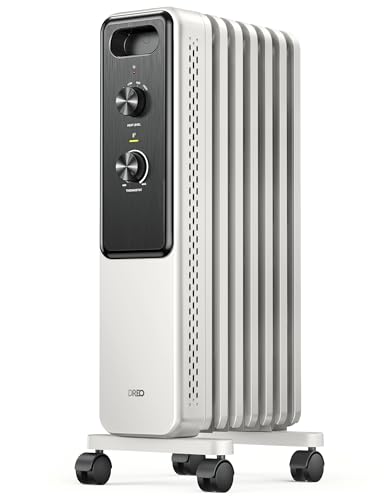
Traditional oil radiators use flat, narrow metal columns. While those classic models produce steady heat, their flat sides release warmth slowly and mostly straight up along the wall. Dreo changes this dynamic by shaping their heating columns into curved metal heating ridges, often called M-shaped fins. These deep bends increase the amount of metal that makes direct contact with the air inside your room.
That extra surface area changes how quickly and evenly a room warms up. The seven-fin models provide 39.5 percent more heating area than conventional flat fins, while the larger eight-fin versions expand the heat dissipation area by 59.5 percent. The manufacturer lists a 92.3 percent heating boost from this geometry compared to standard flat-panel designs. When cold air enters the bottom of the heater, the curved ridges guide it through wider heating channels, acting like small thermal chimneys.
Because the fins flare outward in an M-shape, the rising heat does not just head for the ceiling. It expands outward in a wide pattern, pushing warm air into the center of the room where you actually sit. This wider physical shape also allows the 1500W internal heating element to transfer its energy into the room air without scorching the outer casing. You get faster room circulation without needing a fan, preserving the completely silent operation that makes oil radiators so pleasant in living rooms and home offices.
Six Steps to Set Up and Run the Heater for Steady Warmth
Getting even heat throughout a broad living space requires good placement and smart power settings. Follow these steps to set up the radiator for balanced warmth and safe energy use.
- Place the radiator in the coolest natural airflow path: Set the unit along an interior path where cold air settles, keeping at least 3 feet of open space around all sides. Placing it near cold air currents lets the heater draw in chilly floor air and spread warmth evenly, while maintaining a 3-foot safety buffer keeps rugs, curtains, and furniture away from hot metal.
- Plug directly into a dedicated wall outlet: Insert the heavy-duty power cord straight into a standard 120-volt household receptacle without any adapters. At its maximum 1500W draw, the heater pulls about 12.5 amps, which will overheat or melt common extension cords and multi-outlet power strips.
- Start on the maximum 1500W heat setting: Turn the power level up to full wattage and set your target temperature for the first 45 to 60 minutes. Oil radiators take 15 to 20 minutes to heat their internal fluid, so starting at full power warms the metal fins quickly and knocks the morning chill out of large air volumes.
- Switch to ECO mode or a lower power level once warm: Drop the unit into ECO mode or lower the heat setting to 900W or 700W after the room reaches a pleasant baseline. Maintaining a room's temperature takes much less energy than heating it from a dead chill, and reducing the wattage cuts down on electrical use.
- Set the digital temperature dial to your exact comfort number: Adjust the thermostat to click on and off around 68°F to 72°F rather than leaving it on continuous high. A digital temperature dial that clicks on and off to hold your set warmth stops the heater from running when the space is already warm, keeping the room comfortable without wasting power.
- Turn on the control lock if children or pets are present: Hold down the lock button on the display or use the remote control to lock your settings. Locking the panel prevents pets or curious children from bumping the heat level, changing the timer, or turning the machine off unexpectedly in busy family rooms.
Safety Safeguards for Long Runtimes in Open Living Areas
Large spaces often require a heater to run for hours at a time, especially on freezing winter days. Oil radiators are naturally suited for long runtimes because their heating coils are completely sealed inside steel bodies, away from airborne dust and fabric fibers. Dreo builds multiple physical and electronic defenses into their units to prevent accidents during extended operation.
- Automatic overheat sensor that shuts the unit off if internal parts get dangerously hot: If air circulation is blocked by a blanket or wall, internal sensors cut power immediately before the oil or casing can reach unsafe temperatures.
- Tip-over safety switch that cuts power instantly if the unit is knocked over or tilted: If a running dog or a vacuum cleaner cord tips the 17- to 21-pound metal frame, an internal mechanical switch breaks the electrical circuit before hot oil or metal can press against flooring.
- Fire-resistant casing on all exterior housings: The outer control panel and cord storage brackets are built with flame-retardant materials rated to resist sparks and heat buildup.
- Burn-proof power plug: The wall plug is engineered with reinforced internal pins to withstand the continuous 12.5-amp draw of the 1500W high setting without scorching the wall socket.
- Recognized safety listings: Dreo oil radiators carry the ETL safety mark on their data label, confirming that the electrical build complies with standard North American fire and shock safety requirements.
Even with these safeguards, keep an eye on your wall outlet during the first hour of use. Touch the plastic faceplate of your wall outlet with the back of your hand. If the outlet feels uncomfortably hot to the touch, turn the heater off, unplug it, and have a licensed electrician inspect the circuit. Loose internal wire connections behind old wall outlets can overheat when handling high-wattage space heaters.
Realistic Room Limits, Drafts, and Ceiling Heights
Every portable electric space heater sold for residential use in the United States is limited to 1,500 watts by electrical safety codes. That wattage produces about 5,120 BTUs of heat. Under standard conditions, you need roughly 10 watts per square foot of living space. A 1500W radiator can serve as the sole heat source for a closed 150-square-foot room with standard 8-foot ceilings, or provide comfortable supplemental warmth in an open 300- to 400-square-foot living room where a central furnace is already running.
Ceiling height changes how warm a room feels. If your living room has 12-foot or 16-foot vaulted ceilings, hot air has far more space to rise before it begins warming the lower half of the room. You can counteract this by running a ceiling fan on low speed in reverse (clockwise), which gently pushes warm ceiling air back down along the walls without creating a chilly downward breeze. Open stairwells can also pull warmth away into second-floor hallways, making a downstairs living area feel cooler than expected.
Drafts also play a massive role in how well an oil radiator performs. Single-pane windows, uninsulated exterior doors, and leaky baseboards constantly strip heat away from the room. Just as you would manage air leaks when choosing a heater for an enclosed porch, sealing drafts with weatherstripping or heavy curtains makes a noticeable difference in how well an oil radiator maintains room temperature. If your home has older wiring, be careful not to run a television, vacuum, or gaming console on the same 15-amp branch circuit, similar to the circuit planning needed when running a dedicated heater for a garage with a thermostat.
What to Look for in a Large-Room Radiator
When selecting a portable radiator for a broad family room, master suite, or open floor plan, look past basic wattage numbers. Because almost every model draws 1,500 watts on high, the way the heater handles that energy determines how comfortable your space will be.
Look first at the fin structure and surface area. Radiators with wide, shaped fins expose far more heated steel to the air than narrow, flat-sided models, which translates to faster circulation and better room coverage. Check the thermostat controls as well. A digital thermostat that lets you select a specific degree target keeps a large room much more consistent than a simple dial with no temperature markings. Multiple heat settings (such as high, medium, and low) and an automated eco mode are also helpful for trimming energy use once your living space is warm.
Finally, check mobility features and safety marks. Oil radiators are heavy because they are filled with steel and oil, typically weighing between 17 and 22 pounds. Look for sturdy caster wheels that roll smoothly over thick carpet and integrated carry handles so you can reposition the machine safely after it cools. Always look for a recognized safety mark like ETL or UL printed directly on the product's electrical rating label.
- BWP Score9.5
BWP Score is a ranking system developed by Bestwinterproducts.com. BWP score has no relationship or impact from any manufacturers or sales agent websites. Learn more
- BrandDREO

- BWP Score9.4
BWP Score is a ranking system developed by Bestwinterproducts.com. BWP score has no relationship or impact from any manufacturers or sales agent websites. Learn more
- BrandDREO

- BWP Score8.3
BWP Score is a ranking system developed by Bestwinterproducts.com. BWP score has no relationship or impact from any manufacturers or sales agent websites. Learn more
- BrandDREO

- BWP Score8.0
BWP Score is a ranking system developed by Bestwinterproducts.com. BWP score has no relationship or impact from any manufacturers or sales agent websites. Learn more
- BrandDREO

- BWP Score7.7
BWP Score is a ranking system developed by Bestwinterproducts.com. BWP score has no relationship or impact from any manufacturers or sales agent websites. Learn more
- BrandDREO

- BWP Score7.6
BWP Score is a ranking system developed by Bestwinterproducts.com. BWP score has no relationship or impact from any manufacturers or sales agent websites. Learn more
- BrandDREO
Last update on 2026-10-07 / Affiliate links / Images, Product Titles, and Product Highlights from Amazon Product Advertising API
FAQs
How long does an oil radiator take to heat a large room?
An oil radiator takes roughly 15 to 20 minutes for its internal fluid to heat up and begin radiating noticeable warmth. Warming an entire large room to a comfortable baseline typically takes 45 to 60 minutes, depending on ceiling height and window insulation. Once the room reaches temperature, the dense oil holds onto that heat and maintains a steady warmth with minimal cycling.
Will running a 1500W radiator spike your electric bill?
Running any space heater on its maximum 1500W setting uses 1.5 kilowatt-hours of electricity per hour of continuous run time. To keep costs down, run the heater on high only until the room feels warm, then lower it to ECO mode or a lower power level. Because the oil stays hot long after the heating element clicks off, the unit does not draw electricity continuously to maintain room comfort.
Is it safe to leave an oil-filled radiator running overnight?
Yes, oil-filled radiators are among the safest space heaters for overnight use because they have no exposed glowing elements and operate completely silently. Ensure the unit has a functioning tip-over safety switch and an automatic overheat sensor, and keep it plugged directly into a wall outlet at least 3 feet away from bedding, drapes, and furniture.
Do you ever need to refill or change the oil inside?
No, the oil inside a radiator heater is permanently sealed during manufacturing and never needs to be refilled, replaced, or topped off. The fluid is not used as fuel; it acts strictly as a heat-transfer liquid that circulates inside the welded steel fins. If you ever notice oil leaking from the fins, stop using the heater immediately, unplug it, and discard the unit.


Best Warm Winter Scarves 2026 For Cozy Comfort

Best Green Ski Goggles 2026 For Clear Vision On Slopes

12 Best Corner Electric Fireplace 2026: My Ultimate Guide To Pick One

Best Battery Powered Snow Blower 2026 For Effortless Snow Clearing

Best Ski Goggles Under 30 Inches For Crisp Vision And Comfort

Best Cooling Scarf 2026 For Instant Relief And Comfort

Fake Snow for Grass: Create a Realistic Winter Lawn Display

Dimplex Prism Wall Mount Fireplace: Sleek Heat With Modern Flame Style





