
Why Do Dreo Space Heaters Work So Well in Winter?

Modern ceramic space heaters warm a cold room quickly because they push steady heat within two seconds while running as quietly as a whisper. How evenly that warmth spreads across the living area depends on the size of the space and how well the room keeps out cold air. Rather than blasting loud fans and scorching dust over exposed coils, these units use smart internal sensors to keep the air comfortable without wasting energy.
Square footage plays a major role, as a closed bedroom heats up far faster than a drafty living room with high ceilings. Electrical limits also factor in, since running a full-power heater requires a dedicated wall outlet that does not share power with another heavy appliance. Here is a clear look at how this quiet airflow design handles stubborn winter drafts.
The Short Version
- Immediate comfort: Fast-heating ceramic elements reach full warmth in about two seconds, pushing steady air without the dry, scorched-coil smell of older heaters.
- Quiet performance: Smooth interior air channels and blower wheels keep sound levels down between 25 and 34 decibels, making them quiet enough for light sleepers and home offices.
- Steady warmth without wasted power: Built-in digital temperature sensors track room air and automatically adjust heat output, keeping the room comfortable without running full blast non-stop.
- Multiple safety shutoffs: Protective features include fire-resistant plastic housings, automatic tip-over switches, internal overheat sensors, and specialized plugs that guard against hot wall outlets.
Fast Ceramic Warmth Without Glowing Wire Coils
Most traditional portable heaters rely on thin metal coils that slowly heat up until they glow bright orange. While those coils eventually throw heat, they take several minutes to overcome a cold room. They also collect stray household dust between uses, which creates that unpleasant burning odor the moment you turn them on in late autumn.
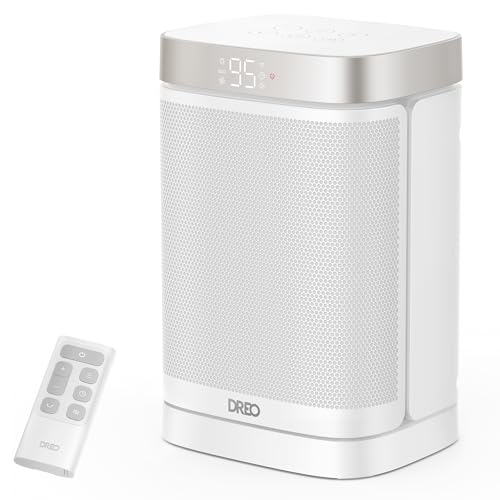
Modern Dreo heaters take a completely different mechanical approach by using positive temperature coefficient ceramic blocks (fast-heating ceramic elements that warm up in seconds). Instead of waiting for a metal spring to cook the air, an electric current passes through durable ceramic stones that jump to heating temperature almost immediately. Dreo pairs this with their Hyperamics design, which starts pushing noticeable warm air into the room within two seconds of pressing the power button.
Because the ceramic surface spreads heat evenly across a wide honeycomb grid rather than concentrating it on a fragile, red-hot wire, it produces up to 53.9 percent more warm air than basic radiant coils. You do not have to hover directly over the front grille shivering while you wait for the room to change. The heat moves outward smoothly, making the space around your desk or armchair comfortable right away.
This rapid delivery is especially helpful when you wake up in an ice-cold bedroom or step into a chilly home office in the morning. Rather than cranking up your central furnace to heat the entire house just to warm one work corner, a quick-starting ceramic unit solves the chill right where you are sitting.
Low-Noise Airflow That Stays Quiet All Night
The biggest complaint about conventional space heaters has always been the racket they make. Standard box heaters use cheap, pitched fan blades that buzz, rattle against the outer cage, and kick on with an aggressive clatter every time the heat cycle begins. That harsh hum makes it hard to focus on phone calls during the workday and wakes light sleepers throughout the night.
To cut that irritating noise, Dreo rebuilt how air travels through the heater body. Instead of flat fan blades that chop through the air, these heaters use an extended impeller (a cylindrical blower wheel with curved fins, similar to what quiet modern air conditioners use). This wheel pulls cool air through the back and glides it across the warm ceramic core with very little turbulence.
The result is a low, gentle airflow that drops operating volume down as low as 25 decibels on quiet settings. To put that in perspective, 25 decibels is quieter than a whisper and softer than a quiet suburban library. You hear a soft, steady whoosh of warm air rather than a buzzing motor or vibrating plastic casing.
That whisper-level sound profile changes how you use heat in everyday spaces. You can place an oscillating tower heater right beside your bed or run a compact heater on your desk while talking on video meetings, and the machine will not drown out conversations or disrupt your sleep.
Smart Digital Thermostats That Stop Room Overheating
Basic space heaters usually come with a simple numbered dial that offers little real control. You turn the knob to a random line, the heater blasts at maximum power until the room feels like an oven, and then you have to shut it off manually. An hour later, the room is freezing again, leaving you constantly getting up to adjust the switch.
Dreo replaces those guesswork dials with a precise digital thermostat managed by an internal sensor chip (a digital temperature sensor that monitors room air constantly). Instead of running blind, the heater reads the actual temperature in degrees Fahrenheit. You select the exact warmth level you want, and the unit works to hold the room right at that mark.
This accurate tracking powers the auto-adjusting energy saving setting (known as ECO mode). In this setting, the heater does not stay locked on its highest 1500-watt draw. As the room approaches your target comfort level, the internal processor automatically scales down the power level to lower wattages, such as 900 or 700 watts, before shutting the element off entirely when your target is reached.
Running a continuous 1500-watt load can noticeably raise your monthly electric bill if left unchecked. By regulating its own energy draw and stepping down when full blast is not needed, a smart ceramic heater helps prevent power waste while keeping your living space at an even, comfortable temperature. If you are dealing with challenging, drafty zones, reading about a heater for drafty enclosed spaces can help you see how air control prevents runaway power bills.
Layered Safety Features for Pets, Kids, and Outlets
Electric space heaters draw significant electrical current, which naturally makes safety the top concern for anyone warming their home. In standard American households, a 1500-watt heater draws roughly 12.5 amps on a standard 120-volt household circuit. Handling that much energy requires strict protective hardware to keep homes safe from accidental fires and tripped breakers.
Dreo addresses household hazards with their ETL-listed Shield360 protection setup, which layers multiple automatic safeguards into each unit:
- Smart tip-over switch: A built-in sensor cuts electrical power the instant the unit is tilted or knocked over by a running dog, curious cat, or bumped desk leg.
- Automatic overheat sensor: Internal thermal sensors monitor component temperatures and shut the heater down if an obstruction, like a fallen blanket or heavy curtain, blocks the air intake.
- V0 flame-retardant materials: The outer body and internal framework are molded from fire-resistant casing plastic designed to self-extinguish rather than feed an open flame.
- FortPlug safety plug: Selected models feature a specialized plug head with integrated heat sensors that cut power if the wall outlet itself begins to overheat, protecting against loose or aging household wiring.
- Automatic run timers: Built-in 12-hour timers and 24-hour automatic shutoff limits ensure the heater does not run indefinitely if you forget to turn it off before leaving the house.
Even with these smart protections in place, practicing basic heater safety is vital. Always keep a strict 3-foot safety buffer between your heater and flammable items like bedding, drapes, papers, and soft furniture. Never run a space heater through a power strip, extension cord, or surge protector, as those extra connections can easily overheat and melt. Always plug the unit directly into a grounded wall receptacle on a circuit that is not already powering other heavy appliances.
If you notice the wall faceplate feels hot to the touch, or if your breaker trips repeatedly, turn the heater off, unplug it, and consult a licensed electrician to verify your circuit wiring before using the appliance again.
Picking the Right Heater Size for Your Room
Space heaters are not one-size-fits-all appliances. Picking the right footprint and airflow pattern ensures you do not end up with an undersized unit that runs constantly without warming the space, or an oversized tower that crowds a small desk area. A good standard rule of thumb for supplemental heating is roughly 10 watts per square foot of living area.
Compact personal units, such as 10-inch models, are built specifically for targeted, close-range warmth. Models with a manual vertical tilt (allowing adjustment from 0 to 60 degrees) work exceptionally well under an office desk or on a sturdy table, letting you angle warm air directly at your hands or feet without overheating the entire room. These units push air at speeds around 10.5 feet per second while weighing less than 4 pounds, making them easy to carry from room to room.
For standard closed bedrooms between 100 and 150 square feet, compact tower units with 70-degree oscillation offer balanced, circulating warmth. The side-to-side swing sweeps warm air across the floor plan, preventing cold pockets from gathering near exterior walls and windows.
Larger spaces, such as primary bedrooms or family rooms up to 270 square feet, benefit from taller 25-inch oscillating towers or specialized circular models. A tall tower moves air at velocities up to 11.5 feet per second to project heat deeper into the room. Meanwhile, 360-degree circular heaters push warm air outward in all directions at 9.5 feet per second, making them ideal for the center of an open living room where people gather on different couches.
If floor space is limited, or if you want to keep floor heaters away from small children and active pets, a wall-mounted model provides a permanent, elevated solution. Wall units with 120-degree downward oscillation distribute heat from top to bottom, warming the entire room without occupying any floor real estate. For workshops or detached hobby areas, pairing the right model with an electric heater with a steady thermostat ensures your workspace stays workable through freezing weather.
What to Look for When Choosing a Space Heater
When selecting a portable heater to handle winter drafts, focus first on your room layout and daily routine. Look for a unit that offers ceramic heating elements rather than exposed coils so you get immediate warmth without dry, scorched odors. Verify that the decibel rating fits your noise tolerance, especially if the heater will operate beside your bed or in a work area where focus matters.
Make sure any model you choose includes an adjustable digital thermostat with an automated energy-saving setting, which keeps your power bill under control by preventing unnecessary full-power operation. Check the safety listing marks on the label, confirming that certified tip-over switches, internal overheat sensors, and flame-rated materials are built into the design. Finally, measure your floor clearance to decide whether a compact tilt model, an oscillating vertical tower, or an elevated wall unit matches your everyday living space.

- BWP Score9.7
BWP Score is a ranking system developed by Bestwinterproducts.com. BWP score has no relationship or impact from any manufacturers or sales agent websites. Learn more
- BrandDREO

- BWP Score9.6
BWP Score is a ranking system developed by Bestwinterproducts.com. BWP score has no relationship or impact from any manufacturers or sales agent websites. Learn more
- BrandDREO

- BWP Score9.5
BWP Score is a ranking system developed by Bestwinterproducts.com. BWP score has no relationship or impact from any manufacturers or sales agent websites. Learn more
- BrandDREO

- BWP Score7.9
BWP Score is a ranking system developed by Bestwinterproducts.com. BWP score has no relationship or impact from any manufacturers or sales agent websites. Learn more
- BrandDREO

- BWP Score7.7
BWP Score is a ranking system developed by Bestwinterproducts.com. BWP score has no relationship or impact from any manufacturers or sales agent websites. Learn more
- BrandDREO

- BWP Score7.7
BWP Score is a ranking system developed by Bestwinterproducts.com. BWP score has no relationship or impact from any manufacturers or sales agent websites. Learn more
- BrandDREO
- BWP Score7.4
BWP Score is a ranking system developed by Bestwinterproducts.com. BWP score has no relationship or impact from any manufacturers or sales agent websites. Learn more
- BrandDREO
Last update on 2026-10-07 / Affiliate links / Images, Product Titles, and Product Highlights from Amazon Product Advertising API
FAQs
Why does my space heater make a burning smell when I first turn it on?
A faint burning odor during the first use of the season is usually caused by dust settling on the internal elements while the unit sat in storage. As the ceramic block heats up, it burns off that microscopic dust layer within a few minutes. If the smell smells like melting plastic or rubber rather than warm dust, turn the unit off, unplug it, and check the power cord and wall outlet immediately.
Can I plug a 1500-watt space heater into an extension cord or surge protector?
No, you should always plug a portable electric heater directly into a wall receptacle. Standard space heaters draw about 12.5 amps at maximum output, which can easily overload the thinner wiring inside household extension cords and power strips. That electrical resistance generates extreme heat along the cord, creating a serious fire hazard.
How much space do I need to leave around the heater for safety?
Maintain a 3-foot safety buffer on all sides of the heater at all times. Keep the unit clear of curtains, bed skirts, throw blankets, upholstered chairs, papers, and pet beds. Adequate clearance not only prevents fire hazards but also ensures the heater has plenty of fresh air intake to circulate heat properly through your room.
Does leaving a space heater on ECO mode really save electricity?
Yes, an auto-adjusting energy saving setting helps reduce power consumption by lowering the wattage draw once your room gets close to the set temperature. Instead of pulling a continuous 1500 watts from your wall outlet, the heater steps down to lower watt levels to maintain warmth, shutting off entirely once your desired room temperature is reached.


Best Warm Winter Scarves 2026 For Cozy Comfort

Best Green Ski Goggles 2026 For Clear Vision On Slopes

12 Best Corner Electric Fireplace 2026: My Ultimate Guide To Pick One

Best Battery Powered Snow Blower 2026 For Effortless Snow Clearing

Best Ski Goggles Under 30 Inches For Crisp Vision And Comfort

Best Cooling Scarf 2026 For Instant Relief And Comfort

Fake Snow for Grass: Create a Realistic Winter Lawn Display

Dimplex Prism Wall Mount Fireplace: Sleek Heat With Modern Flame Style





