
Why the Dreo DR-HSH001 Space Heater Fits Your Home

Most people assume portable space heaters are either noisy energy drains or glowing fire hazards that only warm one tiny spot. In reality, a well-engineered unit solves that exact headache. This design excels because it delivers fast, even ceramic heat while running at a whisper-quiet hum that will not wake light sleepers. It warms a chilly room smoothly, monitors its own temperature, and cuts power the second it tilts.
How well it works in a home comes down to room size, power access, and safe placement. It is built to heat single closed rooms up to 270 square feet, like drafty bedrooms or quiet offices, rather than wide open floor plans. The cord needs a direct wall outlet on an uncrowded circuit, and the base requires a flat floor with three feet of clear space away from curtains and bedding. Here is why this design fits everyday living spaces so naturally.
Ceramic elements and wide oscillation heat rooms evenly
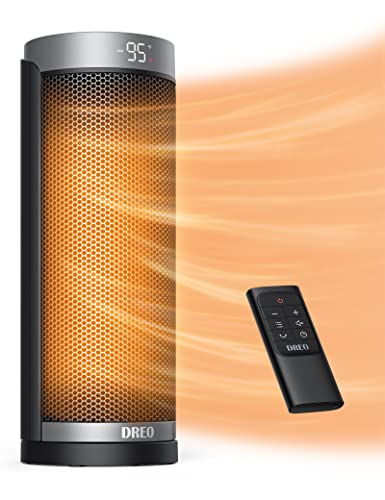
Traditional portable space heaters often rely on exposed wire coils that glow red hot. Those older coils bake the air immediately around the front grille while leaving the rest of the bedroom cold and drafty. The Dreo DR-HSH001 uses a PTC ceramic heating element that warms up in seconds. These internal ceramic blocks absorb electricity and generate rapid heat without any exposed coils or harsh red glare.
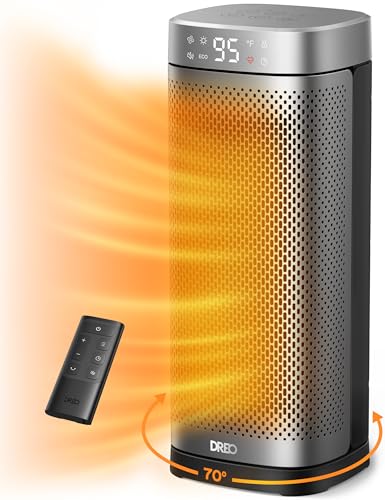
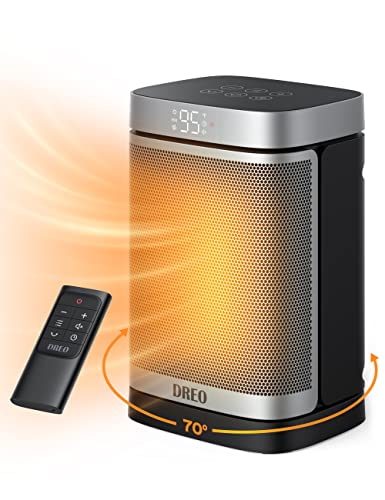
Heat generation is only half the battle when warming a living space. Once heat builds within the ceramic blocks, an internal fan pushes warm air across the room. The unit also features 70-degree oscillation, which is a smooth side-to-side turning motion that sweeps air back and forth across the floor. Instead of dumping dry heat onto a single piece of furniture, the moving fan distributes warmth evenly across your living zone.
This wide distribution solves the common problem of localized cold spots in typical home layouts. In standard American homes, portable electric heaters are sized at roughly 10 watts per square foot of living space. Running at its 1500-watt maximum power level, this compact tower easily warms a closed bedroom or home office up to 270 square feet. It raises the room temperature in minutes without forcing you to wait on a sluggish central furnace.
If your room suffers from air leaks around older window frames, consistent airflow helps prevent cold drafts from pooling near the floor. While space heaters with oscillating fans work well for drafty bedrooms, uninsulated spaces like a sunroom often require a specialized heater for an enclosed porch to overcome heavy heat loss. For a standard enclosed living space, the combination of ceramic heat and smooth turning motion maintains steady comfort from corner to corner.
Quiet fan mechanics keep your bedroom peaceful
Many people dread running an electric heater overnight because cheap fans buzz, rattle, or click loudly whenever they turn on. Noise levels are measured in decibels (dB), which is the standard scale for sound loudness. Standard portable heaters often operate between 50 and 60 decibels, which sounds like a humming kitchen blender or an old window fan on high.
This ceramic heater is designed to operate down to 34 decibels. To put that in perspective, a quiet whisper in a library measures around 30 decibels, while a standard kitchen refrigerator hums at about 40 decibels. At 34 decibels, the sound coming from the unit is a soft, steady rush of air. Light sleepers can run it next to their bed without waking up every time the fan circulates warmth.
That tranquil sound level comes from two specific engineering choices: a brushless DC motor and a winglet fan design. Brushless motors eliminate the internal friction and electrical buzzing common in older electric motors. The fan blades feature curved winglet tips that slice through the air smoothly. This shape minimizes air turbulence and prevents the loud chopping sound produced by standard flat plastic fan blades.
This low sound profile makes the heater practical for spaces where concentration matters. You can set it right beside your desk during phone calls or video meetings without picking up distracting background roar on your microphone. It also works well in children's rooms or nurseries, keeping the space comfortably warm without interrupting deep sleep.
Built-in safety sensors protect your home from accidents
Safety is the primary concern when using an electric heater in a family home. Curious pets can knock appliances over, children might toss clothes nearby, and bedding can shift toward the front grille during the night. The Dreo DR-HSH001 includes several protective hardware features to prevent fire hazards and surface damage:
- Tip-over safety switch: An internal sensor cuts power instantly if the heater tilts or gets knocked over. If a running pet or an accidental bump tips the tower onto the floor, the switch shuts the element off before the hot grille touches your carpet or rug.
- Automatic overheat sensor: This built-in thermal sensor monitors internal temperatures and shuts the unit off if parts become dangerously hot. If blankets drape over the air intake or dust blocks airflow, the sensor cuts power before components can melt or scorch.
- Flame-retardant housing: The outer shell is built from V-0 rated flame-retardant materials. This engineering plastic is designed to resist ignition and will self-extinguish quickly if exposed to extreme heat.
- ETL safety listing: The unit carries an official ETL certification mark on its product label. This mark confirms that independent safety inspectors verified the unit against strict North American electrical and fire safety standards.
If your heater ever turns off suddenly on its own, treat it as an automatic safety response. Turn the switch off and unplug the cord from the wall outlet. Let the heater cool down completely for 15 to 20 minutes before inspecting it. Check the air grilles for trapped dust or pet hair, clear away any nearby clutter, and make sure the unit sits flat on the floor before plugging it back in.
Smart ECO settings balance comfort and power bills
Running a space heater throughout the cold months can cause concern about soaring electricity bills. Basic electric heaters usually have simple high and low switches that run continuously at maximum wattage until you turn them off. This constant draw wastes power and creates an uncomfortable cycle where the room swings between freezing cold and sweltering hot.
The digital thermostat and ECO mode on this model prevent that wasted energy through automatic heat adjustments. ECO mode is an automatic setting that drops heat output once the room warms up to your set target. You set your desired temperature in degrees Fahrenheit using the digital controls, and the unit monitors the surrounding air in real time.
When you first turn the heater on in a cold bedroom, it runs at its full 1500-watt output to bring the room up to temperature quickly. Once the ambient air reaches your target number, the smart thermostat automatically scales down the wattage or pauses heating. It maintains your preferred comfort level using small bursts of low power instead of burning maximum electricity all day.
Managing electrical draw is also vital for preventing electrical problems in older homes. In standard US households, a 1500-watt heater pulls about 12.5 amps on a standard 120-volt circuit. Because many bedroom circuits are rated for 15 amps total, running full power constantly leaves little headroom for lamps, televisions, or laptop chargers. Much like using an electric heater with a thermostat in a workshop, digital temperature controls keep your home breakers from tripping while keeping your monthly power bills predictable.
Proper placement ensures safe and steady airflow
Even a heater with built-in safety controls requires correct placement to warm your room safely and efficiently. Positioning the unit properly protects your household wiring and allows heat to circulate freely without getting trapped in corners. Follow these practical steps when setting up the heater:
- Plug directly into a dedicated wall outlet: Insert the plug straight into a standard 120-volt wall receptacle. Never plug a 1500-watt space heater into an extension cord, power strip, or surge protector. These external cords are often not rated for a continuous 12.5-amp load and can overheat, melt, or spark a house fire.
- Maintain the three-foot safety buffer: Keep all furniture, bedding, drapes, papers, and clothing at least 3 feet (36 inches) away from the front, sides, and back of the heater. Keeping a clear perimeter prevents heat buildup and ensures that airflow into the back intake remains unobstructed.
- Set the base on a hard, flat floor: Always position the tower on a firm, level surface like hardwood, laminate, tile, or low-pile carpet. Avoid placing the unit on plush shag rugs or soft cushions, which can block the lower cooling vents or wobble the internal tip-over switch.
- Give the oscillation path clear room: Verify that the 70-degree swing path is completely open. The rotating tower should never brush against nightstands, bed skirts, or desk legs as it turns back and forth.
- Check the wall plug after 30 minutes: After running the heater on high heat for half an hour, touch the wall plug and the plastic outlet plate carefully. The plug should feel warm, but never hot. If the outlet or plug feels uncomfortably hot to the touch, shut the heater off immediately, unplug it, and consult a licensed electrician to inspect your wall wiring.
Choose the right ceramic heater for your room size
When supplemental heat is needed for chilly bedrooms or home offices, compact ceramic tower heaters offer a practical solution. These units warm up within seconds, occupy very little floor space, and circulate heated air smoothly without the safety risks of glowing heating coils. They provide reliable zone heating so you can keep individual living spaces comfortable without turning up the central thermostat for the entire house.
Before purchasing a supplemental heater, calculate the square footage of your space using the standard guideline of roughly 10 watts per square foot. Look for clear safety certifications like an ETL or UL mark on the product label, and confirm that the unit includes an automatic tip-over switch and overheat protection. Choosing a model with a digital thermostat and quiet fan motor ensures your room stays warm and peaceful throughout the winter months.

- BWP Score9.6
BWP Score is a ranking system developed by Bestwinterproducts.com. BWP score has no relationship or impact from any manufacturers or sales agent websites. Learn more
- BrandDREO

- BWP Score9.5
BWP Score is a ranking system developed by Bestwinterproducts.com. BWP score has no relationship or impact from any manufacturers or sales agent websites. Learn more
- BrandDREO
- BWP Score8.5
BWP Score is a ranking system developed by Bestwinterproducts.com. BWP score has no relationship or impact from any manufacturers or sales agent websites. Learn more
- BrandDREO

- BWP Score7.9
BWP Score is a ranking system developed by Bestwinterproducts.com. BWP score has no relationship or impact from any manufacturers or sales agent websites. Learn more
- BrandDREO
- BWP Score7.1
BWP Score is a ranking system developed by Bestwinterproducts.com. BWP score has no relationship or impact from any manufacturers or sales agent websites. Learn more
- BrandDREO

- BWP Score9.7
BWP Score is a ranking system developed by Bestwinterproducts.com. BWP score has no relationship or impact from any manufacturers or sales agent websites. Learn more
- BrandDREO
- BWP Score9.5
BWP Score is a ranking system developed by Bestwinterproducts.com. BWP score has no relationship or impact from any manufacturers or sales agent websites. Learn more
- BrandDREO

- BWP Score8.2
BWP Score is a ranking system developed by Bestwinterproducts.com. BWP score has no relationship or impact from any manufacturers or sales agent websites. Learn more
- BrandDREO
Last update on 2026-10-07 / Affiliate links / Images, Product Titles, and Product Highlights from Amazon Product Advertising API


Best Warm Winter Scarves 2026 For Cozy Comfort

Best Green Ski Goggles 2026 For Clear Vision On Slopes

12 Best Corner Electric Fireplace 2026: My Ultimate Guide To Pick One

Best Battery Powered Snow Blower 2026 For Effortless Snow Clearing

Best Ski Goggles Under 30 Inches For Crisp Vision And Comfort

Best Cooling Scarf 2026 For Instant Relief And Comfort

Fake Snow for Grass: Create a Realistic Winter Lawn Display

Dimplex Prism Wall Mount Fireplace: Sleek Heat With Modern Flame Style





