
Why a Dreo Space Heater Delivers Quiet Winter Warmth

A well-engineered ceramic tower heater stands out in freezing weather by delivering fast, steady warmth with barely a whisper from its fan. How much comfort it actually brings still depends on matching the unit to your specific living space. Instead of blasting scorching air that quickly cuts off, modern units use smooth internal airflow and exact temperature sensors to keep a room evenly cozy without waking light sleepers.
Choosing the right setup comes down to your daily routine. A tight home office corner needs a compact footprint, while a shared bedroom calls for broad oscillation to push heat into cold pockets. Noise tolerance also matters if you run warmth during video calls or overnight, along with having an accessible wall outlet that can manage a full electric load safely. Here is how modern safety shutoffs, silent airflow, and steady temperature controls make cold winter days far easier to manage.
How Fast Ceramic Heating Cuts the Winter Chill
Cold winter air tends to pool along floorboards, beneath desks, and around window sills. When you wake up or sit down to work in a chilly room, waiting half an hour for an old radiator or central furnace to take the edge off is frustrating. Traditional coil heaters use metal wires that slowly glow red hot. They often scorch airborne dust before they push any noticeable warmth into the room, creating an unpleasant smell and leaving cold spots behind.
Dreo heaters rely on a ceramic heating element that warms up in seconds, powered by a fast-heating ceramic stone element (often called a PTC ceramic element). Instead of delicate glowing wires, these heaters use small, conductive ceramic stones bound inside an aluminum fin grid. When electricity passes through the ceramic material, it creates instant resistance and generates heat in seconds. Because ceramic self-regulates its temperature, it produces intense, immediate warmth without reaching the extreme, glowing surface temperatures of open metal coils.
Speed also depends on how effectively a heater projects that warmth away from its plastic housing. Dreo builds its units with high-speed internal blowers that push warm air out at speeds between 11.5 and 12 feet per second. Instead of letting heat rise directly to the ceiling where it does you no good, the fan forces warm air horizontally across your living zone. If you struggle with stubborn drafts seeping around window frames or uninsulated baseboards, much like the challenge of finding the right unit to warm drafty spaces, rapid airflow cuts through cold drafts and delivers comfort right where you are sitting.
Why Whisper-Quiet Airflow Protects Your Sleep and Focus
A common complaint with portable heaters is fan noise. Cheap electric space heaters often sound like a hair dryer running inside a plastic bucket. Their fans rattle, their small motors emit a persistent electrical buzz, and they kick on and off with loud clicks that wake light sleepers in the middle of the night. If you work from home, that mechanical drone can easily bleed into microphone calls and break your concentration.
Dreo tackles this issue by redesigning the internal motor and fan layout. Most models use a brushless motor (a quiet fan motor with less friction) rather than standard friction-heavy motors. Because the motor parts do not physically rub against internal brushes, the motor runs cooler, lasts longer, and eliminates mechanical hum. Dreo pairs this motor with winglet fan blades and an extended impeller cylinder, similar to the airflow engineering used in high-end air circulators. Winglet blades curve gently at their outer tips to reduce air turbulence, letting air slip smoothly through the front grille.
This aerodynamic design lowers operating noise levels down to roughly 25 decibels on low settings. A decibel is a unit used to measure sound loudness. To put 25 decibels into perspective, it is quieter than a whisper in a library or the soft rustle of falling leaves. In a quiet bedroom, the sound turns into a gentle, steady airflow that blends into the background. You can sleep peacefully or join business calls without hearing distracting motor clatter.
Five Simple Steps to Set Up Safe Winter Heating
Operating a portable heater requires smart habits to protect your home from electrical overload and fire hazards. Here is how to position and verify your unit for safe, worry-free warmth:
- Plug the power cord directly into a dedicated wall outlet. Standard 1500-watt electric heaters pull approximately 12.5 amps of electricity on standard 120-volt household wiring. Extension cords, multi-outlet adapters, and power strips cannot reliably handle this continuous electrical current, which can cause them to overheat, melt, and ignite.
- Establish a clear three-foot safety buffer around the unit. Keep the heater at least 36 inches away from bedding, curtains, upholstered chairs, papers, and pet beds. Thermal radiation can slowly heat surrounding fabric and paper fibers until they reach combustion temperatures, even if an open flame never touches them.
- Place the heater on a firm, flat, and hard floor surface. Dreo space heaters feature an internal tip-over safety switch that cuts power instantly if the unit is knocked over or tilted past 45 degrees. Thick shag rugs or uneven carpeting can depress the mechanical sensor unevenly, causing the heater to shut off unexpectedly or tip over if bumped.
- Inspect and wipe down the rear intake grille every few weeks. Household lint, dust, and pet hair naturally collect along the back air intake over time. Restricted airflow starves the ceramic heating stones of cool air, causing the internal temperature to spike and triggering the automatic overheat sensor to shut the heater down.
- Verify the safety shutoff before leaving the unit unattended. While the heater is running during the day, gently tilt the top of the unit sideways on a stable floor. The tip-over sensor should immediately cut power to the heating element, confirming that active protections are working properly before you leave the heater running in a bedroom or nursery.
How Precise Temperature Control Keeps Electric Bills Down
Basic portable heaters often cause high electric bills because their controls are crude. Many traditional models rely on basic dials marked simply with high, medium, or low settings. These basic units blast heat continuously until a room becomes uncomfortably hot, forcing you to switch them off manually. Once the room turns freezing again, you switch them back on, creating an inefficient cycle of overheating and shivering that wastes electricity.
Dreo units eliminate this problem through digital temperature regulation. Built-in electronic thermostats (a temperature sensor that cycles heat on and off) monitor the ambient room temperature in real time. Rather than guessing, you choose your exact comfort level, such as 68°F or 71°F, on the digital display or with the remote. Once the room reaches that target, the heater's digital controller automatically dials back the wattage or pauses the heating element while keeping air circulating gently.
In home heating, the standard rule of thumb is approximately 10 watts per square foot of living space. A 1500-watt heater easily warms a 150-square-foot closed bedroom or home office. Managing steady warmth without wasting wattage is the same goal when operating an electric heater with a thermostat, because keeping the temperature stable prevents the heating element from drawing maximum current continuously. Choosing an Eco setting lets the heater modulate between lower and higher power levels automatically, holding your desired comfort while protecting your monthly budget.
Choosing the Right Heater Design for Your Room
Every room has different heating needs depending on its size, layout, and draftiness. Choosing the right heater style ensures you get steady comfort without overcrowding your living space or wasting energy:
- Compact desk heaters: These small footprint units work best for personal warmth in home offices, study nooks, or under work desks. They deliver targeted warmth directly to your hands and feet without cluttering tight floor areas.
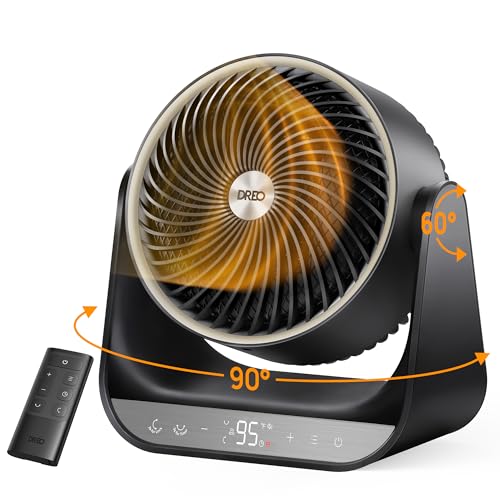
- Medium oscillating towers: Standing between 15 and 25 inches tall, medium tower models fit standard bedrooms and home libraries. Their upright grilles blow warm air at sitting and bed height, while an oscillation range of 70 to 90 degrees distributes heat evenly across the entire room.
- Tall towers and whole-room circulators: Larger rooms, open-plan living spaces, and rooms with high ceilings benefit from taller 30-inch towers or multi-directional circulators. Taller units feature wider oscillation angles, up to 120 degrees, while circulator fans can tilt vertically and horizontally to move warm air through deep living spaces.
Before picking a heater, check the specific features that match your daily habits. Make sure the unit includes a remote control so you can adjust settings from bed or your desk chair. Look for a programmable auto-off timer that runs from 1 to 12 hours so the unit turns off automatically after you fall asleep. Finally, confirm the unit displays a recognized electrical safety certification mark, such as ETL or UL, on its specifications label to ensure the design meets strict fire safety standards.

- BWP Score9.6
BWP Score is a ranking system developed by Bestwinterproducts.com. BWP score has no relationship or impact from any manufacturers or sales agent websites. Learn more
- BrandDREO
- BWP Score9.6
BWP Score is a ranking system developed by Bestwinterproducts.com. BWP score has no relationship or impact from any manufacturers or sales agent websites. Learn more
- BrandDREO

- BWP Score9.5
BWP Score is a ranking system developed by Bestwinterproducts.com. BWP score has no relationship or impact from any manufacturers or sales agent websites. Learn more
- BrandDREO

- BWP Score9.3
BWP Score is a ranking system developed by Bestwinterproducts.com. BWP score has no relationship or impact from any manufacturers or sales agent websites. Learn more
- BrandDREO

- BWP Score8.8
BWP Score is a ranking system developed by Bestwinterproducts.com. BWP score has no relationship or impact from any manufacturers or sales agent websites. Learn more
- BrandDREO

- BWP Score7.7
BWP Score is a ranking system developed by Bestwinterproducts.com. BWP score has no relationship or impact from any manufacturers or sales agent websites. Learn more
- BrandDREO

- BWP Score7.6
BWP Score is a ranking system developed by Bestwinterproducts.com. BWP score has no relationship or impact from any manufacturers or sales agent websites. Learn more
- BrandDREO

- BWP Score7.4
BWP Score is a ranking system developed by Bestwinterproducts.com. BWP score has no relationship or impact from any manufacturers or sales agent websites. Learn more
- BrandDREO
Last update on 2026-10-07 / Affiliate links / Images, Product Titles, and Product Highlights from Amazon Product Advertising API
Frequently Asked Questions
Can you safely leave a ceramic space heater running overnight?
You can run a ceramic space heater while sleeping if you maintain safe clearance and plug it directly into a wall outlet. Keep the unit at least 3 feet away from blankets, pillows, and curtains. Modern ceramic heaters include automatic overheat sensors and tip-over shutoff switches that cut power if airflow is blocked or the unit is bumped. Using an automatic shutoff timer or setting the digital thermostat also prevents the room from becoming stuffy overnight.
Why do space heaters trip household circuit breakers?
A space heater running on its 1500-watt high setting draws about 12.5 amps of electricity. Most residential bedroom and living room circuits are rated for 15 amps total across all outlets on that line. If you run a space heater on the same circuit as a computer, television, gaming console, or curling iron, the total load exceeds 15 amps, causing the breaker to trip to protect the wiring inside your walls. Switching the heater to a lower heat setting or moving other heavy appliances to another circuit prevents breaker trips.
How do you clean dust and pet hair out of a portable heater?
Always switch the heater off, unplug it from the wall outlet, and let it cool completely before touching the housing. Wipe the exterior grilles with a dry microfiber cloth to pick up surface dust. If your unit has a removable rear filter screen, slide it out and gently vacuum it or rinse it with water, making sure it dries completely before reinstalling. Never spray household cleaners or liquid directly into the heating element or motor vents.
Will running a portable ceramic heater dry out the air in a bedroom?
Ceramic heaters do not extract moisture from the room like a dehumidifier, but warming cold air naturally drops its relative humidity. Warmer air holds more moisture, which can make your sinuses, skin, and throat feel dry after several hours. Setting your digital thermostat to a sensible level between 68°F and 70°F prevents excessive dryness. Placing a small bowl of water near the airflow or running a cool-mist humidifier in the room can also maintain healthy indoor humidity.


Best Warm Winter Scarves 2026 For Cozy Comfort

Best Green Ski Goggles 2026 For Clear Vision On Slopes

12 Best Corner Electric Fireplace 2026: My Ultimate Guide To Pick One

Best Battery Powered Snow Blower 2026 For Effortless Snow Clearing

Best Ski Goggles Under 30 Inches For Crisp Vision And Comfort

Best Cooling Scarf 2026 For Instant Relief And Comfort

Fake Snow for Grass: Create a Realistic Winter Lawn Display

Dimplex Prism Wall Mount Fireplace: Sleek Heat With Modern Flame Style





