
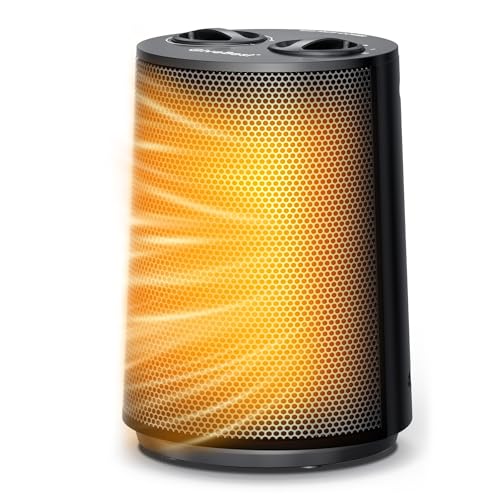
Why Does the GiveBest Portable Space Heater Stand Out?

Check the exact size of your drafty room before placing an order. This small heater stands out because it delivers rapid personal warmth through a lightweight frame with reliable safety switches, focusing heat directly on you rather than struggling to warm an entire house.
How well it works depends on how you use it. A compact ceramic blower thrives in an enclosed bedroom or under a desk up to two hundred square feet, but it quickly loses steam in an open living area. It also pulls a full electrical load, meaning it needs an outlet that does not share power with a microwave or coffee maker. Choosing between a simple dial or an oscillating digital design also shapes your daily comfort. Here is what makes this little warmer work and how to know if it fits your space.
Immediate Ceramic Heat in a Three-Pound Frame
The main reason this portable heater draws so much attention comes down to how fast it delivers noticeable warmth. When you sit down at a desk on a cold morning or step into a chilly bedroom, waiting twenty minutes for an oil-filled radiator to slowly warm its metal fins feels frustrating. This compact heater uses a ceramic heating element that warms up in seconds. Inside, small ceramic stones heat up almost instantly as electricity flows through them. An internal fan pulls cool air through the back, blows it across those hot ceramic blocks, and pushes heated air directly into your space.
Within two to three seconds of turning the power dial, you feel steady heat pouring out of the front grille. That rapid response solves the immediate discomfort of cold fingers and icy feet. It delivers direct warmth straight to your body instead of slowly warming the ceiling air first. Because ceramic elements naturally self-regulate their temperature as they heat, they produce consistent warmth without glowing red like open-wire coils that can dry out the air.
Portability is the other major factor behind its popularity. Weighing about three pounds and measuring roughly six by eight inches across its base, the unit takes up less room than a toaster. You can lift it using the built-in handle on the back and carry it from your home office floor during work hours to your bedside table at night. It fits under a desk, beside an armchair, or on a nightstand without cluttering your room.
Built-in Safety Guards: How Tip-Over and Overheat Shutoffs Work
Running a high-powered heater near furniture, pets, or children naturally raises safety concerns. Older space heaters earned a cautious reputation because they lacked dependable shutoffs to prevent accidents. Modern units use automatic internal mechanisms to protect your home.
The first line of defense is the tip-over safety switch that cuts power instantly if the unit is knocked over or tilted. On the bottom of the base sits a small spring-loaded mechanical peg. When the heater rests flat on a firm surface, its weight presses this peg up into the chassis, closing the circuit so current flows. If a dog bumps the heater, a cat rubs the side, or an office chair nudges the corner, the unit tilts. The instant that bottom peg loses contact with the floor, the spring pushes it out, cutting power to both the heating element and the fan.
The second internal guard is the automatic overheat sensor that shuts the unit off if internal parts get dangerously hot. If clothing drops over the front grille or papers block the back air intake, airflow stops immediately. Trapped heat builds up inside the chassis within seconds. Before internal temperatures can melt plastic or start a fire, this thermal sensor trips and shuts off the electricity. The outer housing is also molded from V-0 flame-retardant plastic, which self-extinguishes rather than catching fire if exposed to intense heat.
While these automatic features provide peace of mind, they are emergency backups rather than substitutes for careful placement. You must always maintain the standard three-foot safety buffer. Keep at least thirty-six inches of clear space on all sides from bedding, drapes, papers, and furniture. Never place the unit on thick shag rugs or soft beds. Deep carpet fibers can keep the bottom safety peg pressed in even if the heater tips over, while also blocking the intake. Always set the heater on a flat, hard, level floor.
Realistic Heating Expectations and Circuit Safety
The biggest frustration with compact space heaters happens when buyers expect a three-pound box to do the work of a furnace. Seeing a heater rated for up to 200 square feet tempts people to assume it will heat an entire living room. In practice, these units provide targeted personal warmth and supplemental heat in closed rooms, not whole-house heating.
Standard heating guidelines recommend about ten watts of power per square foot of living space in an insulated room with eight-foot ceilings. That means running this heater on its 1,500-watt high power level produces enough warmth to steadily heat a closed 150 to 200 square foot bedroom or home office. In a closed room of that size, the internal fan circulates air continuously, gradually raising the room temperature over twenty to thirty minutes.
The results change completely in open floor plans or drafty areas. In an open living room that connects to dining areas and stairwells, heated air rises and disperses across the ceiling, leaving the floor cold. If you place the heater in a poorly insulated sunroom with leaky windows, cold air enters faster than the ceramic stones can warm it. If you need to manage severe drafts across an uninsulated room, reading about the best heater for an enclosed porch shows the heavier heating capacity required to combat raw outdoor chill.
Using the unit as a targeted personal warmer is where it shines. Placing it three feet away under your desk keeps your feet and legs warm even if the rest of the house feels chilly. Most models offer two heat levels, 1,500 watts on High and 750 watts on Low, alongside a mechanical thermostat dial. Turning the unit down to 750 watts once you feel warm maintains comfort while cutting electricity use in half. If you try to warm an uninsulated garage, this compact unit will only warm you if you sit right in front of it; heating cold concrete spaces requires heavier equipment like an electric heater for a garage with a thermostat.
Running a portable space heater safely also requires understanding how your home handles heavy electrical loads. A space heater on its 1,500-watt high heat setting draws roughly 12.5 amps of electricity from a standard 120-volt wall outlet. In most American homes, bedroom and living room outlets connect to a 15-amp breaker. That single space heater takes up over eighty percent of the circuit's total safe capacity.
If your room circuit already powers a computer, monitors, or a television, turning on a 12.5-amp heater pushes total electrical demand past fifteen amps. When that occurs, the breaker (the electrical wall switch that trips during a power overload) shuts off. That power loss is not a defect in the heater; it is your breaker panel protecting house wiring from overheating.
Fire safety standards strictly prohibit running a 1,500-watt space heater through an extension cord, power strip, or multi-plug surge protector. Common household extension cords use thin wires made for lamps or chargers. Forcing 12.5 continuous amps through a light-duty cord causes the wires to heat up rapidly, which can melt the plastic insulation, scorch baseboards, and spark a fire.
Follow this practical checklist to run your space heater safely:
- Plug directly into a wall receptacle: Connect the heavy-duty power cord straight into a grounded wall outlet. Never use power strips, surge protectors, or extension cords.
- Check for shared circuit appliances: Make sure no other high-draw appliances, such as hair dryers, coffee makers, or irons, run on the same circuit while the heater is on High.
- Feel the wall outlet plate: After thirty minutes of use, touch the outlet faceplate and the plug prongs. If either feels hot to the touch or smells like warm plastic, unplug the heater and have a licensed electrician check the wiring.
- Keep the cord uncovered: Run the power cord openly along the floor. Never tuck the cord under rugs, carpet runners, or furniture where heat can get trapped.
- Use lower heat on tight circuits: Switch to the 750-watt low setting if you share a circuit with other electronics, or when managing tight power limits like those found when operating a heater for van life in a camper.
Choosing the Right Heater Setup for Your Space
Finding the right portable heater setup comes down to your daily habits, room layout, and how much control you want over your warmth. While the underlying ceramic heating engine works the same way across compact designs, different control styles and bodies suit different routines.
If your main goal is warming your feet under a desk or adding quick warmth by an armchair, a basic manual model with rotary knobs is the most practical choice. Mechanical dials allow you to select your power setting and adjust your comfort dial once without navigating digital menus. These simple dial units turn back on automatically when power returns, making them reliable tools for under-desk use where you simply want quick, dependable heat.
If you want to warm a small bedroom or a seating area where multiple people relax, look for a model featuring wide oscillation and digital controls. An oscillating base turns the heater side to side, spreading warm air across a wider angle rather than blowing a single stationary stream. Digital displays, remote controls, and programmable timers let you adjust warmth from across the room or set the heater to turn off automatically after you fall asleep, so you never have to get out of bed in the middle of the night.
Before picking a compact personal heater, verify these three practical details:
- Clearance space: Confirm that your room has enough floor space to keep the mandatory three-foot safety buffer away from beds, curtains, and furniture.
- Direct outlet access: Make sure a wall outlet is located within six feet of your seating spot so the power cord reaches without stretching tight.
- Safety certification marks: Look for recognized safety marks, such as UL or ETL, printed directly on the product label to verify the unit meets strict United States electrical standards.

- BWP Score9.0
BWP Score is a ranking system developed by Bestwinterproducts.com. BWP score has no relationship or impact from any manufacturers or sales agent websites. Learn more
- BrandGiveBest

- BWP Score8.9
BWP Score is a ranking system developed by Bestwinterproducts.com. BWP score has no relationship or impact from any manufacturers or sales agent websites. Learn more
- BrandGiveBest

- BWP Score8.5
BWP Score is a ranking system developed by Bestwinterproducts.com. BWP score has no relationship or impact from any manufacturers or sales agent websites. Learn more
- BrandGiveBest

- BWP Score8.1
BWP Score is a ranking system developed by Bestwinterproducts.com. BWP score has no relationship or impact from any manufacturers or sales agent websites. Learn more
- BrandGiveBest

- BWP Score7.7
BWP Score is a ranking system developed by Bestwinterproducts.com. BWP score has no relationship or impact from any manufacturers or sales agent websites. Learn more
- BrandGiveBest
- BWP Score7.2
BWP Score is a ranking system developed by Bestwinterproducts.com. BWP score has no relationship or impact from any manufacturers or sales agent websites. Learn more
- BrandGiveBest
Last update on 2026-10-07 / Affiliate links / Images, Product Titles, and Product Highlights from Amazon Product Advertising API
FAQs
Can you leave a portable ceramic space heater running overnight while sleeping?
You should not leave any portable space heater running unattended while you sleep. Even though modern ceramic heaters include automatic overheat sensors and tip-over shutoff switches, blankets or sheets can shift during the night and breach the three-foot safety buffer. If you need to warm a cold bedroom, run the heater for an hour before bed, shut the unit off, and rely on warm blankets or a central thermostat set to a safe overnight temperature.
Why does a new ceramic space heater smell like burning dust when first turned on?
A faint burning smell is normal during the first few minutes of operation, especially on new heaters or units brought out of storage. Dust particles settle on the internal ceramic heating stones, and those particles burn away quickly once electricity heats the stones. The odor typically clears within ten to fifteen minutes in a ventilated room. If you smell melting plastic or see smoke, shut the heater off immediately, unplug it, and inspect the outlet.
Does using a portable space heater dramatically increase electric bills?
Running a 1,500-watt space heater continuously on high heat for eight to ten hours a day will cause a noticeable jump in your electric bill. However, you can lower overall heating costs by using the heater for zone heating, which means lowering your central thermostat and warming only the specific room you occupy. Dropping down to the 750-watt low setting once your space feels comfortable also cuts the heater's electricity draw in half.


Best Warm Winter Scarves 2026 For Cozy Comfort

Best Green Ski Goggles 2026 For Clear Vision On Slopes

12 Best Corner Electric Fireplace 2026: My Ultimate Guide To Pick One

Best Battery Powered Snow Blower 2026 For Effortless Snow Clearing

Best Ski Goggles Under 30 Inches For Crisp Vision And Comfort

Best Cooling Scarf 2026 For Instant Relief And Comfort

Fake Snow for Grass: Create a Realistic Winter Lawn Display

Dimplex Prism Wall Mount Fireplace: Sleek Heat With Modern Flame Style





