
Why the SereneLife Outdoor Electric Patio Heater Stands Out

Direct radiant heat makes these electric units stand out because it warms people directly like sunshine instead of pushing hot air that blows away in the wind. That steady comfort only works, though, if a focused heating zone fits the way your patio is arranged. Built-in weatherproofing keeps rain from ruining the electronics, giving you instant warmth without lugging heavy gas tanks.
Success with this kind of heater comes down to your space and your power setup. One heater comfortably covers a 15 to 25 square foot zone, making it ideal for a small seating group rather than a massive deck. You also need an outdoor wall outlet on a circuit that can handle a full electrical draw without shutting off. Deciding between a freestanding pole or a wall mount then settles the question of floor space. Here is how the parts work together so you can decide if it fits your porch.
The Short Version
- Infrared warmth cuts through the wind: Unlike standard outdoor fan heaters that blow warm air into the yard where the breeze instantly sweeps it away, these heaters use carbon-fiber elements to send gentle radiant heat that warms your skin, clothing, and patio furniture directly, just like sunlight on a cool afternoon.
- Real outdoor weather protection: Weather-resistant builds rated up to IP65 feature aluminum alloy bodies and stainless steel base covers that seal out rain, garden hose spray, and dust, preventing internal rust and electrical shorts.
- Electric ease without propane headaches: You get instant, odorless warmth at the click of a remote control without lifting heavy 20-pound gas tanks, smelling fuel fumes, or lighting finicky pilot lights on chilly evenings.
- Targeted personal heat zones: Compact 900-watt and full-power 1500-watt models create cozy 15 to 25 square foot warmth zones over seating areas, provided you plug them into a dedicated 120-volt outdoor wall outlet.
Direct Infrared Heat: Why Carbon-Fiber Warmth Works Outdoors
If you have ever tried running a traditional indoor space heater outside, you know how quickly the heat disappears. Standard fan heaters rely on convection, which means they warm the surrounding air and push it across the room. Outside on a patio, that warm air rises instantly into the open sky or blows away with the slightest breeze. Trying to heat an open yard with blown air is like trying to illuminate a football field with a handheld flashlight.
SereneLife patio heaters solve that problem by using infrared radiant heating. Radiant heat does not warm the empty air between the heater and your chair. Instead, it travels silently across space in gentle light waves that release their energy only when they strike a solid surface. When you sit in front of the heater, the rays warm your jacket, your hands, and your chair cushion directly. You feel cozy warmth within seconds of pressing the power button, even if a cool autumn wind is blowing through the yard.
The heating elements themselves are built from high-efficiency carbon fiber. Carbon-fiber tubes heat up almost instantly, glow with a soft, warm light, and deliver sun-like comfort without creating dry, stuffy drafts. They also operate completely silently because there is no motorized fan humming or rattling in the background. If you have an enclosed outdoor retreat, pairing radiant heat with the best heater for an enclosed porch gives you an easy way to enjoy chilly evenings without battling drafts or background noise.
True Outdoor Weather Protection: What IP Ratings Mean in Rain and Dust
Leaving an electrical appliance out in the open requires real weatherproofing. Many basic indoor heaters short out or pose severe fire hazards if exposed to morning condensation or sudden rain showers. SereneLife outdoor heaters are built specifically for exterior environments, carrying formal Ingress Protection (IP) ratings such as IP65 or IP44.
An IP rating uses two numbers to define how well an electrical casing seals out the elements. The first digit shows how well the housing blocks solid particles like windblown dust and dirt, while the second digit reveals how well it repels moisture and water. Understanding these numbers helps you decide where to place your unit on the patio:
- IP65 Weather Resistance: The "6" indicates total dust tightness, meaning fine patio grit and pollen cannot slip inside the electronics. The "5" certifies that the unit handles direct water spray from any direction, such as driving rain or splashes from a garden hose. Models with this rating can remain on open decks and uncovered patios throughout the outdoor season.
- IP44 Splash Protection: The first "4" stops solid objects larger than 1 millimeter from entering the housing. The second "4" means the unit withstands water splashing against it from all angles. Units with IP44 ratings perform well under covered gazebos, covered porches, and roofed decks where they are shielded from direct downpours.
- Durable Aluminum Alloy Frames: The outer structures use corrosion-resistant aluminum alloy paired with stainless steel base covers. Aluminum naturally resists rust, preventing water from weakening the frame or staining your patio stones.
Before installing your heater, take a look at your intended patio spot. Look for a level surface shielded from standing puddles, and verify that the electrical outlet features a weatherproof, in-use bubble cover to keep water out while the unit stays plugged in.
Electric Ease Versus Propane: Odors, Switches, and Breaker Limits
Propane mushroom heaters are a common sight outside restaurants, but they carry distinct headaches for residential homeowners. A standard 20-pound propane cylinder weighs over 30 pounds when full, runs out of fuel without warning in the middle of a gathering, and requires regular trips to the gas station or exchange depot. Propane heaters also emit exhaust fumes, produce an unmistakable gas odor, and feature an open flame that can feel risky around low awnings, pergolas, or fabric umbrellas.
Electric patio heaters remove that daily maintenance. You plug the unit in, pick up the remote control, and enjoy instant, odorless warmth without soot or gas smells. Multiple power levels let you adjust the heat output depending on how chilly the night feels. A 900-watt compact model offers two gentle heat levels for mild evenings, while 1500-watt units provide two or three distinct power settings to match shifting seasonal temperatures.
You must, however, respect the electrical realities of running high-power appliances outdoors. In North American homes, a 1500-watt electric heater draws roughly 12.5 amps of electricity on a standard 120-volt household circuit. Most residential outdoor circuits are protected by a 15-amp or 20-amp circuit breaker. Because drawing 12.5 amps uses more than 80 percent of a 15-amp circuit's safe continuous limit, the heater needs to plug directly into a dedicated wall outlet.
If you run outdoor string lights, an electric smoker, or a patio sound system on the exact same circuit while running a 1500-watt heater on high, the circuit breaker will likely trip to prevent the wiring from overheating. Never plug an outdoor patio heater into a thin household extension cord, a power strip, or a multi-outlet surge protector. Standard light-duty cords can overheat, melt their plastic insulation, and spark fires under continuous 12.5-amp loads. If an outlet is slightly out of reach, an electrician can confirm whether a heavy-duty, outdoor-rated 12-gauge cord is safe, or install a dedicated outdoor outlet right where you need it. If you also spend time working in an outbuilding, using a dedicated electric heater for garage with thermostat uses this same dedicated-circuit rule to keep your space warm without nuisance breaker trips.
Safety Built In: Tip-Over Sensors, Overheat Shutoffs, and Mesh Guards
Tall patio heaters must remain stable when friends walk by or when gusts of wind blow across the deck. SereneLife freestanding models stand anywhere from 37 inches for compact patio units up to nearly 73 inches for full-height standing towers, with base weights ranging from under 8 pounds to almost 30 pounds. Because outdoor environments introduce unpredictable bumps from pets and children, built-in physical safeguards are essential.
The primary safety defense on freestanding models is a 360-degree tip-over safety switch. This internal sensor constantly monitors the vertical balance of the heater. If the tower tilts past a safe angle or gets knocked flat by a running dog, the switch cuts power to the heating element instantly. This stops the glowing tube from resting against a wood deck, outdoor rug, or dry lawn where intense heat could cause scorch marks or ignite a fire.
Internal protection continues with an automatic overheat sensor. If airflow around the heating tube becomes obstructed by blown debris or if electrical components reach unsafe operating temperatures, this safety switch cuts off the power before damage occurs. On the exterior, a protective metal mesh guard covers the front of the aluminum reflector. The mesh screen creates a physical barrier that prevents curious fingers, pet noses, and loose blankets from making direct contact with the hot carbon-fiber element.
Even with protective screens and automatic shutoffs, you should always follow the standard 3-foot safety buffer. Keep all sides of the heater at least 3 feet (36 inches) away from patio umbrellas, wicker furniture, fabric cushions, wooden posts, and outdoor curtains. If the heater is knocked over, turn the master power switch off, unplug the power cord, and allow the casing to cool down completely before inspecting the frame for loose parts or damaged glass.
Choosing the Right Size: Matching 900W and 1500W to Your Space
Electric patio heaters excel at personal zone warmth, but they do not heat an entire backyard lawn. Before picking a model, measure the seating area you actually use and consider how your family gathers outside. SereneLife designs fall into three clear form factors to match specific patio layouts:
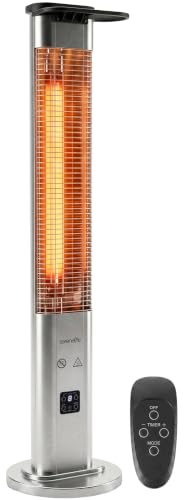
Compact 900-Watt Standing Towers: Standing about 37 inches tall and weighing under 8 pounds, these slender heaters work best for intimate settings. They provide targeted warmth across an area of roughly 15 square feet, making them ideal beside a two-person bistro table, next to an outdoor reading lounger, or tucked between a pair of porch rocking chairs. Their light weight lets you pick them up and move them wherever you want to sit, and they pull just 7.5 amps on low or medium settings, leaving more electrical headroom on shared circuits.
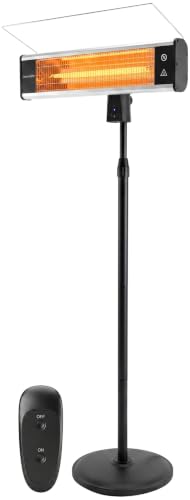
Full-Height 1500-Watt Standing Towers: Standing between 47 inches and 73 inches tall and weighing between 17 and 30 pounds, these tall towers provide broader coverage up to 25 square feet. Their higher aluminum reflectors cast downward radiant heat over four-person dining sets or outdoor sectional sofas. The heavy base plates keep the tall frames steady in moderate patio drafts, while the remote control lets you switch between multiple power levels from your seat without walking across a chilly patio.
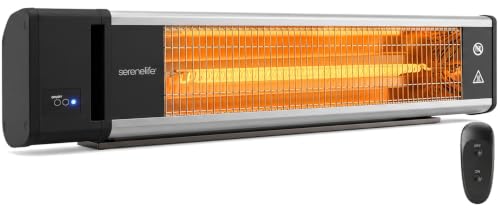
1500-Watt Wall-Mounted Heaters: Measuring roughly 29 inches wide and weighing just over 6 pounds, wall-mounted bars free up valuable patio floor space. If you have a narrow balcony, a small deck, or active pets running around, mounting the heater directly to an exterior wall or gazebo beam eliminates tripping over cords and keeps the heat source above head height. Angled downward, a wall bar directs constant radiant warmth over a patio table or an outdoor bench seat while staying permanently shielded under the eaves.
What to Look for in an Outdoor Electric Patio Heater
When selecting an electric outdoor heater to solve your cold-weather patio problems, match the physical design to your outdoor layout and electrical setup. Start by looking at where you sit most often. If your deck has limited floor room or busy foot traffic, look for a lightweight wall-mounted unit that mounts securely to exterior studs or overhead beams, keeping the walking area open and clear.
If you prefer flexible warmth that shifts between a dining table and an evening seating circle, look for a freestanding tower equipped with a broad, weighted base and an automatic 360-degree tip-over shutoff switch. Check the weather resistance rating stamped on the manufacturer label: choose an IP65 rating if your patio is fully open to falling rain, or an IP44 rating if the unit will live under a solid porch roof. Finally, verify that your patio has an accessible outdoor GFCI outlet on a dedicated circuit that can handle a 1500-watt load without tripping other household appliances, ensuring safe, reliable warmth whenever you step outside.
- BWP Score8.5
BWP Score is a ranking system developed by Bestwinterproducts.com. BWP score has no relationship or impact from any manufacturers or sales agent websites. Learn more
- BrandSereneLife

- BWP Score8.4
BWP Score is a ranking system developed by Bestwinterproducts.com. BWP score has no relationship or impact from any manufacturers or sales agent websites. Learn more
- BrandSereneLife
- BWP Score8.2
BWP Score is a ranking system developed by Bestwinterproducts.com. BWP score has no relationship or impact from any manufacturers or sales agent websites. Learn more
- BrandSereneLife

- BWP Score8.1
BWP Score is a ranking system developed by Bestwinterproducts.com. BWP score has no relationship or impact from any manufacturers or sales agent websites. Learn more
- BrandSereneLife

- BWP Score8.1
BWP Score is a ranking system developed by Bestwinterproducts.com. BWP score has no relationship or impact from any manufacturers or sales agent websites. Learn more
- BrandSereneLife

- BWP Score7.1
BWP Score is a ranking system developed by Bestwinterproducts.com. BWP score has no relationship or impact from any manufacturers or sales agent websites. Learn more
- BrandSereneLife
- BWP Score7.1
BWP Score is a ranking system developed by Bestwinterproducts.com. BWP score has no relationship or impact from any manufacturers or sales agent websites. Learn more
- BrandSereneLife
Last update on 2026-10-08 / Affiliate links / Images, Product Titles, and Product Highlights from Amazon Product Advertising API
FAQs
Can an electric patio heater be left outside in the rain?
Models carrying an IP65 weather rating can safely stay outside in the rain because their sealed casings protect the internal wiring from water spray. Units with an IP44 or lower splash rating should remain under a covered porch or roofed gazebo where driving rain cannot strike them directly. For the longest operating life, placing a weather-resistant protective cover over the heater when it is turned off and cooled helps shield the aluminum finish and electrical cord from harsh sun and winter ice.
Will wind blow away the warmth from an infrared patio heater?
No, wind does not blow away infrared radiant heat. Infrared waves travel straight through moving air and release their heat only when they strike solid surfaces like your body, clothes, or chair cushions. While a freezing wind will chill your exposed skin, the direct radiant rays continue warming you immediately, unlike fan heaters whose warmed air disappears with the slightest breeze.
Can I plug an electric patio heater into a normal outdoor extension cord?
No, you should never plug an electric patio heater into a standard, lightweight household extension cord or power strip. A 1500-watt heater pulls roughly 12.5 amps of continuous current, which can quickly overheat thin copper wires, melt vinyl insulation, and spark an electrical fire. Always plug the heater directly into a dedicated outdoor wall outlet, or consult a licensed electrician to verify whether a heavy-duty, outdoor-rated 12-gauge cord is safe for your specific layout.
How large of an area does a 1500-watt patio heater realistically warm?
A 1500-watt electric patio heater realistically warms an outdoor personal zone between 15 and 25 square feet. Because outdoor spaces have no insulating walls to trap heat, the warmth remains concentrated directly in front of the carbon-fiber heating element and aluminum reflector. This makes it ideal for keeping a four-person patio table or a small conversation seating area comfortable during cool weather.


Best Warm Winter Scarves 2026 For Cozy Comfort

Best Green Ski Goggles 2026 For Clear Vision On Slopes

12 Best Corner Electric Fireplace 2026: My Ultimate Guide To Pick One

Best Battery Powered Snow Blower 2026 For Effortless Snow Clearing

Best Ski Goggles Under 30 Inches For Crisp Vision And Comfort

Best Cooling Scarf 2026 For Instant Relief And Comfort

Fake Snow for Grass: Create a Realistic Winter Lawn Display

Dimplex Prism Wall Mount Fireplace: Sleek Heat With Modern Flame Style





