
Why Do Some Portable Space Heaters Outshine the Rest?

A freezing draft sneaks across the floorboards, prompting someone to switch on a cheap space heater that rattles loudly while barely warming their ankles. The designs that truly outperform the rest do not produce extra heat, but they warm up instantly with ceramic elements and circulate quiet, steady air right where you sit. Because standard household outlets cap all portable heaters at 1,500 watts, superior performance comes down to efficient heat distribution rather than raw wattage.
Finding that level of comfort depends on the size of your room, how close you keep the unit, and how accurately its thermostat prevents wasted electricity. Basic wire coils scorch dust and cycle unpredictably, whereas self-regulating ceramic stones maintain an even temperature without driving up your power bill. Understanding these mechanical details makes it easy to see why certain heaters feel completely different in daily use.
Can Any 1500-Watt Space Heater Produce More Heat?
In standard American homes, every portable electric space heater plugged into a standard wall outlet is limited by the exact same physical rules. Standard household circuits operate at 120 volts on a 15-amp breaker. Under normal electrical safety standards, a continuous appliance can draw up to 80 percent of that circuit capacity, which equals roughly 12.5 amps or 1,500 watts of power. Because of this electrical limit, no standard plug-in heater can legally or safely pull more than 1,500 watts from your wall.
Electric resistance heating turns power into warmth at a direct one-to-one ratio. That means every single 1,500-watt heater generates the exact same amount of thermal energy on its highest setting: roughly 5,120 British Thermal Units (BTUs) per hour. When a manufacturer claims their heater puts out double the heat of normal models while still plugging into a standard wall socket, that claim simply contradicts basic electrical science. If a heater attempted to draw 2,000 or 2,500 watts, it would trip your circuit breaker or cause house wiring to overheat.
Why do some portable units feel dramatically warmer than others? The answer comes down to heat distribution rather than total power output. Cheap, poorly engineered space heaters allow hot air to drift straight up to the ceiling, where it does nothing to warm your cold hands or feet. In contrast, superior portable heaters capture that same 1,500 watts of thermal energy and project it horizontally across your living space. The total heat produced is identical, but the way that warmth reaches your body makes all the difference in everyday comfort.
Why Do Ceramic Heating Elements Work So Much Better?
Older space heaters rely on thin, coiled metal wires that glow bright orange when electricity flows through them. These exposed wire coils present several frustrating drawbacks. They take several minutes to produce noticeable warmth, they glow brightly enough to disturb sleep in a dark bedroom, and they burn airborne dust particles, producing that unpleasant singed smell whenever the heater turns on. Over time, those thin metal coils can also become brittle, crack, and fail completely.
Modern heaters solve this problem by replacing wire coils with PTC ceramic elements, which are small ceramic stones that heat up quickly and safely. These ceramic blocks conduct electricity and transfer heat directly into aluminum fins. This solid design allows a ceramic heater to blow noticeable warmth into a room in as little as two seconds. Instead of glowing at scorching temperatures, ceramic stones distribute thermal energy evenly over a much larger surface area, eliminating the burnt-dust odor and prolonging the life of the internal parts.
Ceramic elements also feature built-in self-regulation. As the ceramic stones get hotter, their internal electrical resistance naturally increases. This physical property prevents the element from overheating on its own, even if airflow slows down. If you need steady warmth in drafty spots, such as when looking for a heater for an enclosed porch, having a ceramic element that delivers instant warmth ensures you feel comfortable right away instead of waiting for slow metal coils to catch up.
How Does Fan Design Make Airflow Far Quieter?
The fan inside a space heater determines whether the unit provides soothing background warmth or an annoying, rattling drone. Basic portable heaters cut manufacturing costs by using small, flat-bladed propeller fans powered by crude motors. These short blades must spin at high speeds to force air through the heater grille. This violent air movement chops the breeze, creating turbulent air drafts and generating noise levels that easily top 55 to 60 decibels (a measure of fan volume where lower numbers mean quieter running).
Superior heaters rethink airflow from the ground up by adopting extended impellers and sculpted heat funnels. An impeller looks like a long cylindrical wheel with curved fins, similar to the blower wheel inside a central home air conditioner. Because this wheel has a much larger surface area, it moves a greater volume of air at lower spinning speeds. Air travels smoothly through curved interior baffles rather than crashing into flat plastic grilles, reducing fan noise down to whisper-quiet levels between 25 and 45 decibels.
This aerodynamic engineering also shapes how far the warm air travels. A well-designed air funnel can project a focused stream of warm air outward at speeds up to 11.5 feet per second. Instead of creating a stagnant pool of hot air right next to the plastic grille, the fan pushes a gentle thermal current several feet outward across your floor. That means your feet stay warm under a desk or across a small home office without forcing you to raise your voice during phone calls or turn up the television.
Why Does Thermostat Accuracy Save You Money?
A heater without an accurate thermostat (a dial or sensor that cuts heat when the room reaches your goal) is an expensive energy waster. Low-end space heaters use basic mechanical dials built around cheap bi-metal strips. These strips take a long time to react to room temperatures, creating wide temperature swings. The heater might stay on until the room reaches 76 degrees Fahrenheit, leaving you uncomfortably hot, and then fail to kick back on until the temperature plunges to 65 degrees. That roller-coaster effect wastes substantial electricity by constantly overheating the room.
Better portable heaters use sensitive temperature controls that respond swiftly to small shifts in ambient air. When the air around the unit reaches your desired warmth level, the internal switch cuts power to the heating element immediately, running only the quiet fan or shutting off entirely until the temperature dips slightly. By eliminating unnecessary overheating, an accurate thermostat prevents your utility bill from climbing out of control. Choosing an electric heater with a reliable thermostat ensures your space stays consistently comfortable without drawing power when it is not needed.
Smart power settings further improve efficiency. High-performing compact units often feature dual heat modes, allowing you to choose between full 1,500-watt power and an energy-saving low setting of 750 or 900 watts. While 1,500 watts quickly cuts the initial chill in a cold room, dropping the switch down to 750 watts provides steady, gentle warmth using half the electricity. This lower setting prevents sudden power spikes, reduces wear on internal parts, and keeps personal desk spaces comfortably warm throughout long workdays.
Which Safety Features Protect Your Home From Fires?
Portable space heaters account for a notable share of winter home heating fires, almost always due to knocked-over units, blocked airflow, or dangerous electrical connections. Superior heaters stand out by building multiple physical safety backups directly into the chassis. When checking any space heater for your desk or bedroom, verify that it includes these vital protections:
- Automatic tip-over switch: An internal sensor that shuts off power instantly if the heater falls forward, tilts, or gets knocked over by a pet or vacuum cleaner. Superior models use sensitive mechanical switches or digital tilt sensors that cut the current even on plush carpeting.
- Internal overheat sensor: A safety cutoff switch that constantly monitors temperatures inside the heater cabinet. If papers, blankets, or heavy dust block the intake grilles, this sensor shuts off the electrical element before internal components reach dangerous temperatures.
- Flame-retardant housing: High-grade exterior plastics rated as V0 flame retardant. This material resists thermal breakdown and will not catch fire or sustain a flame even under severe electrical faults.
- Built-in thermal fuse: A secondary emergency backup that permanently breaks the electrical circuit if the primary overheat sensor ever fails, preventing runaway melting.
Even with advanced internal safety systems, you must follow basic placement rules to prevent accidents. Always maintain a 3-foot safety buffer around your heater, keeping curtains, blankets, papers, and furniture at least 36 inches away from all sides. Place the unit on a flat, hard, level floor rather than on high-pile rugs or unstable tables. Never plug a space heater into an extension cord, power strip, or surge protector. Those intermediate cords cannot handle a continuous 12.5-amp electrical draw, which can cause the plastic plug to melt, smoke, and spark a fire. Always plug the heater directly into a dedicated wall outlet.
What Should You Look For Before Buying a Heater?
Finding the right portable space heater comes down to matching the unit to your room size and your daily routine. As a practical sizing guideline, plan for roughly 10 watts of heating power per square foot of living space. A full-size 1,500-watt portable heater is designed to warm a closed room up to roughly 150 to 200 square feet, or to supply strong supplemental warmth in a larger living area. If you only need to warm your feet under a desk at work, a compact mini heater running on 500 watts provides personal comfort without overloading shared office circuits.
Look for units with sturdy, wide bases that resist tipping and include dual heat settings such as 1,500 watts and 750 watts. A fan-only mode is also helpful, allowing you to circulate air during mild weather. Check the product label to ensure the heater carries a recognized safety certification mark from an accredited laboratory, such as UL, ETL, or CSA. By prioritizing fast ceramic elements, whisper-quiet airflow impellers, accurate temperature dials, and multi-layer safety shutoffs, you will get steady, dependable warmth that outperforms basic space heaters all winter long.

- BWP Score9.6
BWP Score is a ranking system developed by Bestwinterproducts.com. BWP score has no relationship or impact from any manufacturers or sales agent websites. Learn more
- BrandGarvee

- BWP Score9.6
BWP Score is a ranking system developed by Bestwinterproducts.com. BWP score has no relationship or impact from any manufacturers or sales agent websites. Learn more
- BrandAmazon Basics

- BWP Score9.0
BWP Score is a ranking system developed by Bestwinterproducts.com. BWP score has no relationship or impact from any manufacturers or sales agent websites. Learn more
- BrandDREO

- BWP Score8.9
BWP Score is a ranking system developed by Bestwinterproducts.com. BWP score has no relationship or impact from any manufacturers or sales agent websites. Learn more
- BrandGiveBest

- BWP Score7.7
BWP Score is a ranking system developed by Bestwinterproducts.com. BWP score has no relationship or impact from any manufacturers or sales agent websites. Learn more
- BrandDREO
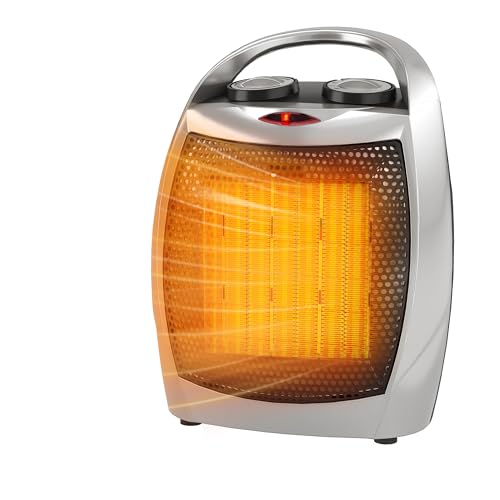
- BWP Score7.5
BWP Score is a ranking system developed by Bestwinterproducts.com. BWP score has no relationship or impact from any manufacturers or sales agent websites. Learn more
- BrandTakywep

- BWP Score7.4
BWP Score is a ranking system developed by Bestwinterproducts.com. BWP score has no relationship or impact from any manufacturers or sales agent websites. Learn more
- BrandAmazon Basics
Last update on 2026-10-07 / Affiliate links / Images, Product Titles, and Product Highlights from Amazon Product Advertising API
FAQs
Can you plug a portable space heater into an extension cord?
No, you should never plug a portable space heater into an extension cord, power strip, or surge protector. A standard 1,500-watt heater draws roughly 12.5 amps of continuous current, which creates substantial resistance and heat inside lightweight cords. Most household extension cords are not rated for that continuous electrical load, causing the plastic insulation and plug prongs to melt and spark a fire. Always plug your heater directly into a standard wall outlet on a dedicated circuit.
How much space can a 1500-watt heater actually warm?
A standard 1,500-watt heater can comfortably warm an insulated, enclosed room of up to 150 to 200 square feet. This matches the standard heating rule of thumb of roughly 10 watts of power per square foot of floor space. In rooms with high ceilings, large drafty windows, or open floor plans, a 1,500-watt unit works best as a personal zone heater placed within three to six feet of where you sit, rather than trying to raise the temperature of the entire room.
Why do some new space heaters smell like burning when first turned on?
A faint burning smell during the first few hours of running a new heater is completely normal. Manufacturers apply light protective oils and anti-corrosion coatings to internal metal and ceramic components during assembly to prevent moisture damage during shipping. When you turn the heater on for the first time, these factory oils burn off harmlessly. Simply run the unit in a well-ventilated room or near an open window for about an hour until the temporary odor disappears.
Does running a portable space heater lower winter electric bills?
A portable heater only lowers your electric bill if you practice strategic zone heating. This technique involves lowering your central home thermostat by several degrees and using a portable heater to warm only the single room you are occupying, such as your home office or bedroom. Because you stop wasting energy heating empty rooms, your total fuel or power consumption drops. But if you leave your central furnace running at normal levels and run space heaters at the same time, your electric bill will rise.


Best Warm Winter Scarves 2026 For Cozy Comfort

Best Green Ski Goggles 2026 For Clear Vision On Slopes

12 Best Corner Electric Fireplace 2026: My Ultimate Guide To Pick One

Best Battery Powered Snow Blower 2026 For Effortless Snow Clearing

Best Ski Goggles Under 30 Inches For Crisp Vision And Comfort

Best Cooling Scarf 2026 For Instant Relief And Comfort

Fake Snow for Grass: Create a Realistic Winter Lawn Display

Dimplex Prism Wall Mount Fireplace: Sleek Heat With Modern Flame Style





