
How Do Cats Stay Warm Outside in the Winter?

Check underneath porches, steps, and quiet crawl spaces before freezing temperatures settle in tonight. Outside felines survive bitter cold by puffing up their dense fur to trap warm air against their skin and curling into tight balls to protect their vital organs. Tucking their paws and noses deep into their bellies turns their own bodies into small, self-insulating domes.
A cat's ability to pull this off depends heavily on the surroundings and overall physical health. Freezing rain or melting snow quickly mats wet fur, stripping away every bit of natural insulation. Bitter wind chill also steals body heat fast, putting thin, very young, or elderly cats at serious risk. Without a dry, windproof nook to crawl into, their built-in defenses will eventually fail. Here is how their natural heat-trapping system works, along with simple ways to keep neighborhood felines safe and dry all season long.
How Cats Trap Body Heat With Fur and Posture
Cats rely on a natural survival system to handle chilly weather, but their biology has limits. Knowing how an outdoor cat responds to falling temperatures helps you spot when a stray is managing fine and when it is struggling to survive.
A cat's first line of defense is its dual-layered coat. The outer layer consists of guard hairs that block cold wind and shed dirt or light rain. Beneath those guard hairs sits the undercoat (the soft, dense inner layer of fur right next to the skin). In late autumn, outdoor cats shed their lighter summer fur and grow a thick undercoat packed with fine hairs. This dense mesh creates millions of tiny air pockets that hold warmth rising from the cat's skin.
When freezing weather arrives, a cat triggers piloerection (fluffing up fur to trap air). Tiny muscles at the base of each hair follicle contract, forcing the coat to stand upright. This reaction makes an outdoor cat look round and puffy on a cold morning. That puffiness creates a thick blanket of warm air around the body, working like a winter coat. Like people learning how to keep warm in winter outdoors with layered clothing, a cat depends on that trapped air cushion to stay warm.
Body posture works hand in hand with fur fluffing. A cat loses heat quickly through its bare ear tips, paw pads, and nose. To stop this loss, an outdoor cat curls into a tight ball. It draws its paws under its chest, wraps its tail over its nose and toes, and presses its chin into its flank. This compact tuck shields bare skin from drafts and seals core warmth against the belly.
Maintaining body heat also demands fuel. A cat's normal resting body temperature sits between 100.5°F and 102.5°F, which is higher than a human baseline. Shivering to generate warmth burns calories quickly. Without extra food during winter freezes, an outdoor cat burns through its fat reserves and loses the ability to produce heat.
Where Outdoor Cats Seek Winter Cover and How to Spot Danger
When freezing wind blows, fur and posture are not enough. Outdoor cats search for small, draft-free hiding places where their body heat can warm a confined space. Feral cats look for tight nooks that resemble natural dens, slipping under backyard decks, into crawl spaces beneath porches, or inside garden sheds.
Stray cats also look for warm spots around parked vehicles. A recently driven car holds engine heat for hours, drawing chilled cats up into the wheel arches and engine bay. This habit leads to severe injuries every winter. If you park outside, bang firmly on your car hood and wait a few seconds before starting the engine to give hiding animals time to escape.
A cat's natural insulation fails completely once moisture enters the picture. Rain, wet snow, or slush mats down guard hairs and flattens the undercoat. Once wet, fur loses its air pockets and stops insulating. Cold water pulls heat away from skin roughly twenty times faster than dry air. Add biting wind chill, and a damp cat can suffer hypothermia in hours.
When cold overwhelms a cat, it slips into hypothermia (a dangerously low body temperature). Watch for these warning signs:
- Violent or stopped shivering: Chilled cats shiver hard to warm their muscles, but shivering stops once energy reserves run out.
- Stiff, clumsy movement: The cat walks with stiff legs, stumbles, or crouches motionlessly in the snow without trying to hide.
- Lack of responsiveness: The cat seems dazed, lethargic, or glassy-eyed, failing to react when you walk near or call out.
- Pale or grayish skin: Ear tips, lips, gums, and paw pads lose their pink tone and turn pale, gray, or blue, showing poor circulation and early frostbite.
- Weak, shallow breathing: A cat in deep trouble breathes very slowly with wide, dilated pupils and stiff limbs.
If you see these symptoms, move the cat into a warm room right away. Wrap it gently in a dry towel so its body warms gradually. Never submerge a freezing cat in warm water, never rub cold paws, and never place it directly onto high-heat pads. Rapid surface heating causes shock and burns. Contact a veterinarian or animal rescue group immediately.
The Danger of Blankets and Why Dry Straw Saves Lives
Putting old towels, fleece blankets, or sweaters inside an outdoor box is a common first instinct. While this kindness comes from a good heart, using fabric bedding in an unheated shelter is a dangerous mistake. During freezing winter nights, cloth bedding can turn deadly.
Fabric absorbs moisture from the air, from melting frost, and from snow packed between a cat's paw pads. Towels, blankets, and fleece hold onto this dampness rather than shedding it. As overnight temperatures drop below freezing, that wet fabric freezes into a solid sheet of ice. A cat crawling inside lies directly on a frozen block, which sucks out its core warmth and accelerates hypothermia.
Hay is another item people place in shelters by mistake, but hay differs completely from straw. Hay is dried grass cut for feeding livestock like horses and rabbits. It has soft, solid stems that absorb water like a sponge. Inside an outdoor cat house, hay turns damp from humidity and breath. Within days, hay rots, grows mold that irritates lungs, and freezes into a hard clump.
Clean, dry straw is the safest and most effective bedding you can provide. Straw consists of the dry, golden stalks left behind after harvesting grain crops like wheat or oats. These stalks are naturally hollow, functioning like tiny sealed tubes. That hollow design provides two critical benefits for winter survival:
First, the hollow centers trap air inside every stalk, creating an insulating nest that reflects warmth back against the cat's body. Second, straw repels water. Moisture, snow, and condensation slide off the smooth, waxy stalks and settle beneath the bedding, leaving the top layer dry. A cat can burrow deep into a thick bed of straw, creating a cozy hollow that blocks drafts. Fill an outdoor shelter about halfway with loose straw so the cat can easily dig its own nest.
Setting Up Safe Shelters and Choosing Warming Gear
While learning how to keep warm in winter in the house focuses on draft-proofing windows and adjusting thermostats, protecting outdoor cats requires creating a wind-blocking, dry sanctuary. Whether you build your own shelter or purchase an outdoor pet house, specific design details make all the difference.
Use these practical steps and buying checks to keep neighborhood cats safe all winter:
- Keep dimensions snug and elevate the floor: A winter cat house should be relatively small, roughly 15 to 24 inches wide, so a cat's body heat can warm the interior. A large box allows heat to dissipate quickly, leaving the inside cold. Always raise the shelter two to four inches above the frozen ground using bricks, concrete pavers, or wood pallets. Raising the structure stops ground frost and pooling rainwater from soaking the floor.
- Choose insulated walls and seamless bottoms: Look for shelters made from waterproof Oxford fabric, durable molded plastic, or cedar wood lined with foam insulation. Check the bottom construction carefully. Seamless or raised floor designs prevent ground slush from leaking through needle holes or corner seams. Make sure the roof has a slant so heavy snow and rain run off instead of gathering on top.
- Ensure wind flap protection and an escape door: An open entryway allows cold drafts to blow straight over sleeping cats. Look for shelters equipped with clear plastic flap doors that block wind while allowing light inside. Stray cats also need an escape route. Choosing a shelter with dual doors (a main entrance and a rear escape flap) prevents aggressive animals or dogs from cornering a cat inside, giving the cat the confidence to use the house.
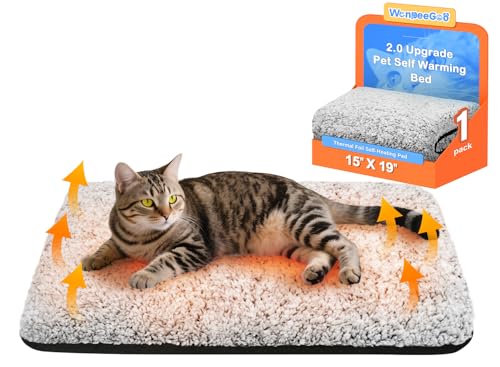
- Select self-warming mats or outdoor-rated heated pads: For spots without electrical outlets, use a self-warming pet mat. These pads contain an internal layer of heat-reflective thermal foil that bounces the cat's own body warmth back toward it without cords or electricity. If you have an outdoor electrical outlet, an outdoor-rated heated cat house with an internal thermostatic pet pad provides steady warmth. Verify that any electric outdoor pet pad features a steel-wrapped, chew-resistant power cord, a water-resistant sealed surface, and an automatic thermostat that holds a pet-safe temperature. Never use indoor human heating pads, which lack weatherproofing and can cause burns.
- Keep unfrozen water and food nearby: Dehydration is a major winter threat because cats cannot drink frozen water and should not eat snow. Check water bowls twice daily or set up a pet-safe heated water bowl near the shelter. Offer extra dry kibble or slightly warmed wet food daily to fuel the cat's internal furnace. Always place food and water dishes outside the shelter so spills do not wet the sleeping straw.

- BWP Score9.2
BWP Score is a ranking system developed by Bestwinterproducts.com. BWP score has no relationship or impact from any manufacturers or sales agent websites. Learn more
- BrandK&H Pet Products

- BWP Score9.2
BWP Score is a ranking system developed by Bestwinterproducts.com. BWP score has no relationship or impact from any manufacturers or sales agent websites. Learn more
- BrandPetvolve

- BWP Score9.0
BWP Score is a ranking system developed by Bestwinterproducts.com. BWP score has no relationship or impact from any manufacturers or sales agent websites. Learn more
- BrandPETYELLA
- BWP Score9.0
BWP Score is a ranking system developed by Bestwinterproducts.com. BWP score has no relationship or impact from any manufacturers or sales agent websites. Learn more
- BrandWanpeeGoo

- BWP Score8.4
BWP Score is a ranking system developed by Bestwinterproducts.com. BWP score has no relationship or impact from any manufacturers or sales agent websites. Learn more
- BrandWn's Day

- BWP Score8.4
BWP Score is a ranking system developed by Bestwinterproducts.com. BWP score has no relationship or impact from any manufacturers or sales agent websites. Learn more
- BrandPETIMBER

- BWP Score8.2
BWP Score is a ranking system developed by Bestwinterproducts.com. BWP score has no relationship or impact from any manufacturers or sales agent websites. Learn more
- BrandTailTastic

- BWP Score8.2
BWP Score is a ranking system developed by Bestwinterproducts.com. BWP score has no relationship or impact from any manufacturers or sales agent websites. Learn more
- BrandUIQELYS

- BWP Score7.6
BWP Score is a ranking system developed by Bestwinterproducts.com. BWP score has no relationship or impact from any manufacturers or sales agent websites. Learn more
- BrandFhiny
Last update on 2026-10-02 / Affiliate links / Images, Product Titles, and Product Highlights from Amazon Product Advertising API
FAQs
How cold is too cold for an outside cat?
Healthy adult cats with thick winter coats can generally handle temperatures down to 45°F without stress. When temperatures drop below 32°F, the danger of hypothermia and frostbite increases significantly, particularly in wet or windy conditions. Any weather falling below 20°F is hazardous for outside cats without an insulated shelter, dry bedding, and steady access to calorie-rich food.
Can I put a regular human heating pad inside an outdoor cat house?
No, you should never place a household human heating pad inside an outdoor cat shelter. Human heating pads are not waterproof, creating serious risks of electrical shock, short circuits, and fire in damp outdoor environments. They can also reach temperatures that cause severe skin burns, and their thin cords are easily damaged by animal chewing. Only use outdoor-rated pet heating pads built with water-resistant covers and chew-proof cords.
Why do cats crawl into car engines during the winter?
Cats crawl into car engines because recently driven vehicles radiate warmth for several hours after being parked. The engine block, hood, and wheel arches create a dark, enclosed pocket that shields strays from freezing wind and snow. To protect cats from severe fan belt injuries, always bang hard on your car hood and wait a few seconds before turning the ignition during cold weather.


Best Warm Winter Scarves 2026 For Cozy Comfort

Best Green Ski Goggles 2026 For Clear Vision On Slopes

12 Best Corner Electric Fireplace 2026: My Ultimate Guide To Pick One

Best Battery Powered Snow Blower 2026 For Effortless Snow Clearing

Best Ski Goggles Under 30 Inches For Crisp Vision And Comfort

Best Cooling Scarf 2026 For Instant Relief And Comfort

Fake Snow for Grass: Create a Realistic Winter Lawn Display

Dimplex Prism Wall Mount Fireplace: Sleek Heat With Modern Flame Style





