
How Long to Run a Pool Pump in Winter to Stop Freezes

Running a pool pump for four to six hours a day is plenty during normal winter weather. That schedule changes immediately when freezing air arrives, because water must keep circulating to prevent pipe damage. Cooler water naturally halts algae growth, so the pool needs far less filtration than it does in midsummer. Setting shorter runtimes keeps the water clean without wasting money on electricity.
A few conditions determine your exact routine. Outdoor air temperature matters most: whenever forecasts drop near 32 degrees, switch the equipment to run continuously 24 hours a day so ice cannot form. Water temperature also counts, since water below 60 degrees requires very little filtering. Finally, while an open pool relies on daily movement, a pool closed and drained for winter needs zero runtime. Here is how to set your daily schedule and keep your plumbing safe through every cold snap.
The Short Version
- Normal cold weather: Run your pool pump 4 to 6 hours daily when water temperatures stay below 65 degrees Fahrenheit and outdoor air stays well above freezing.
- Freezing weather: Run your pool pump continuously 24 hours a day anytime outdoor air temperatures drop near or below 32 degrees Fahrenheit.
- Daily timing: Schedule standard winter runtimes during the coldest overnight hours, typically between midnight and 6:00 AM, to shield equipment from unexpected cold snaps.
- Power outages: Pull all equipment drain plugs immediately if an ice storm cuts power during a freeze, draining the pump, filter, and heater before ice expands.
Baseline Daily Hours for Winter Pool Circulation
In peak summer, heat and sunlight require 8 to 12 hours of pump runtime daily to stop algae. Winter changes this completely because water temperature controls organic growth.
Once pool water drops below 65 degrees Fahrenheit, algae reproduction slows to a crawl. When water dips below 60 degrees, algae goes completely dormant. The green organisms that turn a pool cloudy cannot multiply in cold water, so you no longer need long filtration cycles to hold off blooms.
In cold weather, turnover (pushing all pool water through the filter once every 24 hours) is plenty to keep water fresh and sweep out windblown dirt. For most residential pools, a standard pump moves the entire volume of water in about 4 to 6 hours. If you use a pump with adjustable speeds, running at a low speed for 6 to 8 hours uses very little electricity while keeping water moving smoothly through the skimmers.
Running your pump zero hours is a mistake unless your pool is drained and closed for the season. Motionless water allows leaves to rot on the bottom, causing tannin stains on plaster or vinyl. Still water also allows winter rain to form an untreated top layer where bacteria can settle. Sticking to 4 to 6 hours keeps the pool clean, balances sanitizers, and keeps electric bills low.
Freeze Protection Rules: When to Run the Pump 24/7
Moving water resists freezing far better than standing water. The pool acts as a large heat reservoir, absorbing warmth from the ground. As the pump pulls water from the deep end and pushes it through above-ground plumbing, it continuously warms exposed pipes.
The critical cutoff point is 32 degrees Fahrenheit, but you should never wait until the thermometer hits freezing to turn your pump on. Equipment pads sit out in open yards, exposed to frost and wind. Thin plastic pipes and pump strainer pots can freeze when air sits at 34 or 35 degrees Fahrenheit, especially if wind chill strips away ambient warmth.
Whenever local forecasts call for temperatures near 35 degrees Fahrenheit or below, switch your pump to run continuously around the clock. Do not turn it off until daytime temperatures climb safely above freezing.
Use this checklist whenever freezing weather threatens your area:
- Switch to continuous flow: Set your pump switch or timer to run 24 hours a day until the freeze passes.
- Check your cold-weather sensor: If your system has an automatic cold-weather sensor (a thermostat that turns the pump on during freezes), confirm that it activates properly around 35 to 38 degrees Fahrenheit.
- Open every valve: Turn valve handles so water circulates through main drains, skimmers, and cleaner lines. Any closed pipe with standing water can split, even while the main pump runs.
- Clear skimmer baskets: Empty leaves so water flows freely into the pump without restriction.
- Check water level: Keep water halfway up the skimmer opening so the pump never sucks air and loses prime.
Day Versus Night Scheduling for Winter Timers
During summer, running your pump during daylight makes sense. Sunlight destroys free chlorine, and daytime heat encourages bacteria, so daytime filtration delivers sanitizer right when needed most.
Winter flips that logic completely. Sunlight is weak, chemical loss is slow, and the main danger is freezing weather. The coldest hours of any winter day almost always strike overnight, usually between 2:00 AM and 7:00 AM.
If you set your timer to run 5 hours during the afternoon, your equipment sits unprotected during the coldest hours of the night. A sudden cold snap can freeze motionless water inside your filter tank before your afternoon timer clicks on.
Position your baseline 4 to 6 hours of daily winter circulation overnight. Setting your timer to run from 1:00 AM to 6:00 AM gives you built-in insurance against mild overnight frosts. Also, running equipment late at night often saves money, as many utility companies offer lower off-peak electric rates overnight.
Covered Versus Uncovered Pools: How Runtime Changes
Covering your pool changes how water circulates and how long you need to run your pump. Many homeowners install a solid or mesh safety cover while keeping plumbing active, rather than draining and closing the pool completely.
A solid safety cover blocks sunlight and stops debris from entering the water. Because sunlight cannot break down chlorine and no leaves blow into the pool, filtration demands drop. If your pool is covered and air temperatures stay above freezing, you can cut pump runtime down to 3 or 4 hours daily.
Keep water moving underneath the cover, but angle return jets downward toward the floor. If jets point upward, they push water against the underside of the fabric, causing unnecessary surface wear.
The biggest threat for covered pools is standing water on top of the cover. Rain and snowmelt form heavy puddles across the middle of the fabric. This weight stretches the cover, pulls deck anchors, and can bow pool walls inward. Main pump circulation underneath will not remove puddles on top. You must pump surface water off the cover regularly throughout winter.
What to Do During a Winter Power Failure
A winter storm can knock out electricity for hours or days. When power fails during a hard freeze below 32 degrees Fahrenheit, water stops moving immediately. Trapped water inside above-ground equipment can freeze solid in two to three hours.
Freezing water expands by roughly nine percent, easily splitting PVC pipes, pump strainer pots, and heater manifolds. If power drops during a freeze, drain the equipment pad immediately before ice forms.
Follow these steps in order to protect your pool equipment:
- Turn off the main breakers: Flip the pool equipment breakers off at the electrical panel so the motor does not start dry when power returns.
- Release system pressure: Open the air relief valve on top of the filter tank to break the vacuum and let water drain out.
- Remove pump drain plugs: Unscrew the drain plugs at the bottom of the pump strainer pot and let the water pour out.
- Drain the filter tank: Unscrew the drain plug at the base of the filter tank to empty standing water.
- Drain heaters and chlorinators: Pull drain plugs from your heater, chlorinator, and booster pump.
- Store plugs safely: Place all drain plugs inside the pump strainer basket and put the lid back on loosely so you do not lose them.
- Insulate exposed lines: Wrap heavy blankets, old towels, or foam pipe wrap around bare valves and pipes to trap remaining ground warmth.
Working outside in freezing winds with wet equipment is tough. Bundle up and dress properly to keep warm in winter outdoors before tackling drain plugs. If power stays out for multiple days in sub-zero weather, contact a qualified pool professional to blow out underground lines.
Helpful Gear for Winter Pool Circulation
Two pieces of equipment make winter circulation much simpler while protecting your plumbing from freeze damage.
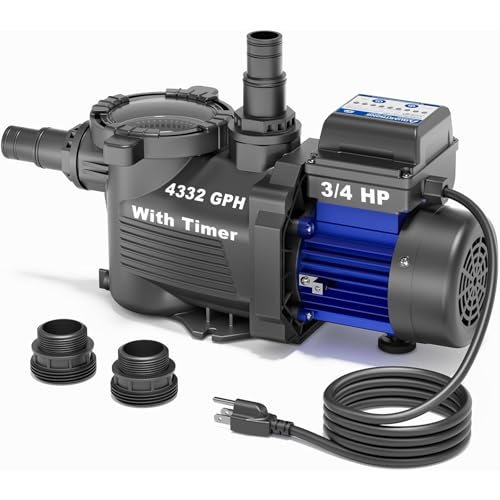
The first helpful upgrade is a circulation pump with a built-in programmable timer. If your current pump uses an old manual switch, a pump with an integrated timer lets you set custom runtime blocks without walking outside in freezing temperatures. When shopping for a timer pump, look for an easy-to-read control interface, weather-sealed buttons, and multi-hour settings that allow you to switch easily between a short 4-hour cycle and continuous 24-hour operation.
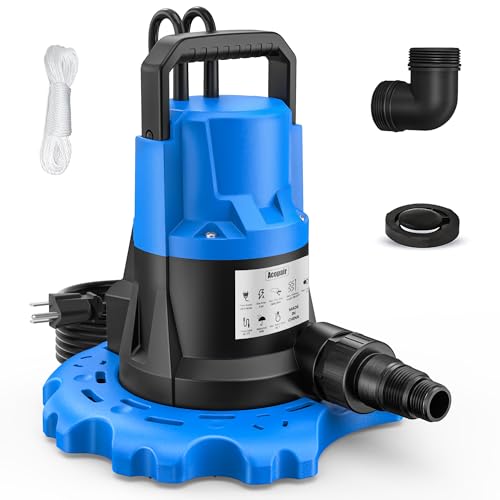
The second essential piece of gear for covered pools is a dedicated submersible pool cover pump. These compact pumps sit directly on top of your pool cover to remove standing rainwater and snowmelt before puddles turn into dangerous sheets of ice. Look for automatic models with water sensors that turn on when water reaches two inches and shut off once the puddle clears. Confirm the pump includes a standard garden hose adapter, a long power cord that reaches an outdoor outlet, and a stable base that will not tip over on flexible covers.
Taking care of your pool equipment pad during cold snaps takes diligence. While monitoring your yard during winter storms, learning how to keep warm in winter in the house without overworking your heating system ensures you stay comfortable while keeping watch on the weather.

- BWP Score9.6
BWP Score is a ranking system developed by Bestwinterproducts.com. BWP score has no relationship or impact from any manufacturers or sales agent websites. Learn more
- BrandWayne

- BWP Score9.0
BWP Score is a ranking system developed by Bestwinterproducts.com. BWP score has no relationship or impact from any manufacturers or sales agent websites. Learn more
- BrandLittle Giant

- BWP Score8.8
BWP Score is a ranking system developed by Bestwinterproducts.com. BWP score has no relationship or impact from any manufacturers or sales agent websites. Learn more
- BrandFibroPool

- BWP Score8.6
BWP Score is a ranking system developed by Bestwinterproducts.com. BWP score has no relationship or impact from any manufacturers or sales agent websites. Learn more
- BrandWayne

- BWP Score8.6
BWP Score is a ranking system developed by Bestwinterproducts.com. BWP score has no relationship or impact from any manufacturers or sales agent websites. Learn more
- BrandAcquaer

- BWP Score8.6
BWP Score is a ranking system developed by Bestwinterproducts.com. BWP score has no relationship or impact from any manufacturers or sales agent websites. Learn more
- BrandSwimline
- BWP Score8.6
BWP Score is a ranking system developed by Bestwinterproducts.com. BWP score has no relationship or impact from any manufacturers or sales agent websites. Learn more
- BrandAQUASTRONG

- BWP Score8.6
BWP Score is a ranking system developed by Bestwinterproducts.com. BWP score has no relationship or impact from any manufacturers or sales agent websites. Learn more
- BrandVidapool

- BWP Score8.4
BWP Score is a ranking system developed by Bestwinterproducts.com. BWP score has no relationship or impact from any manufacturers or sales agent websites. Learn more
- BrandCIPU
- BWP Score8.0
BWP Score is a ranking system developed by Bestwinterproducts.com. BWP score has no relationship or impact from any manufacturers or sales agent websites. Learn more
- BrandAcopair
Last update on 2026-10-03 / Affiliate links / Images, Product Titles, and Product Highlights from Amazon Product Advertising API
FAQs
Can a pool pump freeze while it is running?
A pool pump will not freeze under normal winter weather as long as water flows steadily through the plumbing. Moving water creates friction and carries warmth from the deep end of the pool. However, if a skimmer basket clogs with leaves or the pool water level drops below the skimmer mouth, the pump can lose prime. When water stops moving, motionless liquid inside the housing can freeze quickly.
Should I run the pool pump on high or low speed during a freeze?
You can safely run a pump with adjustable speeds on low or medium speed during freezing weather, provided water continues moving through every return jet. You do not need high pressure to stop ice formation; you simply need constant water movement. Running on a lower speed keeps water circulating 24 hours a day while keeping electric bills manageable.
At what temperature will exposed pool pipes burst?
Exposed pool pipes and equipment can crack when outdoor temperatures drop below 32 degrees Fahrenheit for more than three to four consecutive hours without water moving through them. Thin plastic parts, like chlorinators and pressure gauges, freeze and crack first. Thicker PVC pipes and metal heater headers take longer to freeze solid but will split open during overnight drops into the 20s if the pump is switched off.
Does running the pool pump warm up the pool water?
Running a pool pump adds a tiny amount of motor friction, but it does not warm pool water noticeably. Instead, circulation distributes heat stored in the deep water across exposed pipes. By pulling water from the ground-insulated pool and moving it through plumbing, the pump keeps pipes at water temperature rather than freezing air temperature.


Best Warm Winter Scarves 2026 For Cozy Comfort

Best Green Ski Goggles 2026 For Clear Vision On Slopes

12 Best Corner Electric Fireplace 2026: My Ultimate Guide To Pick One

Best Battery Powered Snow Blower 2026 For Effortless Snow Clearing

Best Ski Goggles Under 30 Inches For Crisp Vision And Comfort

Best Cooling Scarf 2026 For Instant Relief And Comfort

Fake Snow for Grass: Create a Realistic Winter Lawn Display

Dimplex Prism Wall Mount Fireplace: Sleek Heat With Modern Flame Style





