
How Many Countries Participate in the Winter Olympics?

A viewer watching the parade of flags across the TV screen notices that the broadcast wraps up far sooner than it does in July. Modern Winter Games typically feature around 90 participating countries, with exactly 91 delegations entering the 2022 competition. That roster surprises many fans who expect the massive lineup of over two hundred teams seen at the Summer Games.
That exact count shifts with every cycle. A nation only attends when its athletes earn official qualifying slots during winter trials, which keeps the list short for warm regions without natural snow or ice. Global sanctions and sports committee penalties can also remove a country from the official tally, leaving competitors to enter under a neutral flag instead. Knowing how these rules work makes it easy to follow the lineup at each event.
How many nations usually enter the Winter Games?
Modern Winter Olympic Games feature roughly 90 participating nations. At the 2022 Winter Games in Beijing, exactly 91 delegations marched in the opening ceremony. Four years earlier, at the 2018 Games in PyeongChang, a record 92 delegations took part. The 2014 Games in Sochi included 88 delegations. Over the past few cycles, the number has stayed very close to this 90-team mark.
This number is not permanent. It shifts every four years based on athletic qualification, financial support, and global events. Unlike casual sports tournaments where countries receive automatic invitations, every winter delegation must earn its way to the starting line. If a nation has only one qualified skier and that skier suffers an injury before the opening ceremony, that entire country may drop off the official roster for that cycle.
Many sports fans guess the number is much higher, often assuming 150 or 200 nations participate. That mistake happens because people picture the Summer Olympics, which are far larger. Knowing the true count settles trivia bets, helps students finish school reports accurately, and makes watching the parade of nations during the opening ceremony much more interesting.
Why do fewer countries join winter than summer?
The Summer Olympic Games bring together well over 200 nations, usually around 206 separate delegations. The Winter Games feature less than half that amount. This massive gap comes down to three basic hurdles: geography, facility costs, and expensive athletic gear.
Geography is the most obvious barrier. More than half of the countries on Earth rarely or never see snow. Large parts of Africa, Central America, the Caribbean, Southeast Asia, and Oceania have tropical or arid climates. Without natural snowfall, sub-freezing temperatures, and mountain ranges, children in those regions do not grow up ice skating or skiing in their backyards. Winter sports simply do not develop organically in places where ice never forms outdoors.
The financial barrier is just as steep. Summer sports like sprinting, marathon running, and soccer require simple gear and an open field. Almost any community can build a dirt track or set up two goalposts on a patch of grass. Winter sports require specialized, climate-controlled environments that cost millions of dollars to build and maintain. A competitive bobsled, luge, or skeleton track requires miles of refrigerated concrete tubes that cost tens of millions of dollars. Indoor ice arenas for figure skating, short track, and curling demand constant electricity to keep the floor frozen year-round.
Equipment and travel costs also lock out smaller sports programs. High-performance alpine skis, specialized aerodynamic suits, and custom bobsleds run into tens of thousands of dollars per athlete. On top of that, athletes from warmer parts of the world must spend months living and training abroad in Europe or North America to access snow. That requires continuous funding for airfare, hotel stays, specialized coaching, and mountain lift passes.
Spectators traveling to watch these events in person face harsh conditions as well. Standing outdoors beside a frozen sliding track for hours requires serious cold-weather preparation. Learning how to keep feet warm during winter helps fans enjoy hours of live competition on frozen hillsides without dealing with painful, numb toes.
Can countries with no snow compete in the Games?
Warm-weather nations can enter the Winter Games, and many do every four years. Fans around the world love watching underdogs from sunny islands and desert countries carry their flags into the stadium. The famous Jamaican bobsled team that debuted in 1988 is the best-known example, but they are far from alone. Delegations from countries like Brazil, Colombia, Kenya, Ghana, and the Philippines have all lined up in recent winter events.
Athletes from tropical and desert countries use creative methods to build world-class skills without home snow:
- Living and training abroad: Many competitors hold dual citizenship or grew up in families that moved to colder regions. An athlete might represent their ancestral homeland in the Caribbean or South America while living, studying, and training near ski resorts in the United States, Canada, or Austria.
- Dry-land training: Cross-country skiers and biathletes often train on paved asphalt using roller skis, which are short metal frames with small rubber wheels. Bobsled and skeleton push athletes practice their explosive sprinting starts on dry concrete tracks using wheeled sleds before ever touching an icy track.
- Indoor snow centers: Some athletes use giant indoor ski domes or refrigerated indoor ice rinks located in major cities to practice turns and jumps when outdoor temperatures are hot.
Every athlete must still meet strict international performance cutoffs. The Olympic committee does not give out free passes just because an athlete comes from a sunny region. Each competitor must earn an official athlete entry slot (often called a quota spot by sports officials). To earn that slot, they must compete in sanctioned international events and score enough qualifying points before the final deadline. If they do not hit the minimum safety and speed standards, they cannot compete, no matter how inspiring their story might be.
Athletes who train in extreme cold quickly learn how to manage sub-freezing air. If you spend time outdoors watching winter sports or exercising in freezing conditions, knowing how to keep warm in winter outdoors will help protect your body from bitter wind chills.
What actually counts as a country at the Olympics?
When you look at the parade of nations, the word "country" does not mean the same thing as an independent nation recognized by the United Nations. The Games organize competitors by sports organizations rather than political borders. Understanding these categories clears up a lot of confusion during the broadcast:
- The national sports board: Every Olympic team represents a recognized national sports board (traditionally called a National Olympic Committee). This is the official organization responsible for picking athletes, enforcing rules, and managing the team for that specific region.
- Dependent territories: Several territories that belong politically to larger nations have their own separate sports boards. For example, Puerto Rico, American Samoa, Bermuda, and the U.S. Virgin Islands march under their own flags and enter their own teams, even though they are not fully sovereign nations.
- Unified delegations: Sometimes athletes from divided regions agree to march together under a single banner. During the 2018 Games, North Korea and South Korea entered the stadium together behind a white flag showing a blue silhouette of the entire Korean Peninsula, and they even formed a joint women's ice hockey squad.
- Competitors without a country flag: If a national sports board faces a suspension for breaking global sports rules or for political conflicts, clean athletes from that area might still receive permission to enter. These individuals compete as a neutral athlete (a competitor without a country flag). They do not wear their national colors, they march under the Olympic flag, and the Olympic anthem plays if they win an event.
- The refugee team: Athletes who have been displaced from their home countries due to war or persecution can compete together as an independent team, showing that sports belong to everyone regardless of citizenship status.
Which new nations have joined the Winter Games lately?
The total number of participating nations slowly ticks upward as winter sports expand into new markets. While traditional winter powerhouses like Norway, the United States, Canada, and Germany send hundreds of athletes every cycle, smaller delegations continue to make historic debuts.
At the 2022 Games, both Saudi Arabia and Haiti entered the Winter Olympics for the first time in their history. Both nations qualified competitors in alpine skiing events. At the 2018 Games, six separate delegations made their winter debuts: Ecuador, Eritrea, Kosovo, Malaysia, Nigeria, and Singapore. The Nigerian women's bobsled team became an instant international fan favorite, showing that West African athletes could compete in high-speed sliding events.
A new nation joining the Games is a major achievement that takes years of behind-the-scenes work. First, the country must form and register a dedicated winter sports federation under its national sports board. Next, that federation must locate athletes capable of competing at an elite level. Finally, those athletes must travel across the globe to compete in qualifying races, collect points, and earn an official athlete entry slot before the cut-off date.
As we look forward to 2026 and future Games, the total delegation count will likely stay between 88 and 95 delegations. While a few small nations drop out each cycle due to retired athletes or lack of funding, other new nations step up to take their place.
What should you look for in a winter sports guide?
Following the Winter Games can feel overwhelming because dozens of events take place at the same time across ice rinks, sliding tracks, and snowy peaks. An educational winter sports book or guide helps students, kids, and families track which nations are competing and make sense of the rules without getting lost in technical jargon.
Before choosing a guide, check these practical features to ensure it fits your needs:
- Everyday explanations: Look for a guide that explains events like curling, skeleton, Nordic combined, and short-track speed skating in plain English. The best guides break down scoring and rules using simple illustrations rather than dense rulebooks.
- Global participant information: Choose a resource that highlights small and emerging nations alongside traditional winter powerhouses. Learning how tropical athletes train makes watching the early heats far more rewarding.
- Handheld format: A compact, square book format around eight to nine inches wide is easy to keep on the coffee table or tuck into a school backpack. It allows you or your child to look up facts quickly while watching a live broadcast.
- Family-friendly layout: Make sure the text is designed for general audiences of all ages, with clean formatting and clear visuals that make sports trivia engaging for younger readers.
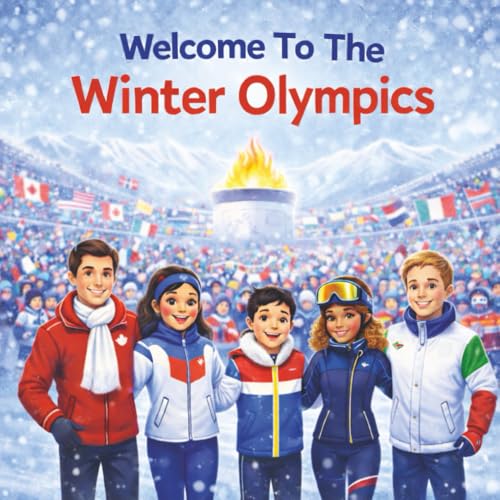
- BWP Score8.8
BWP Score is a ranking system developed by Bestwinterproducts.com. BWP score has no relationship or impact from any manufacturers or sales agent websites. Learn more
- BrandN/A
Last update on 2026-10-02 / Affiliate links / Images, Product Titles, and Product Highlights from Amazon Product Advertising API
Frequently Asked Questions
Which country has won the most Winter Olympic medals?
Norway holds the record for the most total medals and the most gold medals in Winter Olympic history. Despite having a population of just over five million people, Norway dominates events like cross-country skiing, biathlon, and speed skating. Their cold climate, mountain terrain, and strong outdoor culture give them a huge advantage.
How many individual athletes compete in the Winter Games?
Around 2,800 to 3,000 total athletes compete in modern Winter Olympic Games. By comparison, the Summer Games usually host over 10,000 competitors across more than thirty different sports. The Winter Games feature fewer sports, fewer events, and stricter team roster limits, which keeps the total athlete count much smaller.
Do host nations automatically qualify for every sport?
Host countries receive guaranteed spots in selected sports to ensure the local crowds have home athletes to cheer for during the tournament. However, those athletes must still meet basic international safety and skill benchmarks. In dangerous, high-speed events like downhill skiing or skeleton, an athlete who cannot safely complete the course will not be allowed to race.
Can an athlete represent a country they do not live in?
Yes, an athlete can represent a nation where they do not currently reside, provided they hold legal citizenship or a valid passport from that country. Many athletes represent their family's ancestral country while living and training in nations with better winter sports facilities. The athlete must follow eligibility rules set by their sport's international federation before switching their competitive allegiance.


Best Warm Winter Scarves 2026 For Cozy Comfort

Best Green Ski Goggles 2026 For Clear Vision On Slopes

12 Best Corner Electric Fireplace 2026: My Ultimate Guide To Pick One

Best Battery Powered Snow Blower 2026 For Effortless Snow Clearing

Best Ski Goggles Under 30 Inches For Crisp Vision And Comfort

Best Cooling Scarf 2026 For Instant Relief And Comfort

Fake Snow for Grass: Create a Realistic Winter Lawn Display

Dimplex Prism Wall Mount Fireplace: Sleek Heat With Modern Flame Style





