
How to Keep Your Car Warm in Winter Overnight Safely

A parked car cannot hold heat overnight. Sheet metal and thin window glass leak warmth fast, matching the freezing outdoor temperature within an hour of turning off the engine. Trying to keep the cabin air warm without the motor running will quickly drain the starter battery. The real solution is to block freezing drafts and trap direct warmth instead of heating empty space.
The right approach depends on whether the vehicle sits empty or serves as a bed for the night. An empty car near an outdoor outlet can use an electric plug-in engine warmer and a windshield cover, while someone sleeping inside relies on heavy thermal bedding and window insulation. Parking location matters as well, because sheltering against a building wall cuts down on biting wind chill. Here is how to handle freezing nights safely, protect the battery, and avoid dangerous fumes.
Vehicles lose interior heat quickly through thin glass and steel
A parked car cannot hold heat like a house. Vehicles are built from thin sheet steel, aluminum, and large panels of single-pane glass, none of which provide meaningful thermal insulation. When your engine runs, hot coolant flows through the heater core, and the blower fan pushes that warmth into the cabin. The moment you turn the key off, you shut down the only heat source in the vehicle.
Heat escapes rapidly through three main pathways. Warm air rises and slips out through cabin vents and small gaps around door seals. Outside air chills the outer steel panels and glass, pulling cabin warmth out through direct conduction. Car seats, dashboards, and thin floor mats have very little thermal mass, so they cannot store heat and release it slowly.
In freezing weather, an unheated vehicle interior drops down to the outdoor air temperature within an hour. Cranking the dashboard heat right before shutting off the engine makes no practical difference overnight. Within 60 minutes, that warm air is gone, and the interior materials become just as cold as the air outside.
This reality changes how you approach winter car prep. Trying to keep the empty air inside a vehicle warm overnight is impossible without burning fuel or draining huge electrical power. Focus on protecting the engine and glass if the car is empty, or insulating your body if you sleep inside.
Idling all night risks poisonous fumes and dead batteries
Leaving an engine running all night while you sleep inside is extremely dangerous. The most severe hazard is carbon monoxide poisoning. Carbon monoxide is an invisible, odorless, and tasteless gas produced by combustion engines. You cannot smell or taste it, and it gives no warning before causing unconsciousness.
During winter storms, snowdrifts can quickly pile up around the back of your car. If snow blocks the exhaust tailpipe, toxic fumes cannot escape into the open air. Instead, they force their way underneath the chassis and seep upward through floor seams, trunk seals, and heater vents. Falling asleep in an idling car under these conditions can be fatal.
Even on clear nights, sudden wind shifts can blow exhaust directly into your fresh air intake. Never use portable fuel-burning heaters inside a vehicle either. Unvented propane or catalytic heaters consume oxygen, release heavy moisture, and create the exact same carbon monoxide danger.
The second major risk is a dead starter battery. Cold temperatures slow down chemical reactions in vehicle batteries. At freezing temperatures, a battery loses roughly 20 to 50 percent of its cranking strength. If you leave the ignition in the accessory position to run the blower or keep gear plugged into your 12-volt round dashboard socket, parasitic draw (battery power drained by plugged-in accessories) will empty the battery overnight. You will wake up stranded with a vehicle that cannot start.
Block winter winds and prep the engine before parking
When leaving an empty vehicle parked outside in freezing weather, your goal is to prevent frost buildup, protect the starter battery, and keep the engine ready for a smooth morning start. A few simple adjustments before you lock the doors save time and prevent morning headaches.
Follow this preparation checklist whenever severe cold is in the forecast:
- Face the windshield toward the east: The morning sun rises in the east and provides natural radiant heat. Weak winter sunshine helps soften windshield frost and warms the dashboard before you step outside.
- Park against a solid windbreak: Park alongside a garage wall, fence, or commercial building. Cold winter winds create wind chill that strips residual heat away from the engine block and radiator. Blocking the wind keeps your engine bay several degrees warmer for the first few hours.
- Fasten an exterior windshield frost cover: Spread an exterior frost blanket across your outside glass and secure it under your wiper blades. Scraping thick frost off cold glass takes heavy effort and wastes fuel during morning warmups. An exterior cover prevents ice from bonding to the glass, allowing you to pull it off and drive away immediately.
- Plug in an engine block heater: A block heater (an electric plug-in engine warmer) keeps engine coolant and motor oil warm while parked. Cold oil thickens, putting immense strain on your starter motor. Connect your block heater to an outdoor timer set to turn on two to three hours before your morning departure so you avoid wasting power all night.
- Unplug all dashboard cords and turn off accessories: Switch off the blower fan, windshield wipers, heated seats, and headlights before turning off the key. Pull all charging cords out of the auxiliary outlet (12-volt round dashboard socket). Turning off these draws ensures the starter battery delivers its full power directly to the engine in the morning.
Insulate your body and the windows when sleeping inside
If you must sleep in your vehicle during freezing weather, do not attempt to heat the cabin air. Focus entirely on insulating yourself and blocking heat transfer through the glass. Creating a warm microclimate around your sleeping space keeps you safe in sub-freezing temperatures without running the engine.
Follow these steps to set up your vehicle for an overnight stay:
- Crack two opposing windows a quarter-inch for ventilation: Human breathing releases moisture into the air overnight. In a sealed cabin, that moisture condenses against freezing glass and metal panels, dripping cold water onto your bedding and forming thick frost on the inside of the windows. Cracking two side windows slightly creates a gentle cross-draft that carries humidity out while keeping the cabin dry.
- Cover all windows with insulated foam panels: Vehicle glass accounts for most overnight heat loss. Cut panels of foil-faced bubble insulation or closed-cell foam board to friction-fit snugly against every window frame. These panels create a dead air space that blocks radiant heat loss and stops cold drafts from dropping onto you.
- Build a thick sleeping base above the floor: Cold air sinks, and metal floor pans pull heat from your body through direct conduction. Never lie directly on vehicle carpet or bare seats. Lay down a closed-cell foam camping mat or a thick wool blanket first, then place an insulated sleeping pad on top to block drafts from below.
- Layer your clothing with dry materials: Put on a clean, dry sweat-wicking base layer before climbing into bed. Thermal long underwear made from wool or synthetic fabric pulls moisture away from your skin. Avoid cotton because cotton traps sweat and stays cold, which quickly induces shivering. Put on a warm fleece beanie to prevent head heat loss, and slip into thick, dry wool socks. Knowing how to keep feet warm during winter is essential when vehicle floors stay near freezing. These layering steps work much like the techniques used to keep warm in winter outdoors without sweating.
- Wrap your bedding in thermal layers: Use a sleeping bag rated for below-freezing conditions as your primary cocoon. If your bag is rated for mild weather, place a fleece throw blanket inside against your body, and drape a heavy wool blanket over the top. You can also place an emergency foil blanket over your top blanket to reflect radiant body heat back down. Keep the foil layer over a fabric blanket rather than directly against bare skin to prevent sweat from pooling.
Power personal heated gear with a separate battery pack
Many drivers carry 12-volt heated electric blankets in their winter emergency kits. While these heated throws provide fast personal warmth, plugging them directly into your vehicle's 12-volt round dashboard socket overnight is a major mistake. In some vehicles, the auxiliary outlet shuts off when the ignition is turned off. In others where the socket remains live, the blanket draws continuous electric current from your starter battery.
A standard car starter battery is not designed for sustained power delivery. It is built to supply a quick, powerful burst of current to crank the engine, after which the alternator recharges it. Running a heating throw for several hours causes severe battery drain. In freezing weather, this draw empties the battery, leaving you stranded with a vehicle that cannot start.
The safe solution is using an independent portable power station. These units contain deep-cycle lithium batteries designed to deliver steady power over many hours without damaging their cells. A portable power station with a capacity between 200 and 300 watt-hours can safely power a low-voltage heated blanket for an entire night. This setup keeps you warm while leaving your car starter battery completely untouched and fully charged.
If you do not have an independent power station, use your heated blanket strictly while the engine is running during a rest stop or evening commute. Turn off and unplug the heated throw before turning off the ignition to sleep, relying entirely on your passive bedding layers to hold the warmth you gathered while driving.
Choose 12-volt heated blankets with timers and auto-shutoff
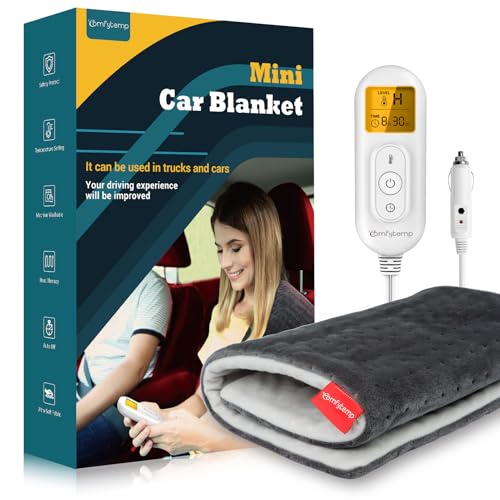
Low-voltage 12-volt heated blankets and electric throws provide concentrated personal warmth right where you need it. Heating empty cabin air requires massive energy, but warming your body directly with a heated throw is practical for winter rest stops and emergency delays. Selecting the right model ensures dependable warmth without creating safety hazards or battery drain issues.
When selecting a 12-volt heated blanket for your vehicle, verify these specific features before buying:
- Built-in automatic shutoff timers: Look for blankets with integrated digital controllers that feature timed shutoff settings, such as 30, 45, or 60 minutes. An automatic timer prevents the blanket from running continuously if you fall asleep, protecting you from overheating and conserving battery power.
- Multiple heat levels: Choose a blanket that offers at least low and high temperature options. Low settings provide gentle, sustained warmth that keeps you comfortable without causing you to sweat, while high settings warm up chilled fabric quickly when you first enter the car.
- Generous power cord length: Check the length of the 12-volt power cord. A cord measuring at least 6 to 7 feet allows you to comfortably reach the back seat or cargo area without putting mechanical tension on the 12-volt plug or vehicle socket.
- Dense, insulating fabric: Select blankets made from double-layer polar fleece, plush flannel, or sherpa material. High-density fabrics hold warmth naturally on their own, allowing the blanket to function as a cozy thermal wrap even when disconnected from power.
- Integrated plug fuse: Inspect the 12-volt cigarette lighter plug to confirm it houses an internal safety fuse. An integrated fuse protects both the blanket wiring and your vehicle electrical system from unexpected power surges or short circuits.

- BWP Score10.0
BWP Score is a ranking system developed by Bestwinterproducts.com. BWP score has no relationship or impact from any manufacturers or sales agent websites. Learn more
- BrandIHEALTHCOMFORT

- BWP Score9.4
BWP Score is a ranking system developed by Bestwinterproducts.com. BWP score has no relationship or impact from any manufacturers or sales agent websites. Learn more
- BrandMart Cobra
- BWP Score9.0
BWP Score is a ranking system developed by Bestwinterproducts.com. BWP score has no relationship or impact from any manufacturers or sales agent websites. Learn more
- BrandComfytemp

- BWP Score8.6
BWP Score is a ranking system developed by Bestwinterproducts.com. BWP score has no relationship or impact from any manufacturers or sales agent websites. Learn more
- BrandWestinghouse

- BWP Score8.6
BWP Score is a ranking system developed by Bestwinterproducts.com. BWP score has no relationship or impact from any manufacturers or sales agent websites. Learn more
- BrandSunny color

- BWP Score8.4
BWP Score is a ranking system developed by Bestwinterproducts.com. BWP score has no relationship or impact from any manufacturers or sales agent websites. Learn more
- BrandStalwart

- BWP Score8.4
BWP Score is a ranking system developed by Bestwinterproducts.com. BWP score has no relationship or impact from any manufacturers or sales agent websites. Learn more
- BrandJisejima

- BWP Score8.2
BWP Score is a ranking system developed by Bestwinterproducts.com. BWP score has no relationship or impact from any manufacturers or sales agent websites. Learn more
- BrandBig Hippo

- BWP Score7.8
BWP Score is a ranking system developed by Bestwinterproducts.com. BWP score has no relationship or impact from any manufacturers or sales agent websites. Learn more
- BrandComfytemp

- BWP Score4.8
BWP Score is a ranking system developed by Bestwinterproducts.com. BWP score has no relationship or impact from any manufacturers or sales agent websites. Learn more
- BrandMariocsa
Last update on 2026-10-02 / Affiliate links / Images, Product Titles, and Product Highlights from Amazon Product Advertising API


Best Warm Winter Scarves 2026 For Cozy Comfort

Best Green Ski Goggles 2026 For Clear Vision On Slopes

12 Best Corner Electric Fireplace 2026: My Ultimate Guide To Pick One

Best Battery Powered Snow Blower 2026 For Effortless Snow Clearing

Best Ski Goggles Under 30 Inches For Crisp Vision And Comfort

Best Cooling Scarf 2026 For Instant Relief And Comfort

Fake Snow for Grass: Create a Realistic Winter Lawn Display

Dimplex Prism Wall Mount Fireplace: Sleek Heat With Modern Flame Style





