
What Is a Winter Hat Called? Every Style Named and Defined

The everyday hat pulled on for cold weather is usually called a beanie or a knit cap. That name quickly shifts depending on where someone lives and how the hat is cut to block the cold. A simple rounded cap works fine for mild autumn chills, but different shapes and styles carry specific names once serious winter air arrives.
Where you live plays a huge part in the vocabulary. Canadians call a standard knit cap a toque, while people across the pond often say bobble hat if it has a fuzzy pom-pom on top. The shape also changes the name when freezing wind picks up. Thick hats with fold-down ear flaps are called trapper hats, and full head covers that shield your neck and face are balaclavas. Here is a clear breakdown of each winter hat name so you can spot the exact style you need.
Knit caps and beanies cover everyday winter chill
The most common winter hat in the United States is called a beanie. A beanie is a simple pull-on cap made of knitted yarn that stretches over your head. While "beanie" is the most common name today, people use several terms for this style based on its cut and fit.
A watch cap is a folded knit cap originally worn by sailors. Sailors standing watch on windy decks needed warmth without a wide brim catching ocean gusts. The defining feature of a watch cap is its turned-up cuff. Folding the lower edge creates a double layer of knitted fabric over your forehead and ears, blocking cold breezes right where your ears hurt most.
An uncuffed knit cap is often called a skull cap or a stocking cap. A skull cap is a snug, rounded cap that follows the shape of your head. It has a low profile with no extra fabric at the crown, making it ideal under hard hats or bike helmets. A stocking cap is looser, leaving extra fabric slouching behind your head.
The knit material changes how warm the cap feels in real weather. Acrylic yarn is soft, stretches easily, and keeps its shape well. Wool provides great natural insulation and holds heat even if wet snow dampens the fibers. But loosely knit yarn has tiny openings between stitches that let freezing wind slice through to your scalp. If you face biting winds, pick a knit cap lined with soft fleece to block drafts and prevent yarn from itching your skin.
Trapper hats and ushankas block subzero wind
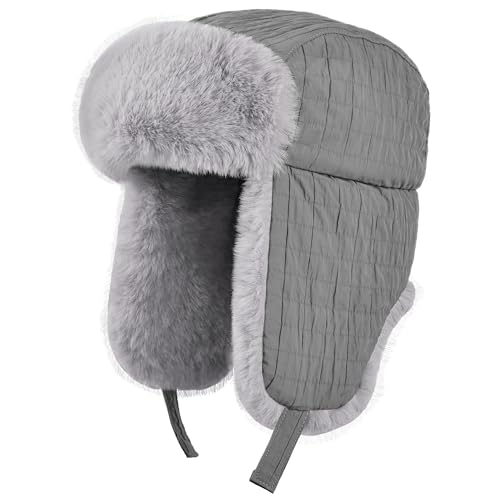
When temperatures drop far below freezing, a simple knit beanie often leaves your ears aching. In conditions with fierce gusts, the right winter hat is called a trapper hat. A trapper hat is a heavy-duty cold-weather cap featuring a padded crown and long side flaps that hang down over your ears and jaw.
Trapper hats were originally designed for hunters spending long winter days in deep snow. The defining feature is the pair of ear flaps with a chin strap or buckle. Buckling the strap under your chin clamps the flaps securely against your cheeks, closing off cold air gaps. On milder days, you can flip the flaps up and fasten them over the crown to prevent overheating.
You will frequently see this style called an ushanka. An ushanka is a Russian-style hat with thick fur ear flaps. The name comes from "ushi," the Russian word for ears. Authentic ushankas feature thick wool or genuine fur across the lining and forehead flap. Modern versions often go by the name trooper hat, aviator hat, or bomber cap. Aviator caps date back to early military pilots who flew in open cockpits at high altitudes, relying on leather shells and shearling fleece to avoid frostbite.
Trapper hats outperform standard knit beanies in severe weather because of their outer shell. Beanies rely on knitted yarn that wind can penetrate, but a trapper hat uses a dense nylon, polyester, or leather shell. This shell deflects howling winds and sheds wet snow. The thick faux fur or fleece lining underneath traps warm air against your ears, giving you heavy-duty protection in subzero wind chills.
Balaclavas and ski hoods protect your whole face
If you face blowing blizzards or spend hours doing winter sports, standard hats leave your nose, cheeks, and neck open to freezing air. Headwear that covers your entire head and neck with only a face opening is called a balaclava. A balaclava is a pull-over hood covering the neck and face, leaving an opening for your eyes, or separate openings for your eyes and mouth.
The hat gets its name from the town of Balaclava in Ukraine. During the Crimean War in 1854, British soldiers faced brutal subzero conditions without adequate uniforms. People back home knitted full-coverage hoods and sent them to troops at Balaclava to keep their faces warm. Today, people also call them ski hoods, full-face masks, or fleece snow hoods.
A balaclava solves a major cold-weather problem: the freezing gap between your hat and jacket collar. Traditional scarves often come unwrapped, shift around, or let cold drafts blow down your neck. A balaclava extends down into your coat collar like a built-in neck warmer. It is an easy way to practice how to keep face warm in winter without carrying multiple loose accessories.
When picking a balaclava, avoid wrapping a plain cotton bandana around your face. Cotton absorbs moisture from your breath as you exhale. Within minutes in freezing weather, damp cotton freezes solid, turning into an icy barrier against your lips. Instead, look for breathable fleece or sweat-wicking synthetic fabric. Many balaclavas feature a hinged mouth panel you can pull under your chin to drink water or speak clearly.
Always watch for signs of frostnip when wind chill is severe. If your cheeks or nose turn numb, tingling, or waxy white, get indoors right away. Rewarm the skin using gentle room temperatures or lukewarm water. Never use boiling water, heating pads, or vigorous skin rubbing, because frozen skin tissues bruise and tear easily.
Winter hat names change depending on where you live
Regional vocabulary often causes confusion when talking about winter hats. People across the United States, Canada, and the United Kingdom use completely different words for the exact same piece of cold-weather headwear.
In Canada, the standard knit winter hat is called a toque, which is often spelled tuque. The word comes from an old French term for a brimless cap. To Canadians, the word toque is an everyday staple describing any knitted winter cap, whether it is thin, thick, cuffed, or topped with a pom-pom. If you use the word "beanie" in Canada, many locals will picture a novelty cap with a spinning propeller on top.
In the United States, "beanie" is the most common word by a wide margin. But regional pockets still use older terms. In parts of the Midwest, the Appalachians, and the South, people often call a knit cap a toboggan. This creates confusion for travelers, because in most places, a toboggan is a long wooden snow sled. In coastal areas and among military veterans, the term watch cap remains the standard name for any thick, cuffed knit hat.
Across the United Kingdom and Ireland, people rarely use the word beanie for winter gear. Instead, they refer to everyday knit caps as woolly hats. If the hat features a fluffy yarn ball on top, British and Irish speakers call it a bobble hat, using the word bobble for a pom-pom. In Australia and New Zealand, beanie is the common term, though Australians also wear them during brisk desert nights.
Other regions have created their own famous winter hat styles based on local traditions. In the freezing mountain altitudes of Peru and Bolivia, locals wear a chullo. A chullo is a traditional knit hat made from warm alpaca or sheep wool, designed with triangular ear flaps and long woven ties. Knowing these regional differences makes it much easier to find the exact style you want when browsing online outdoor retailers.
Match your hat style directly to outdoor conditions
Choosing the right winter hat is about matching your gear to the exact temperature and wind outside. Wearing a heavy fur hat during a mild jog will make you sweat, which chills your body down once you stop moving. Wearing a thin fashion beanie during a freezing blizzard puts you at risk of frostbite. Use this straightforward guide to match your hat to the weather:
- Mild winter weather (40°F to 50°F): Wear a thin, unlined knit beanie or a stretch skull cap. At these temperatures, you only need light protection to take the bite out of a brisk morning. A thin acrylic cap keeps your ears comfortable without trapping excess body heat.
- Moderate cold and windy days (20°F to 39°F): Wear a thick, cuffed watch cap or a fleece-lined knit beanie. The fold-over cuff provides four layers of knit yarn over your ears, creating a reliable barrier against standard winter breezes. Pair this with good layering habits by learning how to keep warm in winter outdoors so your jacket works in harmony with your headwear.
- Freezing wind chills and blowing snow (below 20°F): Put on a trapper hat or an ushanka. The combination of a windproof outer fabric and thick faux fur stops freezing gusts from cutting through to your skin. Fasten the ear flaps under your chin to seal your ears, jaw, and neck. When conditions are this severe, remember that cold feet also drain body heat quickly, so check how to keep toes warm in the winter to protect your lower extremities at the same time.
- Deep freezes, blizzards, and winter sports: Use a thermal balaclava or a fleece ski hood. If you are skiing, snowboarding, or clearing snow in subzero temperatures, leaving bare skin exposed leads to rapid windburn. A balaclava shields your neck, chin, cheeks, and forehead, sliding comfortably under safety helmets or heavy hoods.
Pay attention to how your body feels while you are outside. If your forehead begins sweating, fold up your beanie cuff or unbuckle your trapper hat flaps to release heat. If your earlobes begin to sting from the wind, pull your hat lower immediately. Adjusting your headwear as your activity level changes keeps you warm without soaking your hair in sweat.
Choose the right hat features for your climate
When you are ready to pick out a winter hat, checking a few key construction details will ensure you get real warmth instead of thin fabric that fails in the cold. A hat might look cozy on a hanger, but its real-world performance depends entirely on its materials and fit.
Start by checking the inner lining. Knitted yarn naturally stretches, but that stretch creates tiny gaps between loops that allow icy drafts to blow right through. Look for winter hats that feature a full interior lining made from soft fleece or thermal plush. Fleece acts as a physical barrier against the wind, holding your body's heat close to your scalp while stopping rough wool yarns from scratching your forehead.
Next, check the depth of the crown and the elasticity of the fabric. A dependable winter hat must pull down far enough to cover your entire earlobes without slipping upward as you talk or walk. Look for hats made from stretchy, resilient knit fabrics that bounce back to their original shape after being pulled. If a hat feels tight around your forehead or continually rides up over your ears, it will not protect you when the wind picks up.
Finally, consider the weather conditions in your local area. If you deal with wet snow, sleet, or heavy freezing rain, pick a hat with a water-resistant and windproof polyester outer shell, like a trapper hat. If your winters are mostly dry and calm, a double-layered acrylic or wool knit beanie will give you plenty of warmth and breathability. Checking these construction details ensures your head stays warm and comfortable all season long.

- BWP Score9.6
BWP Score is a ranking system developed by Bestwinterproducts.com. BWP score has no relationship or impact from any manufacturers or sales agent websites. Learn more
- BrandWmcaps

- BWP Score9.6
BWP Score is a ranking system developed by Bestwinterproducts.com. BWP score has no relationship or impact from any manufacturers or sales agent websites. Learn more
- BrandWmcaps

- BWP Score9.4
BWP Score is a ranking system developed by Bestwinterproducts.com. BWP score has no relationship or impact from any manufacturers or sales agent websites. Learn more
- BrandFURTALK

- BWP Score9.4
BWP Score is a ranking system developed by Bestwinterproducts.com. BWP score has no relationship or impact from any manufacturers or sales agent websites. Learn more
- BrandWmcaps

- BWP Score9.0
BWP Score is a ranking system developed by Bestwinterproducts.com. BWP score has no relationship or impact from any manufacturers or sales agent websites. Learn more
- BrandHINDAWI

- BWP Score9.0
BWP Score is a ranking system developed by Bestwinterproducts.com. BWP score has no relationship or impact from any manufacturers or sales agent websites. Learn more
- BrandONWAY

- BWP Score9.0
BWP Score is a ranking system developed by Bestwinterproducts.com. BWP score has no relationship or impact from any manufacturers or sales agent websites. Learn more
- BrandROXUN
- BWP Score8.4
BWP Score is a ranking system developed by Bestwinterproducts.com. BWP score has no relationship or impact from any manufacturers or sales agent websites. Learn more
- BrandSSAXIGC

- BWP Score8.2
BWP Score is a ranking system developed by Bestwinterproducts.com. BWP score has no relationship or impact from any manufacturers or sales agent websites. Learn more
- BrandASWER
Last update on 2026-10-01 / Affiliate links / Images, Product Titles, and Product Highlights from Amazon Product Advertising API


Best Warm Winter Scarves 2026 For Cozy Comfort

Best Green Ski Goggles 2026 For Clear Vision On Slopes

12 Best Corner Electric Fireplace 2026: My Ultimate Guide To Pick One

Best Battery Powered Snow Blower 2026 For Effortless Snow Clearing

Best Ski Goggles Under 30 Inches For Crisp Vision And Comfort

Best Cooling Scarf 2026 For Instant Relief And Comfort

Fake Snow for Grass: Create a Realistic Winter Lawn Display

Dimplex Prism Wall Mount Fireplace: Sleek Heat With Modern Flame Style





